

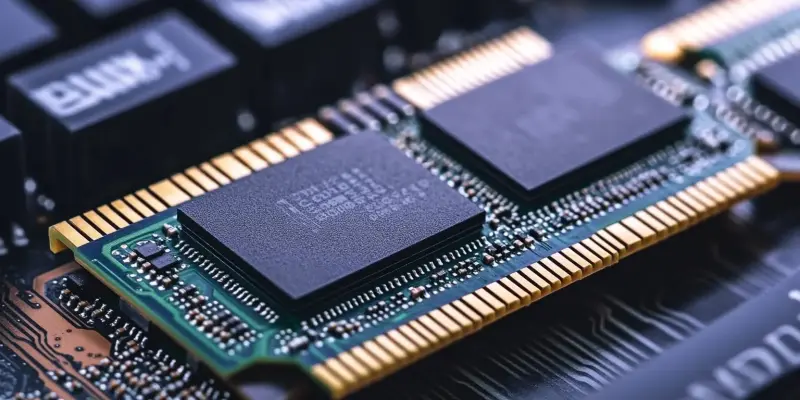
The world of memory overclocking has seen yet another milestone, with the renowned overclocker known as “Hicookie” pushing the boundaries of DDR5 memory speeds. Hicookie achieved a staggering memory speed of 12,762 MT/s on the Gigabyte Z890 AORUS Tachyon ICE motherboard, surpassing his previous record by utilizing XPG LANCER RGB DDR5 memory. This impressive feat not only highlights Hicookie’s expertise but also shines a light on the continuous advancements in memory technology.
The Path to Record-Breaking Performance
Hicookie’s success in setting a new overclocking world record underscores his relentless pursuit of performance excellence. Through meticulous experimentation and leveraging liquid nitrogen cooling to maintain manageable temperatures, Hicookie managed to push the DDR5 memory speeds above 12,000 MT/s. Although the exact cache latency timings for this new record have not been disclosed, it is worth noting that his previous record of 12,726 MT/s was achieved using CL68-127-127-254 timings. This level of fine-tuning highlights the intricate details and precision required in memory overclocking to reach unprecedented speeds.
The achievement also brings into focus the collaborative efforts of hardware developers and companies like ADATA, the parent company of XPG LANCER. ADATA played a crucial role in celebrating this milestone, acknowledging the contribution of Gigabyte’s machine learning and AI-enhanced development processes. These technologies have been instrumental in optimizing performance stability at such extreme speeds. The collaboration between overclockers, hardware manufacturers, and software developers is pivotal in pushing the frontiers of what is possible in memory performance.
The Capabilities of XPG LANCER DDR5 Memory
XPG LANCER DDR5 memory, a key component in breaking the overclocking record, comes equipped with several high-quality features. These memory modules include PMIC chips and ECC (Error-Correcting Code), both of which help maintain system stability and integrity. Additionally, the memory supports both XMP 3.0 and AMD EXPO, enabling users to achieve speeds ranging from 6000 MT/s to 8000 MT/s right out of the box. Such capabilities make the XPG LANCER DDR5 memory suitable for various performance needs, whether for gaming, professional workloads, or hobbyist applications.
Available in capacities from 16 GB to 48 GB, XPG LANCER accommodates a wide range of user requirements. The inclusion of RGB lighting adds a visual flair, appealing to those who desire both aesthetic and performance in their setups. The combination of technical prowess and design elegance makes XPG LANCER DDR5 a favored choice among enthusiasts and professionals. Its role in helping Hicookie set a new world record is a testament to its robust engineering and high-performance potential.
The Significance of Hicookie’s Achievement
The realm of memory overclocking has reached a new pinnacle thanks to the famed overclocker known as “Hicookie.” He has set an extraordinary new record for DDR5 memory speeds. By pushing the boundaries further, Hicookie accomplished an astonishing memory speed of 12,762 MT/s using the Gigabyte Z890 AORUS Tachyon ICE motherboard, surpassing his previous record significantly. This achievement was made possible with the use of XPG LANCER RGB DDR5 memory modules. Hicookie’s accomplishment not only underscores his exceptional skill and dedication but also emphasizes the ongoing advancements and innovations in memory technology. The significance of this milestone in overclocking can’t be overstated as it highlights the potential for even greater speeds and efficiency improvements in future memory technologies. Overclockers and tech enthusiasts alike look forward to how these developments will shape the future of computing, pushing the envelope of what’s currently possible and setting new standards for performance.