

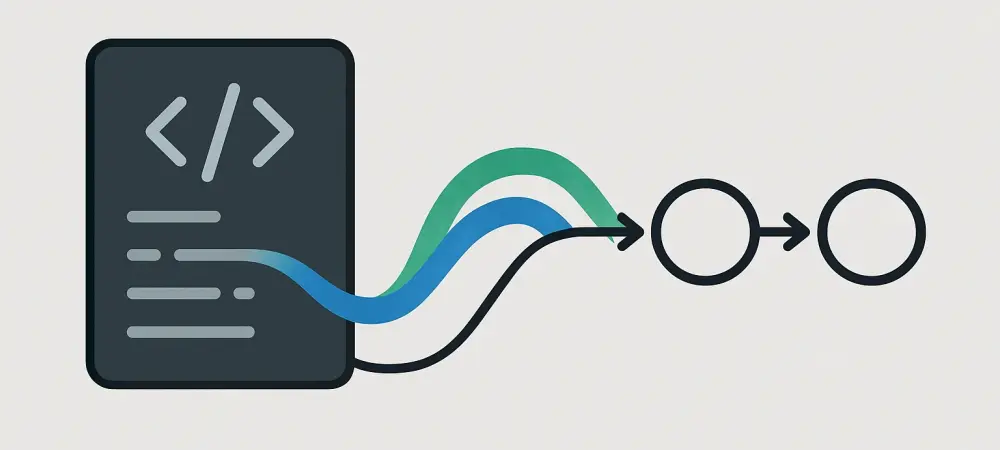
Harness and Amazon Web Services are expanding their strategic partnership by integrating their respective artificial intelligence agents to forge a unified and highly automated software engineering workflow. Announced at the AWS re:Invent 2025 conference, this initiative centers on connecting the Model Context Protocol server from Harness’s CI/CD platform with Kiro, AWS’s proprietary AI coding tool, signaling a major shift toward embedding delivery intelligence directly into the development process. As a cornerstone of this deepened collaboration, the complete Harness DevOps platform has also been made available on the AWS cloud, providing a comprehensive solution for customers looking to modernize their software delivery pipelines. The move addresses a critical challenge in modern software development: the growing disconnect between the rapid pace of AI-assisted code generation and the often complex, fragmented processes required to test, secure, and deploy that code into production environments. This integration promises to bridge that gap by creating a seamless, AI-driven conversation between the developer’s coding environment and the operational realities of the deployment pipeline.
The Mechanics of a Unified AI System
The core of this strategic integration is the establishment of a collaborative framework where AI agents from both platforms can seamlessly communicate and trigger actions across their respective domains. This interoperability is achieved by connecting the Harness Model Context Protocol (MCP) server directly with Kiro, the AI coding tool developed by AWS. According to Bala Venkatrao, a senior vice president at Harness, this new capability empowers AI agents operating within the Kiro coding environment to directly invoke specialized, task-specific AI agents developed by Harness. This cross-platform communication is the fundamental mechanism that unlocks a more cohesive and intelligent development experience. Rather than developers having to manually switch contexts between their integrated development environment (IDE) and their CI/CD platform, the AI agents now handle the handoff, translating a developer’s intent into a series of automated DevOps actions. This deep integration ensures that the intelligence and context gathered during code creation are not lost but are instead carried forward through the entire delivery lifecycle, from the first line of code to the final deployment. At the heart of Harness’s contribution to this partnership is its “Software Delivery Knowledge Graph,” a sophisticated system that provides the contextual intelligence needed for high-fidelity automation. When a developer using Kiro initiates a command, the invoked Harness agents leverage this comprehensive knowledge graph to ensure the outputs they generate are significantly more accurate and context-aware. This graph contains a rich, historical model of the organization’s software delivery practices, including data on previous builds, deployment environments, security vulnerabilities, and pipeline performance. By tapping into this deep well of information, the AI can make informed decisions, such as recommending the correct security scan for a particular service or flagging a potential regression based on past deployment data. For developers, this translates into a major boost in productivity and a dramatically streamlined workflow, as they can now initiate critical DevOps tasks, such as validating infrastructure configurations or running compliance checks, directly from the environment where they are most productive. Once the code is checked in, the Harness platform automatically orchestrates the subsequent pipeline workflows, creating an unbroken and intelligent chain from concept to production.
Redefining the Software Delivery Lifecycle
Industry analysts view this partnership as a landmark development in the evolution of DevOps, marking a significant step toward merging the once-separate domains of AI-powered code generation and sophisticated delivery systems into a single, cohesive process. Mitch Ashley of The Futurum Group observed that this integration provides Kiro with direct access to crucial delivery context, a critical piece of the puzzle that has been missing from many AI coding assistants. This synergy empowers a new kind of workflow where development velocity is balanced with operational rigor. While Kiro can accelerate the creation of code, Harness provides the background intelligence to automatically validate, secure, and manage that code as it moves through complex delivery pipelines. This ensures that the increased volume of AI-generated code does not overwhelm quality assurance and security teams, transforming what could be a bottleneck into a well-managed flow. This collaboration effectively transforms software delivery from a linear sequence of disconnected stages into a dynamic and self-improving “adaptive system.”
The creation of an adaptive system represents a paradigm shift from traditional, rigid CI/CD pipelines to a more intelligent and responsive operational model. This new model establishes a continuous feedback loop where the entire system learns and improves from every build, deployment, and release. For instance, if a deployment to a staging environment reveals a performance issue, that data is fed back into the Software Delivery Knowledge Graph. The next time a developer works on a similar service, the integrated AI agents can proactively warn them of potential performance pitfalls or even suggest alternative code structures based on the lessons learned from the previous deployment. This continuous learning loop extends beyond just code, incorporating insights from security scans, cost-management tools, and end-user monitoring. Over time, the system evolves with each change made to the codebase, becoming progressively smarter and more efficient. This moves software delivery beyond simple automation and toward genuine operational intelligence, where the pipeline itself becomes an active participant in improving the quality and resilience of the software it delivers.
Strategic Goals and the Future of DevOps
From the perspective of AWS, the primary objective of this partnership is to eliminate the persistent friction that software teams traditionally face when moving code from development environments into production. Neha Goswami, a director at AWS, clarified that while the company has no plans to build its own CI/CD platform, it identifies a massive opportunity in leveraging AI agents to streamline these essential workflows for its vast customer base. By integrating Kiro with a best-in-class platform like Harness, AWS can significantly enhance its developer ecosystem and make its cloud an even more attractive and productive platform for building and deploying modern applications. This strategic move acknowledges a critical emerging need in the industry. As AI coding tools like Kiro become more prolific and generate an ever-increasing volume of code, the demand for a robust, scalable, and intelligent CI/CD platform to manage these automated processes will become non-negotiable for any organization that builds software. Without such a platform, companies risk creating a new bottleneck where the speed gained in code generation is lost in a chaotic and unmanageable deployment process. For Harness, this integration marks a significant milestone in its long-term vision to position its platform as the central nervous system for integrating and observing complex DevOps workflows across multiple cloud environments. This collaboration is just the first of many planned integrations designed to establish the Harness platform as an indispensable hub for modern software delivery. By acting as an intelligent orchestration layer, Harness aims to unify the disparate tools and processes that make up the typical enterprise software delivery lifecycle, providing a single pane of glass for managing everything from code commit to production monitoring. This partnership with AWS signals a clear trend in the industry: AI agents are poised to make it fundamentally simpler for developers to ensure higher-quality code long before it ever enters a build process. By embedding security, compliance, and operational best practices directly into the coding experience, this new generation of integrated tools will empower developers to take greater ownership of the entire software lifecycle, fostering a culture of quality and efficiency from the ground up.
A New Paradigm for Code Quality and Velocity
The fusion of AI-driven code generation with context-aware delivery intelligence represents a pivotal shift in how software quality is managed throughout the development lifecycle. Traditionally, quality assurance has been implemented through a series of gates or checkpoints that occur after the code has been written and committed, such as automated testing suites, manual code reviews, and security scans within the CI pipeline. While effective, this approach introduces latency, creating a feedback loop that can be slow and disruptive for developers. This integration flips that model on its head by embedding quality assurance directly into the act of writing code itself. The combined AI agents act as a constant copilot, providing real-time feedback not just on syntax and logic, but also on security vulnerabilities, compliance with organizational policies, and potential deployment risks. This new paradigm promises to dramatically reduce rework, shorten feedback cycles, and fundamentally improve the reliability and security of software before it ever reaches a formal build server.
The collaboration between Harness and AWS represented a significant and necessary step forward in addressing the growing complexity of software delivery in an AI-driven world. It moved the industry beyond the limitations of siloed tools and toward a more integrated, intelligent, and adaptive ecosystem that mirrored the fluid nature of modern application development. The initiative provided a clear and compelling blueprint for how artificial intelligence could be leveraged not just to write code faster, but to deliver that code more safely, reliably, and efficiently. By forging a direct and intelligent link between the point of code creation and the deep context of its eventual deployment environment, this partnership laid the essential groundwork for a future in which the entire software lifecycle was managed as a single, cohesive, and continuously improving system. It marked a transition from automating tasks to orchestrating intelligent outcomes, setting a new standard for what was possible in the realm of enterprise software delivery.