

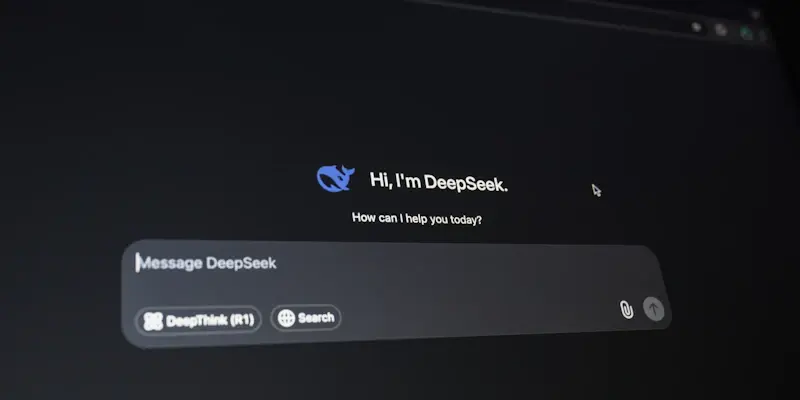
As artificial intelligence continues evolving rapidly, selecting the right chatbot model becomes increasingly vital.The debate between Grok 3 and DeepSeek R1 encapsulates this decision-making process, offering insights into which AI might better suit specific requirements. By examining the nuances of these two advanced AI models, one can understand their distinct capabilities, performance, and real-world applications. This analysis delves into key factors such as accuracy, speed, efficiency, and practical use cases to provide a comprehensive evaluation, guiding users in making an informed choice.
Capabilities and Accuracy
Grok 3 showcases an impressive accuracy rate, achieving 87% on complex tasks, a figure backed by recent tests from AI Labs conducted this year. This high level of precision makes it highly effective for technical questions, with 70% of professionals in a user study preferring it for mathematical problem-solving and coding tasks.Grok 3’s capability to handle intricate computations and generate accurate code examples positions it as a strong contender in fields requiring technical precision.
Contrastingly, DeepSeek R1, though slightly behind in overall accuracy with an 85% score, excels in creative endeavors.Its design inherently favors creative writing and storytelling, areas where it outshines its technical counterpart. This attribute has garnered acclaim from writers and content creators who rely on DeepSeek R1 to produce engaging narratives and compelling social media content.The slight dip in technical accuracy is often overshadowed by its proficiency in imaginative tasks, making it a go-to solution for creative professionals.
Speed, Efficiency, and Multilingual Capabilities
When it comes to response speed, Grok 3 emerges as the faster option, delivering answers in under 1.2 seconds on average. This efficiency is crucial for applications requiring quick turnaround times, such as customer support and real-time assistance.However, DeepSeek R1, while taking a bit longer with an average response time of over 1.5 seconds, compensates with a significant advantage in energy efficiency. It consumes 30% less processing power, making it ideal for deployment on devices with constrained resources.
Furthermore, DeepSeek R1 outshines Grok 3 in multilingual support, understanding over 50 languages compared to Grok 3’s 35.This capability allows DeepSeek R1 to cater to a broader global audience, offering seamless communication across diverse linguistic groups. Grok 3’s focus on maintaining coherent multi-turn conversations through consistent and accurate recall of past interactions is noteworthy, yet it cannot match the extensive language coverage of DeepSeek R1.For users requiring robust multilingual interactions, DeepSeek R1 presents a clear advantage.
Real-World Applications and Practical Use Cases
In practical scenarios, Grok 3 proves to be highly effective in technical fields, educational settings, and customer support environments. Its data-driven responses enhance precision and reliability, leading to a 40% reduction in customer service response times. Educational institutions leverage Grok 3 to provide accurate informational support, aiding both instructors and students with complex problem-solving tasks.Its adeptness in quickly delivering precise answers makes it indispensable in settings where technical correctness is paramount.
DeepSeek R1, on the other hand, finds its strength in content creation, storytelling, and social media management. Marketers and writers favor DeepSeek R1 for its ability to craft engaging content that resonates with audiences, driving a 35% increase in content engagement rates.Its prowess in generating vivid narratives and creative content has made it an essential tool for those in the fields of writing and digital marketing. The AI’s energy efficiency and extensive multilingual support further expand its usability, making it a versatile choice for diverse creative applications.
Decision-Making Insights
As artificial intelligence continues to evolve at a rapid pace, choosing the right chatbot model becomes increasingly crucial. The ongoing debate between Grok 3 and DeepSeek R1 highlights this decision-making process, offering valuable insights into which AI might best meet specific needs.By closely examining the nuances of these two advanced AI models, one can gain a deeper understanding of their distinct capabilities, performance metrics, and real-world applications. This analysis delves into essential factors such as accuracy, speed, efficiency, and practical use cases to provide a thorough evaluation. Consequently, this guidance helps users make an informed choice regarding the most suitable AI model for their requirements.Moreover, exploring additional considerations such as user experience, integration capabilities, and long-term scalability further enriches the decision-making process, ensuring that selections align with both current goals and future growth potentials.