

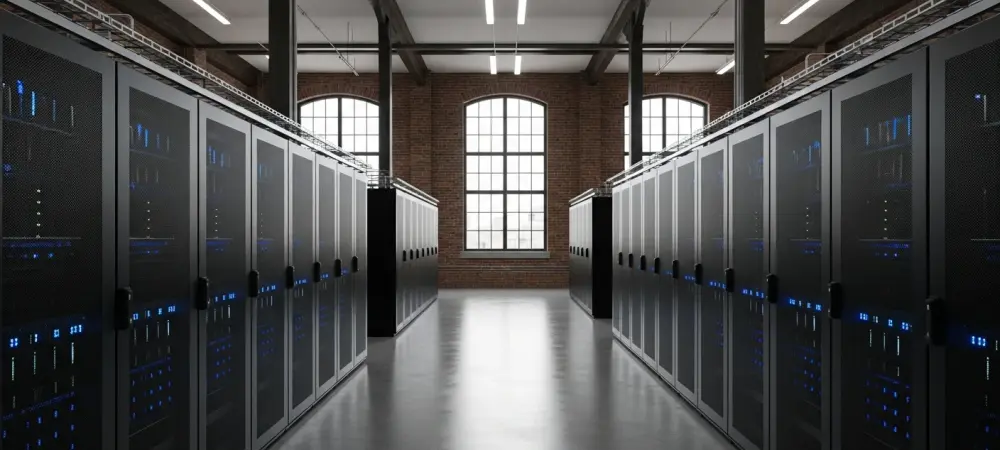
The historic hum of paper machinery in Halden is beginning to harmonize with the rhythmic whir of high-performance servers as industrial giants pivot toward a digital future. This transformation at the Norske Skog Saugbrugs facility represents a bold step where legacy manufacturing grounds provide the foundation for modern cloud demands.
Bridging the Gap Between Heavy Industry and the Digital Frontier
When a paper mill founded in the mid-19th century meets the hyper-scale demands of the modern cloud, the resulting synergy redefines regional development. In Halden, Norway, Norske Skog Saugbrugs and Green Mountain are moving to transform legacy industrial grounds into a cutting-edge data hub. This partnership represents a pivot where traditional manufacturing power provides the base for the digital future.
Why Repurposing Industrial Landmarks is the Future of Infrastructure
The surge in global data consumption sparked a land grab for sites offering massive power capacity and established logistical access. By targeting existing brownfield sites like the Saugbrugs facility, developers bypass many hurdles of greenfield construction while revitalizing regional economies. This project demonstrates how “old-world” industrial power can support the digital economy without the environmental footprint of new land clearing.
Strategic Synergy: The Halden Project Breakdown
The collaboration is formalized through a non-binding letter of intent to explore data center development near the Swedish border. This specific location offers a trifecta of advantages, including proximity to international fiber routes and immediate access to high-voltage power grids. While Norske Skog navigates the permitting process, it also weighs the modernization of its PM6 machine for specialized paper production.
A Legacy of Innovation and Global Expansion
This move aligns with the aggressive growth of Green Mountain following its acquisition by the Azrieli Group. The firm continues to scale its footprint from Norwegian fjords into the UK and German markets. For Norske Skog, a cornerstone of industry since 1859, the partnership represented a calculated diversification move. Leaders highlighted that the site’s unique structural advantages provided a “plug-and-play” environment for Østfold County.
Navigating the Transition: A Roadmap for Industrial Co-location
Converting an active manufacturing site into a high-tier data center required a specialized framework for co-existence. The Halden project served as a blueprint for this transition, focusing on the shared use of cooling infrastructure and power substations. Stakeholders prioritized securing municipal buy-in through transparent permitting phases and maintained site flexibility. This model provided a practical pathway for legacy firms looking to monetize underutilized real estate.