

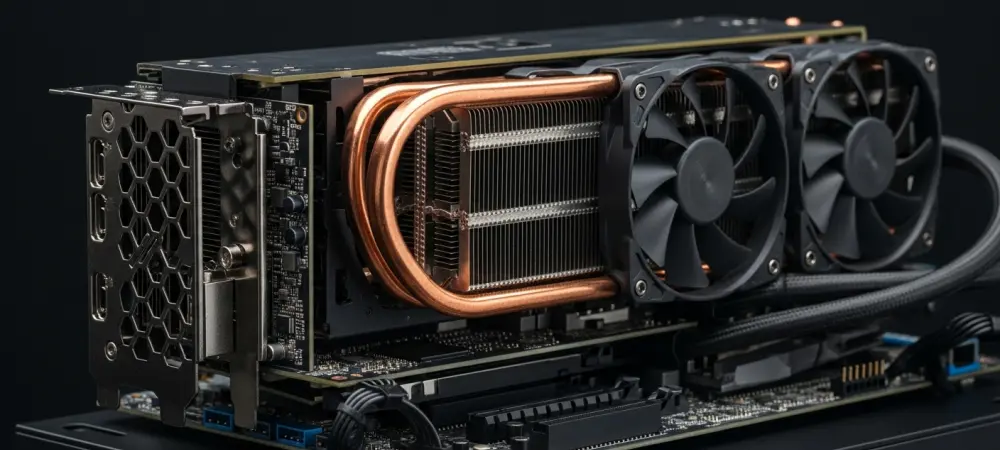
The sheer scale of contemporary graphics processing units has transformed these essential components into massive pieces of industrial-grade hardware that often exceed the structural limitations of the very systems designed to house them. This phenomenon, which enthusiasts frequently refer to as GPU sag, occurs when the substantial weight of a high-end card overcomes the support provided by the motherboard and the computer chassis, causing the far edge of the card to droop. While many users initially dismissed this downward tilt as a minor cosmetic annoyance that only affected the aesthetics of a custom build, it has since evolved into a critical mechanical failure point for sophisticated computing systems. The problem arises from a fundamental physical imbalance where a heavy, elongated component is secured at only one end, creating a lever effect that pulls the unsupported side toward the floor. This constant gravitational pull exerts significant torque on the PCIe slot and the internal circuit board, turning a visual quirk into a significant mechanical risk for high-end gaming and workstation setups.
The Growing Physical Burden of High-Performance Hardware
Graphics cards have undergone a massive physical transformation in recent years, largely driven by the increasing thermal demands of high-performance silicon architectures that require expansive cooling solutions. As manufacturers push for higher clock speeds and more power-hungry cores, the size of the accompanying heatsinks and multi-fan arrays has ballooned to unprecedented proportions. Today, flagship graphics cards can weigh nearly seven pounds, a mass that far exceeds the original design specifications of the PCIe slot standard. The majority of this weight is concentrated in the cooling apparatus rather than the circuit board itself, effectively turning a sensitive electronic component into a heavy cantilevered beam. Without adequate structural reinforcement, the sheer density of these copper and aluminum fins forces the entire assembly to flex under its own weight. This shift in physical dimensions has created a mismatch between the hardware’s mass and the mounting mechanisms intended to keep it level.
Even though manufacturers have attempted to mitigate this issue by incorporating thick metal backplates, these integrated solutions often prove insufficient against the immense mass of modern cooling assemblies. These backplates are intended to add rigidity, yet the physics of a heavy object protruding into open space ensures that some degree of flexing is almost inevitable over a long period. Even the most robust motherboards, featuring reinforced PCIe slots and additional solder points, struggle to counteract the constant torque applied by a three-slot or four-slot graphics card. As structural stress accumulates, the bond between the motherboard and the chassis can also suffer, leading to a gradual misalignment that compromises the entire system’s integrity. The disparity between the hardware’s weight and its mounting points ensures that gravity remains a persistent threat to internal components. This mechanical evolution necessitates a change in how builders approach system assembly and long-term maintenance in high-end configurations.
Internal Damage and Electrical Instability Risks
The consequences of prolonged GPU sag extend far beyond visual imperfection, often manifesting as severe electrical and thermal problems that can permanently disable a high-end system. When a graphics card droops, it places uneven pressure on the gold-plated pins within the PCIe slot, which can lead to poor contact and increased electrical resistance over time. This resistance generates localized heat that may eventually damage the motherboard’s traces or the card’s own connector pins, leading to intermittent system crashes or total hardware failure. Furthermore, the physical flexing of the board can pull the cooling heatsink slightly away from the GPU core or memory modules, creating microscopic gaps in the thermal interface. Once the thermal contact is compromised, internal temperatures can skyrocket, forcing the card to engage in aggressive thermal throttling to prevent immediate destruction. This degradation of cooling efficiency often happens gradually, making it difficult for the user to detect until the performance drops. The most alarming risk associated with excessive sagging is the potential for physical fractures to develop within the multi-layered printed circuit board itself. Modern PCBs are complex sandwiches of fiberglass and copper traces that are not designed to withstand constant bending or torsional stress. When the board flexes past its tolerance, these microscopic copper pathways can snap, resulting in a dead card that is often impossible to repair through standard means. Recent diagnostic data has highlighted a growing number of cases where flagship cards suffered internal fractures near the PCIe locking tab, a high-stress area where the leverage is most intense. These fractures are often invisible to the naked eye but can cause permanent data corruption or power delivery failures. In some extreme scenarios, structural instability has been linked to short circuits where surface-mounted components become detached or bridge nearby traces. Such failures represent a catastrophic risk to the computer and could even lead to fire hazards in poorly ventilated systems.
Navigating Warranty Policies and Protective Measures
Hardware vendors have adopted increasingly stringent policies regarding damage caused by structural failure, often classifying cracked circuit boards as user negligence rather than a defect in design. This legalistic stance means that most warranty claims for sag-related issues are denied, leaving consumers with no recourse after their expensive hardware fails. Because manufacturers argue that users should provide adequate support for heavy components, the financial burden of a broken card falls squarely on the owner’s shoulders. This shift in accountability has made it essential for PC builders to proactively address the physical stability of their systems from the moment of installation. Relying solely on the screws at the expansion slot is no longer a viable strategy for long-term reliability. As the price of high-end graphics hardware continues to rise, the risk of losing a significant investment to preventable mechanical stress becomes a primary concern for enthusiasts and professional workstation users. To combat these risks effectively, users can implement various structural safeguards such as adjustable support pillars or specialized vertical mounting kits. These accessories are designed to redistribute the weight of the card away from the PCIe slot and toward the floor of the computer case, ensuring the PCB remains perfectly horizontal. Even simple DIY solutions, such as using non-conductive blocks or custom-fitted spacers, can provide the necessary stabilization to prevent irreversible damage. Any graphics card weighing more than three pounds should be considered a candidate for additional reinforcement to maintain its physical integrity. Vertical mounting has also become a popular alternative, as it shifts the gravitational pull to a different axis, although this often requires a high-quality riser cable and a compatible case. Regardless of the chosen method, the goal remains the same: neutralizing the leverage that gravity exerts on the hardware. Taking these precautions is no longer just about maintaining a clean aesthetic.
Proactive Solutions for Future Hardware Longevity
In conclusion, the industry recognized that the escalating weight of graphics hardware demanded more than just passive support systems. Users who integrated dedicated support brackets and monitored their card’s alignment effectively mitigated the hazards of board warping and trace fracturing. Moving forward, builders opted for cases with integrated reinforcement bars and vertical mounting configurations that utilized the chassis frame for structural stability. Engineers also recommended regular inspections of the PCIe slot and the surrounding PCB for any signs of micro-cracking or discoloration. The adoption of these practical safeguards ensured that high-performance systems remained operational and safe from the mechanical stresses of gravity. By treating structural integrity with the same priority as thermal management and power delivery, enthusiasts protected their significant investments from the hidden dangers of physical degradation. This shift toward active mechanical support transformed how modern workstations were constructed.
Building on these insights, the community established new standards for component installation that prioritized physical balance over traditional horizontal mounting. Future considerations involved the integration of load-sensing brackets that alerted users to shifting alignment before mechanical stress reached critical levels. Manufacturers began including high-strength support accessories as standard inclusions in every flagship product box, acknowledging that the hardware could no longer safely support itself. These advancements allowed for the continued growth of cooling solutions without compromising the delicate electronic foundations of the hardware. The move toward modular reinforcement systems provided a clear path for maintaining system health throughout the lifecycle of the component. Ultimately, the industry learned that the longevity of advanced computing depended as much on physical structural integrity as it did on electrical efficiency. These steps ensured that the power of modern GPUs remained accessible without the constant threat of gravity-induced failure.