

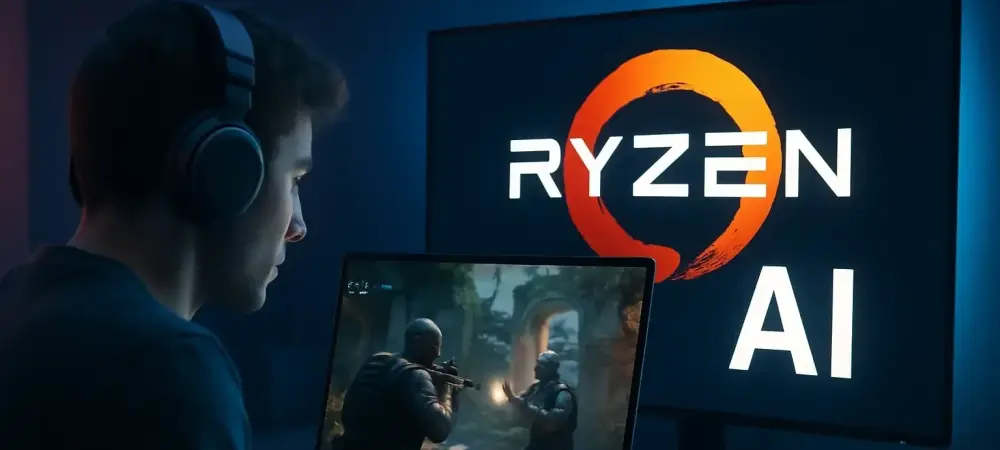
A seismic wave is poised to hit the handheld gaming market with the announcement of GPD’s latest prototype. Not just another device to hold and play, this innovative product is powered by the remarkable Ryzen AI Max+ 395 chip, raising heads and expectations alike. Could this be the handheld gadget that forever alters the landscape of portable gaming?
Why This Gaming Handheld Prototype Matters
The gaming industry has witnessed a growing appetite for high-performance devices in recent years. With advances in technology, consumers’ expectations have escalated, pushing the envelope toward more immersive and visually stunning gaming experiences. Traditional handhelds often struggle to balance performance with portability, leaving a gap for a device that can offer uncompromising computing power in compact hardware. GPD’s latest prototype aims to fill this void, presenting a compelling argument for the future of handheld gaming technology.
Inside the Prototype: Cutting-Edge Features
The heart of GPD’s prototype is the cutting-edge Ryzen AI Max+ 395 chip, featuring 16 cores and Radeon 8060S graphics. These specifications allow the device to achieve impressive Time Spy scores of 10,366 in graphics, ensuring it stands above its contemporaries. The result? Modern games that can run at high to ultra-high settings, delivering 1080p visuals at a consistent 60+ frames per second. Such performance is a testament to how this technological marvel could set a benchmark for other manufacturers to aim for.
Perspectives from the Industry
Experts have weighed in on the potential of GPD’s novel iteration, with analysts predicting a significant shift in consumer preferences toward devices that marry robust performance with accessible design. Insights from testers reveal that the prototype’s smooth operation wowed gamers accustomed to the current limitations of handheld options. Tech specialists echo this sentiment, emphasizing the rapid pace of advancement in both hardware capabilities and consumer demands, suggesting a broader trend in gaming where traditional challenges may soon become a relic of the past.
Economic Hurdles and Solutions
Despite its dazzling specifications, the path toward mass-producing this handheld remains fraught with economic challenges. With a potential production cost exceeding $2,000, the price tag is steep for widespread adoption. Manufacturers must explore strategies for reducing these costs, such as utilizing economies of scale or revisiting supply chain efficiencies. Taking a cue from other industries facing similar hurdles, the gaming sector may need to lean heavily on innovative problem-solving to deliver cutting-edge technology at an attractive price point.
Navigating the Handheld Gaming Frontier
As the gaming world moves forward, the interaction between technological innovation and economic viability is more critical than ever. GPD’s unveiling of this powerful prototype ignited discussions about the possibilities and future trajectories of gaming devices. While challenges in costs and mass production were significant, solutions were pivotal to unleashing the potential of more advanced processors in handhelds. A new era in gaming technology beckons, led by pioneers ready to surmount contemporary challenges and redefine the boundaries of what’s possible in gaming.