

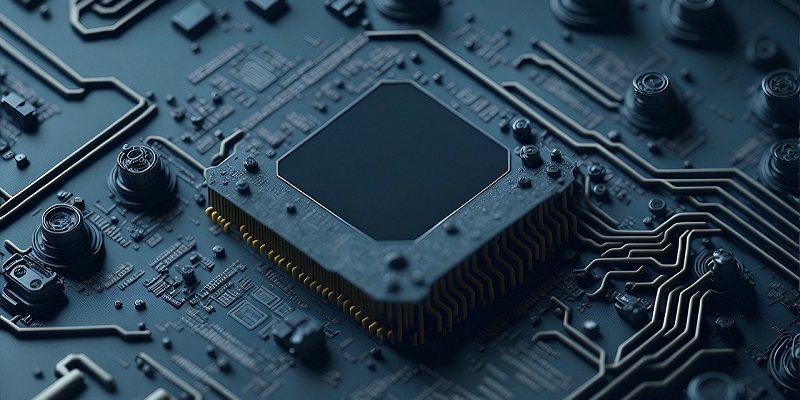
Google has recently made waves in the tech industry with its unveiling of a groundbreaking AI chip and enhanced tools aimed at enterprises. This move puts the company in direct competition with Microsoft as they solidify their position as a leader in the artificial intelligence space. The major announcement was made during the prestigious Google Next Conference 2023, held in San Francisco, where industry professionals and enthusiasts gathered to witness the latest advancements in technology.
Tensor Processing Unit (TPU)
Google’s commitment to advancing AI technology is evident in the preparation for the launch of the Tensor Processing Unit v5e (TPU v5e). This cutting-edge AI chip is designed specifically to handle the output generated through machine learning models and efficiently train large models. Compared to its predecessor, TPU v4, released in 2021, TPU v5e boasts twice the speed, enhancing the overall performance and capabilities of AI systems.
A3 Virtual Machines
In addition to unveiling the TPU v5e, Google also announced the introduction of A3 virtual machines. These virtual machines will be available in the market starting next month and feature the next-generation Nvidia H100 GPUs. The A3 machines provide enterprises with powerful computing capabilities, enabling them to process large amounts of data and carry out sophisticated AI applications with ease. Notably, Antropohic, a startup company, has already shown early adoption of TPU v5e and A3 virtual machines, showcasing the trust and potential of these technologies.
Unveiling New Tools
At the Google Next Conference, the company’s focus on innovation was further highlighted with the introduction of a revolutionary tool. This tool allows for easy watermarking of content and has the ability to detect AI-generated images. This development showcases Google’s dedication to combating deepfake technology and ensuring the authenticity of digital media. With this new tool, enterprises can safeguard their content and protect against misinformation and manipulation.
The Race for AI Integration
In today’s rapidly evolving technological landscape, many large corporations are vying to integrate artificial intelligence into every conceivable field. The aim is to enhance production, efficiency, and decision-making processes. Google’s advancements in AI technology further fuel this race for integration. With their state-of-the-art AI chip and augmented tools, the company is poised to empower enterprises across various industries to tap into the transformative power of AI.
Google’s recent unveiling of the AI chip TPU v5e, A3 virtual machines, and innovative tools during the Google Next Conference 2023 signal a new era in the AI industry. The company’s strategic moves not only position it as a pioneer in the field but also put it in direct competition with major players like Microsoft. Through continuous innovation and dedication to meeting market demands, Google is driving the adoption of AI technology, propelling enterprises towards a future fueled by data-driven insights and automation. As technology continues to advance, the race for AI integration intensifies, and Google remains at the forefront, empowering businesses to embrace the transformative potential of artificial intelligence.