

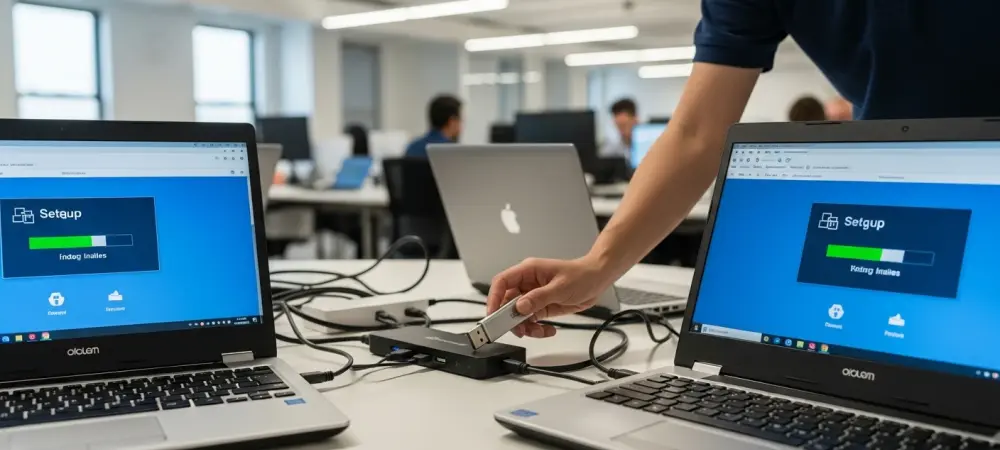
As Windows 10 support fades and procurement budgets strain, a $3 USB stick and a free operating system are suddenly moving the needle on refresh strategy for households, schools, and cost-conscious businesses worldwide. Google’s push behind ChromeOS Flex, paired with Back Market’s low-cost reusable installer, reframes aging PCs as secure, fast cloud endpoints rather than liabilities awaiting disposal.
This market analysis examines why the offer resonates now, how demand could scale as paid Extended Security Updates expire in October, and where the economics, security posture, and user experience align—or clash—with entrenched Windows workflows. It also maps likely winners, pressure points, and the near-term outlook for endpoint strategy as cloud-first models consolidate power.
Demand Shock: Windows 10 Sunset Rewrites Refresh Plans
Microsoft’s hardware bar for Windows 11, including TPM 2.0, left a tranche of capable Windows 10 devices without a sanctioned upgrade path. For owners of those systems, choices narrowed to running insecurely, paying for a brief ESU runway, or buying new hardware—each option imposing cost, risk, or both. The resulting refresh dilemma created a window for substitutes that keep devices productive without steep capital outlays. ChromeOS Flex addresses that wedge. It is free, subscriptionless, and designed to be approachable, with guides aimed at nontechnical users. Back Market’s roughly $3 reusable USB makes the migration tangible and low friction, even if supply is currently constrained; self-installation remains viable, and restock alerts preserve momentum. The pitch aligns with growing pressure to reduce e-waste and extend device lifecycles, themes that now carry board-level weight.
Market Anatomy: From Stalled Upgrades to Cloud-First Thinking
Usage data signaled an ongoing pivot. Windows 10’s share slid from roughly 53% a year earlier to just over 29% in April, suggesting many endpoints already shifted—yet a significant cohort remained marooned by Windows 11 requirements. For these users, Flex offers modern protections, verified updates, and rapid boot on hardware that felt sluggish under legacy loads.
The value is not purely technical. Organizations weary of patch cycles and malware cleanup see simplified administration and a smaller attack surface as a budget lever. In education and frontline roles, standardized web-first workflows reduce training time and variance. The result is a pragmatic bridge: retain sunk hardware costs while adopting a cloud security model built around sandboxing and automatic updates.
Competitive Dynamics: Economics, Experience, and the Gaps
On cost, Flex sets a floor hard to beat. There is no OS license, the USB is negligible, and repurposed PCs avoid depreciation hits from rushed replacements. When compared with ESU payments followed by eventual refresh, the payback period compresses to weeks, not quarters, assuming workloads fit a browser-centric pattern.
Experience, however, hinges on software fit. Native Windows apps, complex drivers, and specialized peripherals may not translate neatly. Workarounds exist—progressive web apps, Android apps, virtualization, or remote desktops—but each adds complexity or recurring expense. For IT, Chrome Enterprise Upgrade unlocks centralized controls and policy enforcement, which strengthens governance but introduces new line items in budgets.
Adoption Pathways: Where Uptake Accelerates
Regions with strong broadband, high PWA penetration, and reliance on Google Workspace or Microsoft 365 are primed for faster conversion. In these markets, Flex can feel like a performance upgrade on older machines, particularly for browsing, email, collaboration, and video meetings. The combination of security-by-default and low overhead turns Flex endpoints into reliable fleet fillers.
In bandwidth-constrained areas, adoption may proceed in phases. Offline editing, file sync, and smarter caching mitigate some friction, yet expectations for local executables persist. Training and change management typically determine the slope: teams that embrace cloud storage, identity-based access, and browser-first habits adapt quickly; those tied to legacy file paths and macros encounter a longer runway.
Forecast and Scenarios: Traction Beyond the Stopgap
As ESU sunsets this October, a replacement wave accelerates decisions. Base-case models point to rising Flex trials within mixed fleets, with stickiness driven by lower help desk tickets, faster onboarding, and fewer security incidents. Upside scenarios ride improvements in PWA capability, better Android app performance, and tighter virtual desktop integration, which collectively reduce Windows-only dependencies.
Supply hiccups around the Back Market USB are unlikely to cap long-term growth. DIY installers, community guides, and channel-led refurb programs broaden access. Over time, expect enterprises to formalize reuse streams: certify device tiers for Flex, assign them to web-first workers, and harvest cost savings while meeting sustainability targets and right-to-repair expectations.
Risk Vectors: Constraints, Misconceptions, and Mitigation
The largest headwind remains legacy application gravity. Manufacturing HMIs, thick finance clients, and niche scientific tools still anchor to Windows. Here, the path forward involves segmentation—reserve Windows hardware for true edge cases, while moving the rest of the fleet to Flex. Security teams also scrutinize identity, insisting on strong sign-in protections and zero trust policies to safeguard cloud access. Misconceptions linger, notably that ChromeOS cannot function offline or that it is only for students. Modern capabilities undermine both claims, but perception gaps slow decisions. Clear pilots, workload mapping, and training plans typically resolve objections, while metrics—boot time, patch compliance, ticket volume—help convert skeptics to sponsors.
Strategic Takeaways: Turning Exit Risk Into Advantage
The analysis pointed to a practical playbook: map critical apps, pilot a small cohort, enforce strong identity, and scale to roles where web workloads dominate. Organizations that codified reuse paths captured savings while lowering risk and e-waste, and households extended device life without costly upgrades. With cloud-first tooling improving and management options broadening, ChromeOS Flex served as a durable tier inside hybrid fleets rather than a mere stopgap.