

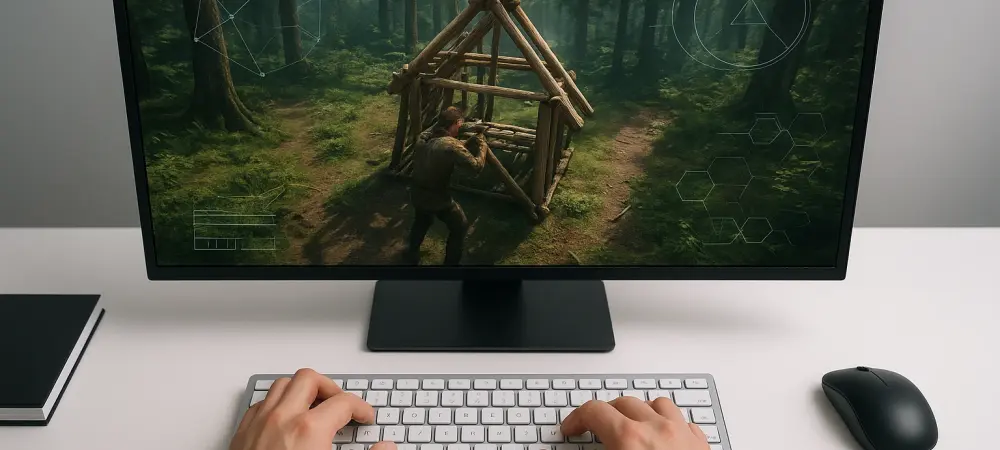
Digital landscapes that once served as mere backdrops for leisure have transformed into the most sophisticated training grounds for the next generation of artificial intelligence, allowing researchers to observe behavior in ways that physical laboratories cannot replicate. For over fifteen years, the researchers at Google DeepMind have leveraged the structured complexity of video games to solve some of the most daunting challenges in computer science. This journey has moved away from the narrow pursuit of high scores and toward the development of generalist agents that can understand, navigate, and exist within multifaceted 3D worlds. By treating games as high-fidelity simulators for human experience, the organization is bridging the gap between algorithmic logic and the unpredictable nature of reality.
The current strategy focuses on creating agents that do not just play a game but inhabit it. While the AI of the past was often a “black box” that optimized for a single metric, today’s research prioritizes agents that can follow natural language instructions and interact with humans as cooperative partners. This shift is essential for moving AI out of the server room and into the real world, where the ability to interpret intent and context is far more valuable than the ability to calculate a million moves per second. As these agents become more sophisticated, the boundary between digital play and scientific discovery continues to blur.
Beyond High Scores: The Shift From Mastering Rules to Understanding Worlds
The era of AI being confined to static datasets and predictable algorithms is fading, replaced by agents that can navigate the chaotic and creative landscapes of modern gaming. While most see video games as a form of digital escapism, Google DeepMind views them as high-fidelity simulators for the human experience. The challenge has evolved; it is no longer enough for an AI to simply win. The new frontier is about an agent’s ability to inhabit a world, interact with its inhabitants, and understand the “why” behind its actions rather than just the “how” of its victory. This transition requires a fundamental rethink of how intelligence is measured, moving from quantitative metrics like scoreboards to qualitative assessments of how well an agent can navigate social and physical nuances.
The shift toward understanding worlds means that researchers are now prioritizing flexibility over raw performance. A specialized bot might be able to defeat a world champion in a specific title, but that same bot is often useless when faced with the slightest change in environment or rules. By focusing on generalist capabilities, DeepMind is building systems that can learn the underlying logic of a 3D space, such as gravity, resource management, and the behavior of other players. This approach ensures that the AI is not just memorizing a sequence of button presses but is developing a world model that can be applied across different scenarios, reflecting the way humans learn to navigate new experiences through intuition and analogy.
Why Virtual Playgrounds Are the Ultimate Laboratory for Intelligence
Video games provide a unique bridge between the rigid logic of traditional computer science and the messy unpredictability of the physical world. They serve as a safe sandbox for high-stakes learning, where AI can fail, iterate, and experiment millions of times in complex 3D environments without real-world consequences. If a robot in a physical factory makes a mistake, it could cause thousands of dollars in damage or risk human safety; in a survival game like Valheim, a mistake simply results in a respawn. This allows for a massive acceleration in the pace of learning, as agents can undergo centuries of training in a matter of weeks through parallel processing in the cloud.
Moreover, these virtual playgrounds act as a bridge to generalization because they require a combination of visual perception, long-term planning, and real-time decision-making. These are precisely the skills that are directly transferable to robotics and scientific research. Modern games are no longer simple 2D puzzles; they are sprawling ecosystems with complex physics and persistent rules. Navigating a dense forest or managing a complex inventory requires the same type of spatial reasoning used by a delivery drone or a laboratory assistant. Furthermore, massive multiplayer worlds simulate market dynamics, diplomacy, and cooperation, providing a blueprint for AI that can eventually navigate the intricate layers of human society and economic systems.
From Atari Pixels to the Nobel Prize: A 15-Year Evolution
Google DeepMind’s journey through gaming history has consistently pushed the boundaries of what neural networks can achieve across different dimensions of complexity. The foundation of deep reinforcement learning was laid with Atari in 2015, where the Deep Q-Network (DQN) proved that an AI could learn to play dozens of different games using nothing but raw pixel data. This was the first time a single system demonstrated generalist tendencies, mastering games like Pong and Space Invaders without being programmed with the rules. It showed that machines could perceive a screen and derive meaning from movement, a breakthrough that catalyzed the entire field of modern AI research.
The focus then moved from 2D pixels to the infinite branching factors found in abstract strategy. With AlphaGo and its successor AlphaZero, researchers showed that AI could surpass human intuition through self-play and pure reinforcement learning. By defeating world champions and discovering “Move 37″—a play so alien it rewrote centuries of Go theory—DeepMind demonstrated that AI could find creative solutions that humans had overlooked for millennia. This strategic mastery was later applied to the “fog of war” and real-time demands of StarCraft II. The resulting AlphaStar system reached Grandmaster status, proving AI could handle imperfect information and long-term planning over extended periods.
These spatial and strategic reasoning principles eventually led to the most significant scientific application of gaming research to date. The same architectural concepts used to navigate 3D game worlds were applied to biology, leading to AlphaFold’s solution to the 50-year-old protein-folding problem. This achievement, which earned the 2024 Nobel Prize in Chemistry, proved that gaming is not just about play; it is a serious engine for solving world-changing scientific mysteries. By 2026, the lineage of these systems has matured into agents that do not just solve puzzles but assist in the very fabric of scientific discovery and industrial optimization.
The SIMA Project: Building AI That Plays Like a Human
The current focus has shifted from specialized “superhuman” performance to the development of SIMA, the Scalable Instructable Multiworld Agent. Unlike previous iterations that relied on game-specific code, SIMA interacts with games exactly like a person, using only screen pixels and keyboard or mouse inputs. This visual-only interaction is a critical milestone because it means the agent requires no backend access to a game’s source code, allowing it to be dropped into almost any digital environment. This independence from internal data structures mimics the way a human enters a new game world, relying on sight and logic to figure out the rules of engagement.
Using Gemini frontier models, SIMA can follow complex natural language instructions, marking a move toward the generalist companion. Instead of simply playing to win a match, SIMA can be told to “build a shelter” or “find resources” across vastly different titles like No Man’s Sky and Hydroneer. This ability to reason in real-time and translate a verbal command into a series of motor actions represents the peak of modern instructable AI. The goal is no longer to create a competitor that defeats humans, but a cooperative partner that understands the logic of diverse 3D environments. This ensures that the AI becomes a tool for empowerment, assisting users in digital tasks and reducing the friction of learning complex new systems.
Scaling Intelligence in the Living Universe of EVE Online
The partnership with Fenris Creations to utilize the EVE Online universe represents the most ambitious attempt to train AI in a persistent, player-driven society. EVE is not just a game; it is a living ecosystem with its own economy, political alliances, and social history spanning over two decades. For DeepMind, this represents the ultimate laboratory for studying four critical research pillars: continual learning, long-term memory, strategic planning, and multi-agent dynamics. In an environment where a single decision can affect thousands of other players and carry consequences that last for months, AI must learn a level of responsibility and foresight that is impossible to teach in shorter, isolated simulations.
The collaboration uses a tiered approach to tactical and strategic learning by utilizing different facets of the EVE universe. While EVE Online provides a high-level economic and diplomatic simulation, EVE Vanguard allows for the study of tactical first-person combat and immediate decision-making. Finally, EVE Frontier offers a programmable, open-ended environment where agents must adapt to changing physical and mechanical rules. By studying intelligence at every level of abstraction—from “twitch” reflexes in a firefight to the galactic governance of a space empire—researchers are building a comprehensive model of how an agent can navigate a truly persistent and evolving reality.
Strategies for Integrating Generalist Agents Into the Real World
The methodologies developed in gaming were structured into frameworks that had immediate practical applications for developers and users alike. Generalist agents like SIMA were utilized to revolutionize quality assurance by stress-testing games in ways that traditional scripted bots could not. These agents adapted to daily code changes more efficiently, identifying bugs and balance issues by exploring the game world with human-like curiosity. This reduced the manual labor required for testing, allowing human developers to focus on the creative aspects of game design while the AI handled the repetitive task of ensuring stability across millions of possible player interactions.
To protect existing digital communities, researchers implemented staged ethical rollouts that ensured a symbiotic integration of AI. Agents were first matured in “offline” sandboxes where they could interact with the game mechanics without disrupting the live player population. Once the technology was deemed safe and helpful, it was introduced through systems like “Aura Guidance” in EVE, which helped new players navigate complex mechanics using natural language. This approach proved that AI could be a catalyst for accessibility rather than a replacement for human agency. The project team concluded that the most effective way to progress was to treat every digital interaction as a stepping stone toward physical autonomy. Scientists determined that the next phase of development involved incorporating more sensory data to bridge the gap between digital and physical worlds. The insights gained from virtual star systems eventually provided the necessary blueprints for the next generation of autonomous robotics and cooperative human-AI systems.