

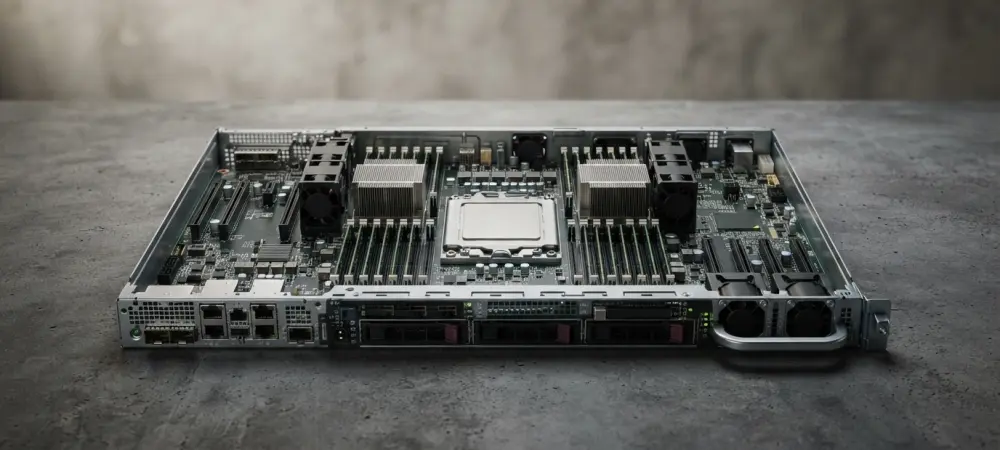
The security landscape for high-performance cloud computing shifted significantly following the disclosure of critical vulnerabilities in fifth-generation AMD EPYC processors, known as Turin. Google Cloud issued a formal warning indicating that specific virtual machine instances, including the C4D, N4D, H4D, Z4D, and G4 series, are susceptible to data leakage due to complex hardware-level flaws. These vulnerabilities reside within the Zen 5 core, potentially allowing malicious actors to bypass isolation boundaries that keep distinct processes secure. While Google has implemented broad mitigations to protect against inter-VM attacks, the internal security of a single virtual machine remains at risk if guest operating systems are not properly updated. This situation highlights a persistent challenge in modern silicon design where speculative execution features inadvertently create side channels that can be exploited by local attacks. Continuous monitoring of hardware security is vital for all enterprise environments.
1. Nature of the Attacks
The technical underpinnings of these vulnerabilities involve what researchers term Transient Scheduler Attacks, which exploit the way processors manage upcoming tasks and execution pipelines. Two specific variants, TSA-SQ and TSA-L1, were identified in earlier iterations of EPYC processors during the mid-2025 cycle, but analysis revealed that the Zen 5 architecture is impacted in a distinct manner. Unlike previous chips where these flaws were well-understood, the Turin series presents a unique set of behaviors that necessitated a reevaluation of existing defensive measures. AMD has acknowledged that these local attacks carry high complexity, meaning an adversary would require significant skill and the ability to execute code directly on the target system to succeed. Despite this complexity, the potential for an attacker to infer sensitive information from other processes on the same core represents a medium-risk scenario that demands immediate administrative attention across all cloud infrastructures.
Adding to the urgency is the discovery of a third, previously undocumented flaw identified as CVE-2026-0004, which experts have categorized as the TSA-Fill variant. This particular vulnerability allows for the inference of data specifically within the processor’s L1 data cache, posing a threat to the confidentiality of information being processed by the kernel or applications. The Xen Project, which monitors hypervisor security, corrected earlier statements that suggested Zen 5 chips were immune to such issues, confirming that the architecture is indeed vulnerable. At this stage, none of these flaws have appeared in the Known Exploited Vulnerabilities catalog maintained by federal agencies, nor have there been documented instances of these exploits being utilized in the wild. However, the lack of active exploitation does not diminish the necessity for rapid patching, as the technical documentation for these side channels is now becoming available to the global security community.
2. Remediation and Strategy
For organizations utilizing Google Cloud instances powered by Turin hardware, remediation involves more than standard software update cycles. Administrators must ensure that guest operating system vendors have released kernel patches that recognize updated CPU reporting information provided by the hypervisor. Once the guest kernel is patched, Google emphasized that a software reboot is insufficient to activate hardware-level mitigations. Instead, a full “stop and start” sequence must be performed on the instance to ensure virtualized CPU features are correctly reinitialized with the latest security parameters. This requirement applies across a broad range of services, including standard virtual machines and bare-metal instances where users manage their own hypervisors. For Google Kubernetes Engine environments, the rollout of updated node images will eventually automate this transition once they become available. Monitoring these tasks is required to ensure no machines remain vulnerable.
In the wake of these findings, security teams adopted a proactive posture by auditing their current silicon inventory to identify any Turin-based workloads that required immediate isolation or patching. The most effective strategy involved a phased rollout of kernel updates followed by the mandatory cold boot of instances, ensuring every layer of the compute stack recognized the newly introduced microcode signatures. Administrators also monitored performance metrics, as the implementation of these mitigations often introduced slight overheads that impacted latency-sensitive applications. Looking ahead, organizations established more robust vendor communication channels to receive early notifications regarding hardware vulnerabilities, preparing for unique “stop-start” requirements. By integrating these hardware-aware security protocols into operational playbooks, businesses successfully minimized their window of exposure. These actions ensured that performance benefits were balanced against the critical need for data confidentiality.