

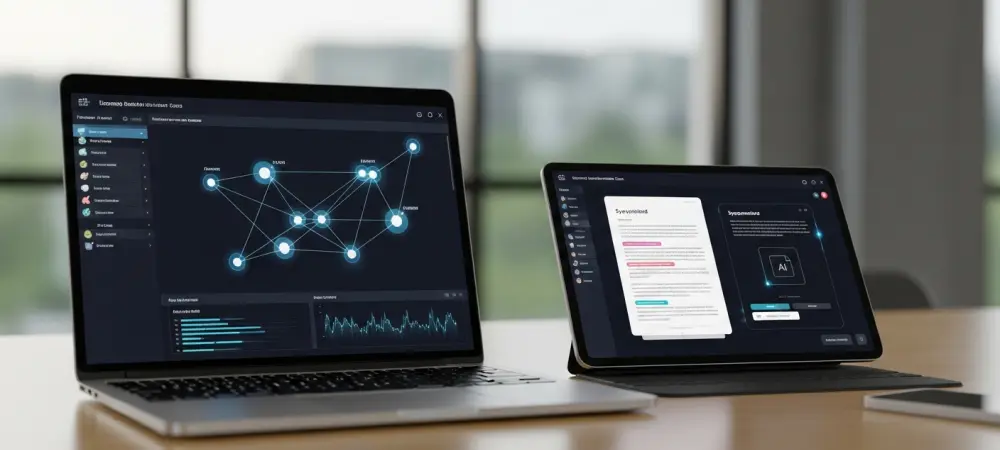
The rapid transformation of artificial intelligence from a specialized novelty into a structural necessity for global productivity reached a definitive milestone with the deployment of the Google AI Pro ecosystem. This advanced suite represents more than a mere incremental update to existing large language models; it signifies a fundamental shift in how digital tools interpret and execute human intent across a unified digital environment. By moving beyond the limitations of isolated chat interfaces, this technology has matured into a sophisticated assistant capable of cross-platform reasoning and deep technical integration. This review explores the technical architecture and the practical implications of a system that attempts to bridge the gap between creative inspiration and professional execution within a single subscription framework.
Understanding the Google AI Pro Ecosystem
The emergence of this ecosystem marks a pivot from general-purpose artificial intelligence toward a highly specialized and interconnected workflow assistant. At its core, the technology operates on the principle of semantic continuity, ensuring that information processed in one application remains contextually relevant as the user moves through different stages of a project. This evolution was driven by the recognition that standalone models often suffer from a fragmentation of data, requiring users to manually transfer information between tools. By consolidating these capabilities into a single environment, the system creates a cohesive digital logic where the AI functions as an underlying operating layer rather than just an external feature.
This transition is particularly relevant in the broader technological landscape, where competition has moved from raw parameter counts to the depth of ecosystem integration. While earlier iterations of artificial intelligence focused on the novelty of text generation, the current model emphasizes utility and reliability within the existing tools that professionals already use daily. The move to a subscription-based model reflects this shift, positioning the service as a essential utility similar to high-speed internet or cloud storage. This framework allows for continuous updates and the deployment of more resource-intensive computational models that would be impossible to maintain through a traditional one-time purchase or ad-supported model.
Core Functionalities and Technical Integration
Gemini: The Central Multimodal Engine
The central multimodal engine serves as the sophisticated heart of the system, designed to process and synthesize information across diverse formats including text, code, images, and audio. Unlike traditional models that might use separate plugins for different tasks, this engine was built from the ground up to understand the relationships between different data types simultaneously. This means a user can provide a video file and ask for a written summary or a code explanation of a visual process without switching between disparate tools. This native multimodality reduces the latency and errors that typically occur when translating data between different specialized modules.
Significance in the overall system is found in the engine’s ability to maintain high levels of reasoning during complex tasks. It does not simply predict the next word in a sequence; it evaluates the logical structure of a request to provide responses that are both technically accurate and contextually appropriate. This is especially evident in creative tasks where the AI must balance stylistic requirements with factual constraints. The result is a more intuitive interaction that feels less like programming a machine and more like collaborating with a knowledgeable peer who understands the nuances of the creative process.
Deep Workspace Synchronization
One of the most technically impressive aspects of the platform is its deep synchronization with the broader suite of office applications. In Gmail, the system analyzes long conversation threads to provide concise summaries and draft replies that match the user’s established professional tone. In Google Docs and Sheets, the integration moves beyond simple spellchecking to offer structural suggestions and complex data visualizations based on natural language commands. This level of synchronization relies on a shared context window that allows the AI to reference a user’s specific files and history, provided the appropriate permissions are granted, to deliver highly personalized results.
Technical performance remains robust even when handling large datasets or lengthy documents. The system leverages cloud-based acceleration to perform data analysis that would normally require specialized software or advanced coding knowledge. For instance, a user can ask the AI to identify trends within a massive spreadsheet of sales data and automatically generate a summary report in a separate document. This seamless flow of information between applications minimizes the cognitive load on the user and reduces the mechanical friction associated with multi-stage content creation.
Recent Advancements and Emerging Industry Trends
The industry has seen a significant shift toward consolidated AI subscriptions as users demand more streamlined experiences. Rather than managing multiple specialized tools for image generation, coding assistance, and text editing, the trend favors “super-apps” or integrated platforms that provide a unified point of entry. This consolidation is a response to the growing complexity of the digital workplace, where efficiency is often lost in the transition between different software environments. The focus is no longer on what the AI can do in a vacuum, but how well it can interact with the user’s existing data and daily habits.
Technological innovation has also progressed toward more efficient multimodal processing, allowing for faster response times and higher accuracy in interpreting visual data. Industry behavior suggests that consumers are increasingly looking for primary digital assistants that can manage schedules, draft communications, and perform complex research autonomously. This trajectory indicates that the future of digital assistance lies in the ability of the system to anticipate user needs based on historical patterns and current tasks. As these models become more adept at understanding intent, the barrier between human thought and digital execution continues to dissolve.
Practical Applications Across Diverse Sectors
Real-world deployment of this technology demonstrates its versatility across a wide array of professional and educational fields. Developers are increasingly using the system to assist with complex coding tasks, leveraging its ability to explain legacy code, suggest optimizations, and debug errors in real time. This does not replace the developer but rather acts as a force multiplier, allowing them to focus on high-level architecture while the AI handles the more repetitive aspects of syntax and documentation. Similarly, students and researchers utilize the system to synthesize vast amounts of information, turning a library of PDF files into organized study guides or literature reviews.
In the business sector, the applications extend to marketing and operational efficiency. Business owners deploy the tools to generate tailored marketing content and analyze customer feedback at scale. Unique use cases, such as real-time meeting summaries in video conferencing tools, have transformed the way teams collaborate by ensuring that action items and key decisions are recorded without the need for manual note-taking. Furthermore, the ability to perform complex file analysis directly within cloud storage folders allows organizations to extract valuable insights from years of archived data, turning static files into active business intelligence.
Navigating Security Challenges and Technical Hurdles
Despite the impressive capabilities of the platform, several technical and ethical hurdles remain. Data privacy is the most significant concern for many users, particularly when the AI requires access to sensitive emails and personal documents to function effectively. While the system uses sophisticated encryption and anonymization techniques, the fundamental trade-off between personalization and privacy remains a point of contention. Users must often navigate complex settings to ensure their data is used in a way that aligns with their personal or corporate security policies. Moreover, the necessity of precise prompt engineering poses a challenge for those not accustomed to communicating with machine logic. While the interface is designed to be intuitive, obtaining the most accurate results still requires a level of clarity and detail that can be taxing for the average user. There is also the persistent issue of regulatory obstacles, as different regions implement varying rules regarding data residency and algorithmic transparency. Ongoing development efforts aim to mitigate these limitations by introducing more robust two-factor authentication, improved user interface controls, and clearer explanations of how the AI arrives at specific conclusions.
The Path Forward: Future Developments in Google AI
Looking ahead, the trajectory of this technology points toward a shift from assisted tasks to autonomous execution. Future breakthroughs are likely to involve AI agents that can not only suggest responses or summarize documents but also take action on behalf of the user, such as booking travel, managing project timelines, or coordinating across different organizational departments. This deeper integration will require even more sophisticated reasoning models that can understand the social and professional nuances of human interaction. The long-term impact on global productivity could be profound, as the time spent on administrative overhead is drastically reduced. The evolution of the digital workplace will likely see a move away from static software interfaces toward fluid, conversational environments. In this future, the primary way humans interact with computers may no longer be through mice and keyboards, but through a continuous dialogue with an intelligent system that understands context and history. This evolution will necessitate a new set of digital skills, focusing less on technical execution and more on strategic direction and creative oversight. As the technology becomes more capable, the role of the human professional will increasingly be to provide the vision and ethical framework within which the AI operates.
Final Assessment: A New Standard for Digital Assistance
The review of the Google AI Pro ecosystem revealed a system that successfully moved beyond the experimental phase into a practical, professional-grade toolset. The setup process was found to be remarkably streamlined, allowing users to activate advanced capabilities across their existing accounts with minimal technical friction. The value proposition of the unified toolset was established through its ability to reduce the time spent on mundane tasks while providing high-quality creative and analytical support. It was clear that the integration of the multimodal engine into daily applications provided a level of utility that standalone competitors struggled to match. The transition to this integrated model suggested that the era of fragmented digital tools was coming to an end. Professionals who adopted these systems early gained a significant advantage in managing the increasing volume of information in the modern workplace. Organizations were encouraged to establish clear guidelines for AI usage to maximize the benefits while minimizing security risks. The trajectory of the platform indicated that further advancements would focus on making the AI even more proactive and personalized. Ultimately, the shift toward an ambient, intelligent layer in the workspace represented the next major phase in the evolution of personal computing and professional productivity.