

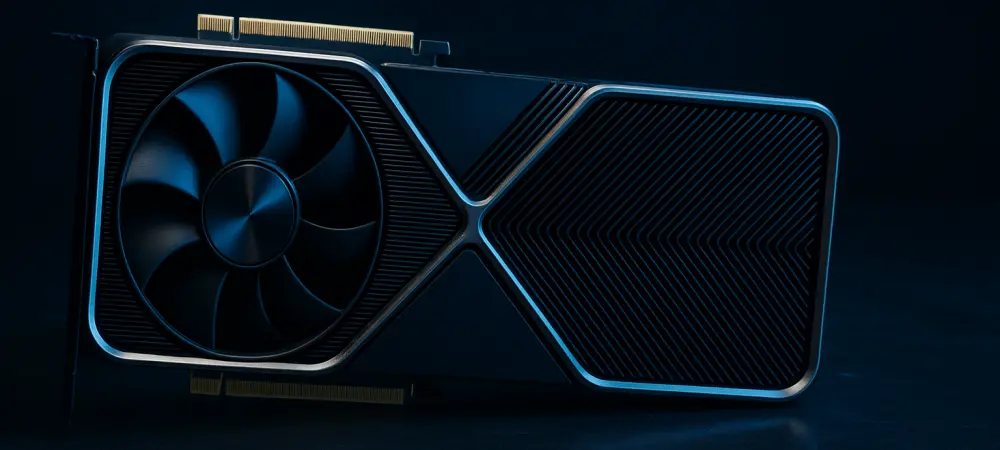
The secondary market for PC hardware has shifted from a buyer’s paradise to a high-stakes environment where six-year-old GPUs command premium prices. In a landscape typically defined by rapid depreciation and the relentless march of technological obsolescence, the Nvidia GeForce RTX 3090 has emerged as a startling anomaly. Originally launched in 2020 for an MSRP of $1,499, this aging powerhouse was widely available for as little as $600 on the secondhand market just a couple of years ago. However, a series of global economic shifts and manufacturing bottlenecks have propelled its value back toward its original launch price. This resurgence is not driven by the typical gaming enthusiasts or cryptocurrency miners who dominated previous cycles, but rather by a professional-grade necessity that has fundamentally altered the valuation of older silicon. As of late 2026, finding an RTX 3090 for under $1,300 has become nearly impossible, marking a historic shift in how consumers view older hardware.
The Mechanics of RAMageddon and Market Shifts
Global Supply Chains and the AI Dominance
The core of this unprecedented market volatility lies in a phenomenon now colloquially known as “RAMageddon.” This crisis is characterized by a massive supply-demand imbalance in the memory sector, where manufacturers are prioritizing high-bandwidth memory (HBM) and specialized GDDR wafers for institutional AI infrastructure over consumer-grade products. Global tech giants have established a virtual monopoly on the output of major fabrication facilities, leaving traditional GPU manufacturers like AMD and Zotac to scavenge for remaining component allocations. This scarcity has trickled down to the retail level, where the production of the newest graphics cards has slowed to a crawl. Because the physical wafers required for high-capacity memory modules are being diverted to massive data centers, the cost of manufacturing new units has skyrocketed. This has effectively created a ceiling for new inventory, forcing those who need significant memory capacity to look backward.
The Secondary Market and Valuation Resilience
Building on this foundation, the scarcity of memory components has directly inflated the pricing of the current generation of hardware. For instance, the new RTX 50-series cards have seen an immediate price hike of roughly 15 to 20 percent compared to initial projections. Flagship models such as the RTX 5090 have become prohibitively expensive for most, while mid-range alternatives like the 5070 Ti remain perpetually out of stock due to the same memory constraints. This unavailability of modern hardware has served as a primary catalyst for the used market’s explosion. Consumers who previously expected to upgrade to the latest architecture are now realizing that the performance-per-dollar ratio of new cards is no longer favorable. Consequently, the pressure on the secondhand market has intensified as buyers compete for a finite supply of older cards that still offer competitive specifications, particularly in terms of memory capacity and bandwidth.
Strategic Value of Large VRAM Buffers
Large Language Models and Local Processing Needs
The valuation of the RTX 3090 serves as the most prominent example of this market resilience. In early 2024, the card could be found for approximately $600 to $800, yet by September 2026, prices have stabilized between $1,287 and $1,450. This represents a staggering recovery of value that defies almost every historical trend in PC hardware. Traditionally, a six-year-old graphics card would be considered an entry-level legacy product, but the 3090 currently commands a premium that rivals the price of new, top-tier components. This price floor is maintained by a specialized demographic of users who prioritize specific technical attributes over raw gaming frames. Unlike the erratic spikes seen during the era of decentralized finance mining, the current demand is anchored in the functional necessity of local processing power. The consistent need for substantial VRAM has effectively insulated the 3090 from the usual price drops associated with the aging of its underlying architecture.
Future Projections and Market Lessons
The unprecedented surge in used hardware prices demonstrated that the traditional lifecycle of PC components was no longer a certainty in a world dominated by AI demand. Owners of high-VRAM legacy hardware discovered a unique opportunity to recoup nearly their entire original investment, a scenario that was previously unheard of in the industry. The industry observed that the most effective strategy for navigating this shortage involved a move toward specialized local optimizations, such as 4-bit quantization, which allowed even older 24GB cards to punch far above their weight class. Retailers and professional outfits shifted their focus toward refurbishment programs, recognizing that the longevity of the RTX 3090 made it a cornerstone of the entry-level AI workstation market. These developments suggested that future buyers prioritized hardware based on memory bandwidth rather than just yearly release cycles. Ultimately, the market acknowledged that the physical limitations of memory production created a new baseline for hardware valuation.