

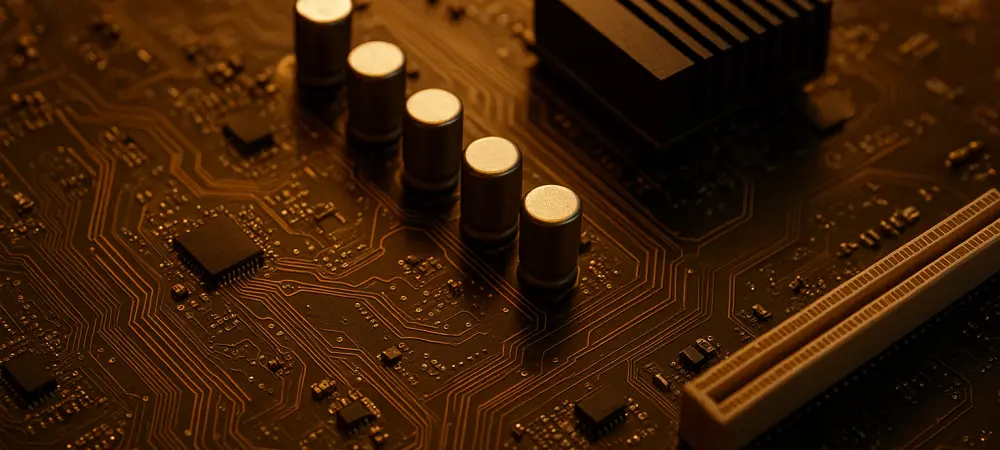
The dual M.2 slot configuration on these boards supports a mix of PCIe Gen4 and Gen3 speeds for versatile high-speed storage arrangements. This capability marks a significant shift in the small-form-factor market, where ERYING is pushing the boundaries of what mobile hardware can achieve when integrated into a robust desktop environment. By utilizing Intel’s 13th-generation HRE processors, specifically the Core i7-13798HRE and Core i5-13598HRE, the manufacturer has developed a solution that targets the bridge between high-performance computing and industrial-grade reliability. These motherboards are designed to meet the rigorous demands of 2026 industrial operations, offering a stable platform for workstation users and automated system builders who require consistent uptime without the footprint of a full ATX tower. This approach leverages the power efficiency inherent in mobile silicon while providing the expansion possibilities usually reserved for larger desktop components, ensuring that space-constrained environments do not sacrifice processing speed for size.
Industrial Grade Silicon: The Core of Thermal Efficiency
The flagship of this new lineup is the Core i7-13798HRE, a processor that features a sophisticated 14-core architecture designed to handle complex multithreaded workloads common in modern industrial automation and data processing. With 6 Performance cores and 8 Efficient cores working in tandem, the chip reaches a peak boost clock of 5.0GHz, ensuring that peak demand scenarios are handled with precision. Similarly, the Core i5-13598HRE variant offers a 12-core configuration with 4 Performance cores and 8 Efficient cores, achieving a respectable 4.8GHz boost frequency. Both chips are engineered with a base thermal design power of 55W, which allows for sustained high-performance output without the excessive heat generation often seen in unlocked desktop processors. This balance between raw throughput and thermal management makes them ideal for enclosed chassis environments where airflow might be limited but computational demands remain high throughout the workday.
A defining characteristic of these motherboards is the inclusion of the HRE series silicon, which is specifically optimized for embedded and industrial applications rather than consumer laptops. These processors are built to withstand more taxing thermal cycles and offer a level of durability required for the continuous operation cycles found in server rooms or factory floors. It is important for potential builders to note that these industrial-grade chips do not feature integrated graphics, representing a significant departure from standard mobile processor expectations. Consequently, the motherboard requires a discrete graphics card to provide any form of video output, a design choice that prioritizes dedicated processing lanes for other critical tasks. This architectural decision reinforces the board’s role as a specialized tool for hardware enthusiasts and system integrators who intend to use high-end external GPUs or specialized expansion cards to fulfill their specific visual or computational needs.
Architectural Versatility: Bridging Mobile and Desktop Standards
Despite its compact physical footprint measuring only 175 by 215 millimeters, the motherboard architecture is remarkably ambitious regarding expansion possibilities for modern hardware. The inclusion of a PCIe Gen5 x8 slot stands as a centerpiece of the design, providing significantly more bandwidth for the latest graphics cards and high-speed data acquisition devices than what is typically found in embedded or MoDT solutions. This forward-looking feature ensures that the system remains relevant for upcoming GPU releases between 2026 and 2028, allowing users to leverage the full potential of high-speed bus interfaces. For memory, the boards utilize two standard DDR4 UDIMM slots in a dual-channel configuration, which offers a cost-effective and reliable way to equip the system with up to 64GB of RAM. By choosing DDR4, ERYING maintains compatibility with a wide range of existing memory modules, providing a stable foundation for industrial applications that value reliability and widespread availability over the more expensive DDR5 alternatives.
The connectivity suite on the rear I/O panel is thoughtfully arranged to support a variety of peripherals and networking requirements essential for industrial workflows. Users will find two 10Gbps USB-A ports for high-speed data transfers, alongside six additional USB ports operating at 480Mbps for legacy devices like keyboards, sensors, or mice. A standard 1GbE LAN port provides reliable wired internet connectivity, while a dedicated internal M.2 slot is specifically reserved for wireless networking modules, allowing for clean integration of Wi-Fi and Bluetooth without using the main storage slots. Storage flexibility is further enhanced by dual SATA ports, which provide support for traditional hard drives or high-capacity SSDs in addition to the primary NVMe slots. This combination of legacy and modern interfaces makes the board highly adaptable for various use cases, from centralized industrial control systems to compact media production workstations that require a mix of fast temporary storage and large-scale long-term archival drives.
Market Position: Strategic Advantages for Industrial Integration
The strategic pricing of these motherboards significantly lowers the barrier to entry for high-performance industrial computing, with the i7 model positioned at approximately $196 and the i5 variant at $168. These prices represent a compelling value proposition in the 2026 hardware market, especially when considering the integrated nature of the CPU and motherboard assembly. This MoDT approach effectively bridges the gap between pre-configured mini-PCs, which often lack expansion slots, and traditional Micro-ATX builds that require significantly more space within a chassis. By repurposing specialized mobile silicon for a desktop framework, ERYING has created a niche that serves developers and engineers who need the flexibility of a customizable PC without the bulk of standard office hardware. This trend towards compact, modular industrial systems reflects a broader industry shift toward maximizing power density, allowing for the deployment of sophisticated computational nodes in locations where space is at a premium but performance cannot be compromised. The deployment of these ERYING motherboards proved that industrial-grade processing could be effectively transitioned into the small-form-factor desktop market with minimal compromises. Organizations that adopted this hardware achieved a significant reduction in their physical footprint while maintaining the high computational throughput required for complex automation tasks. The decision to omit integrated graphics allowed for more focused thermal management, which ultimately extended the operational lifespan of the components in demanding environments. For professionals looking to implement similar systems, it was essential to pair these boards with efficient low-profile cooling solutions and discrete GPUs tailored to their specific workload. Moving forward, the industry should look toward this hybrid MoDT model as a blueprint for balancing high-performance mobile architectures with the robust expansion needs of the modern workstation. Future designs will likely continue this trajectory, further refining the integration of high-bandwidth interfaces into compact boards to support the next generation of industrial data processing.