

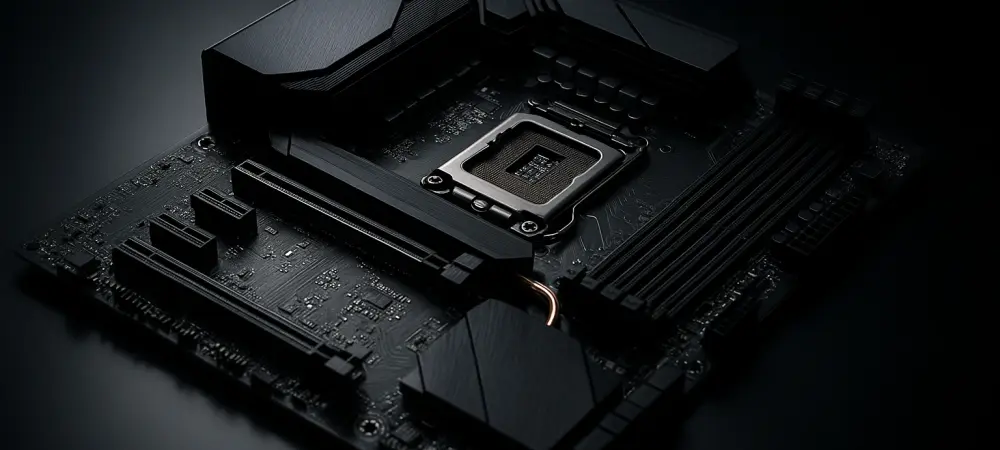
The landscape of high-performance computing has shifted toward platforms that can balance extreme throughput with long-term compatibility, placing the AM5 socket at the center of modern desktop builds. With the mandatory integration of PCIe 5.0 for both graphics cards and M.2 storage, the X870E chipset ensures maximum bandwidth for future hardware upgrades. This motherboard serves as a sophisticated foundation for the latest Ryzen 7000 and 9000 series processors, bridging the gap between high-stakes competitive gaming and intensive productivity tasks. By utilizing the premium X870E chipset, this board distinguishes itself through the mandatory inclusion of cutting-edge standards that mid-range options often overlook. As users demand more from their hardware for 4K video editing and AI-driven workflows, the “Extreme” designation ensures that both graphics cards and storage devices operate at their maximum theoretical bandwidth. This makes the Aorus Pro an ideal candidate for those building a system that remains relevant.
Engineering Excellence: Stability and Power
Part 1: Robust Power Delivery and Clean Voltage
The heart of the motherboard’s performance lies in its 16+2+2 VRM layout, which utilizes 80A Smart Power Stages to deliver exceptionally clean and stable voltage to the CPU. This sophisticated power architecture is essential for maintaining high clock speeds on flagship processors, such as the Ryzen 9 9950X3D, especially during sustained multi-threaded workloads. By distributing the electrical load across multiple phases, the board minimizes heat buildup and prevents the power instability that often plagues lesser hardware during overclocking or heavy rendering sessions. Such a robust configuration ensures that voltage ripple is kept to an absolute minimum, protecting sensitive silicon from the fluctuations that can occur during peak power draws. In a professional environment where downtime is not an option, this level of electrical engineering provides a safety net for complex computational tasks and high-end gaming alike, maintaining peak efficiency without compromising longevity.
Part 2: Thermal Management and System Integrity
Complementing this electrical prowess is a comprehensive thermal management system designed to protect critical components under duress during extended periods of high-load operation. Large, multi-layered heatsinks and strategic airflow optimizations ensure that the voltage regulator modules and high-speed M.2 drives stay within safe operating temperatures regardless of the ambient environment. This focus on thermal integrity allows the system to run demanding software or high-frame-rate games for several hours without the risk of thermal throttling, providing a consistent and reliable user experience. Advanced thermal pads with high conductivity ratings are utilized to bridge the gap between the heat-generating components and the massive aluminum fins, effectively wicking away heat before it can accumulate. Furthermore, the inclusion of multiple fan headers and sensor points allows users to create custom cooling curves that respond dynamically to specific workload temperatures.
High-Speed Memory and Advanced Connectivity
Part 1: Memory Performance and Overclocking Potential
Memory performance is a standout feature, with the board supporting up to 256GB of DDR5 RAM across four DIMM slots, catering to the most memory-intensive modern applications. While it easily handles the 6000 MHz “sweet spot” favored by most gamers, it offers significant headroom for overclocking up to 8200 MT/s via AMD EXPO and Intel XMP profiles. This massive capacity and speed potential make the Aorus Pro a powerhouse for memory-intensive applications like virtualization, 4K video editing, and complex data processing, ensuring the system can grow alongside evolving software requirements. The layout of the memory traces has been optimized to reduce interference and crosstalk, which is vital when pushing high-frequency modules to their limits. This meticulous design allows users to achieve stable overclocks that were previously reserved for specialized benchmarking boards, bringing professional-grade performance to a wider audience of enthusiasts who require high-speed data access.
Part 2: Next-Generation Connectivity and Building Ease
Connectivity is equally impressive, featuring the latest wireless and wired networking standards to eliminate bottlenecks in both local and cloud-based data environments. The integration of WiFi 7 and a 2.5G LAN port provides ultra-low latency and massive throughput for online gaming and local file transfers, which is crucial as file sizes continue to grow. Furthermore, the inclusion of dual 40Gbps USB4 ports and “EZ-Latch” mechanical features simplifies the building process significantly for both veterans and newcomers. These user-friendly additions allow for tool-free installation of components, reflecting a modern shift toward making high-end PC assembly more accessible and less prone to accidental hardware damage. The USB4 ports not only facilitate rapid data transfer but also support DisplayPort Alt Mode, enabling a single-cable solution for high-resolution monitors. This versatility ensures that the motherboard acts as a central hub for a complex peripheral ecosystem, maintaining compatibility with the fastest tech.
Strategic Implementation: System Optimization
Evaluating the current hardware landscape revealed that the X870E Aorus Pro addressed the fundamental needs of a high-performance system by prioritizing bandwidth and stability. Builders who prioritized this platform secured a versatile foundation capable of supporting multiple generations of hardware through the 2026 to 2028 development cycle. To maximize the utility of such a board, users should have verified that their power supply units met the high-current demands of the 80A power stages and selected PCIe 5.0 storage devices to leverage the full 12,000 MB/s speeds. Implementing a structured cooling plan, including high-static pressure fans, became a standard recommendation to keep the VRMs operating at peak efficiency during summer months. Moving forward, the focus shifted toward optimizing BIOS settings for specific AI workloads, as the motherboard’s expanded memory capacity proved vital for localized machine learning tasks. This proactive approach to system building ensured that enthusiasts remained at the forefront.