

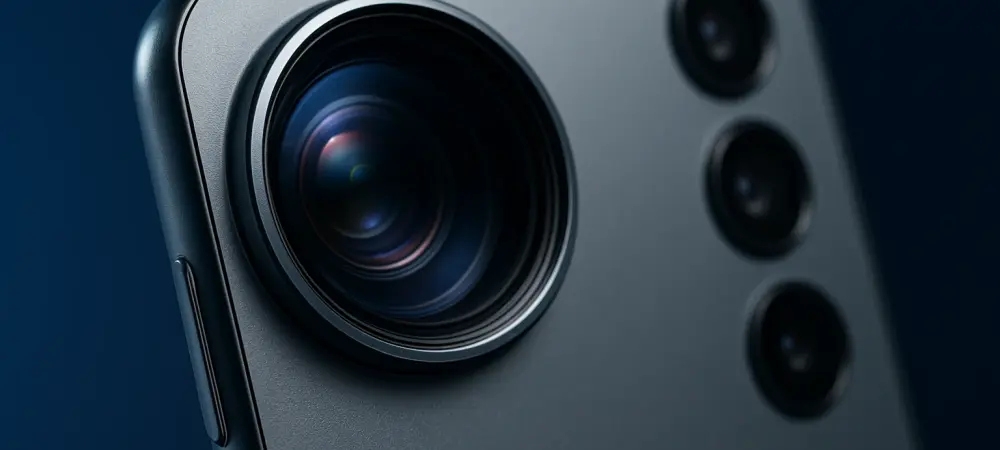
In a mobile photography landscape where bigger is almost always seen as better, Samsung’s rumored strategy for the Galaxy S26 telephoto camera presents a fascinating and potentially counterintuitive pivot toward a software-first future. This review will explore the evolution of Samsung’s telephoto technology, its rumored new key features in the Galaxy S26, potential performance metrics, and the impact this shift could have on user photography. The purpose of this review is to provide a thorough understanding of the rumored changes, their technical implications, and their potential future development.
Setting the Stage a New Direction for Galaxy Zoom
Samsung’s approach to its telephoto cameras has historically created a clear distinction within its flagship series. The Ultra model typically received the most advanced optical zoom hardware, leaving the standard and Plus variants with more modest, yet capable, systems. This hardware differentiation has been a key selling point for the top-tier device for years. The core principle of a telephoto lens in a smartphone is to provide optical magnification, allowing for clearer shots of distant subjects without the quality degradation of digital zoom.
However, the competitive landscape is shifting, with rivals increasingly leveraging software to achieve impressive results. Against this backdrop, rumors point to a significant strategic change for the Galaxy S26 lineup: the unification of the 3x telephoto hardware across all models, from the base S26 to the S26 Ultra. This move suggests Samsung may be re-evaluating its hardware-centric hierarchy, potentially betting that advanced processing can level the playing field and deliver a consistently high-quality experience across its entire flagship range.
Deconstructing the Hardware Changes
The Switch to an in House ISOCELL Sensor
The centerpiece of this rumored shift is the decision to replace the long-serving 12 MP Sony IMX754 sensor with a new, internally developed 12 MP Samsung ISOCELL S5K3LD. This change is significant not just for its technical specifications but for its strategic implications. By moving to an in-house component, Samsung gains greater control over the entire imaging pipeline, from sensor design to software integration, which can lead to more optimized and cohesive performance.
This hardware alignment ensures that for the first time, every device in the Galaxy S26 series will feature the exact same 3x telephoto camera. This decision streamlines the product line and signals a philosophical shift. Instead of differentiating through core optical hardware at this specific zoom range, Samsung appears to be standardizing the foundation and likely plans to distinguish the models through other features or, more crucially, through software-driven capabilities powered by different chipsets.
Analyzing the Smaller Sensor Paradox
Delving into the specifications reveals a curious decision: the new ISOCELL sensor is physically smaller, measuring 1/3.94-inch compared to the 1/3.52-inch Sony sensor it replaces. In photography, a smaller sensor is generally a disadvantage as it captures less light, which can lead to lower image quality, especially in challenging lighting conditions. This apparent downgrade on paper is the central paradox of the S26’s telephoto strategy.
Other reported specifications, such as an f/2.4 aperture and a 10 MP effective sensor crop, provide additional context. The slightly slower aperture further compounds the light-gathering challenge. These hardware choices strongly imply that Samsung is not banking on the sensor’s raw capabilities to deliver improvements. Instead, the company must be supremely confident that its software and processing can more than compensate for the physical limitations of the new component.
The Rise of Computational Photography
The rumored hardware changes for the Galaxy S26 are a clear testament to the industry-wide pivot toward computational photography. For years, the frontier of mobile imaging has been pushed not just by larger sensors and better lenses, but by the sheer processing power of the silicon inside the phone. Advanced algorithms can now stitch multiple frames, reduce noise, and enhance dynamic range in ways that were previously impossible for such small hardware.
This trend is expected to be the driving force behind any advancements in the S26’s telephoto performance. The new Image Signal Processor (ISP) housed within the forthcoming Exynos 2600 chipset is poised to be the star of the show. By offloading the heavy lifting from the sensor to the processor, Samsung can overcome the physical constraints of the smaller sensor, using sophisticated software to clean up images, sharpen details, and produce results that defy the on-paper specifications.
Real World Scenarios and Use Cases
In practical terms, this software-first approach will manifest in everyday photography. For daylight zoom shots, such as capturing architectural details or distant landscapes, the advanced ISP and algorithms will likely work to produce sharp, vibrant images that mask any hardware limitations. The 3x telephoto lens is also crucial for Portrait Mode, where its focal length provides a more flattering perspective. Here, software will be responsible for creating a convincing and artifact-free background blur. The true test, however, will be in mixed or low-light conditions. A concert, a dimly lit restaurant, or an evening cityscape will push the computational systems to their limits. Users may find that while well-lit portraits are excellent, performance in challenging scenarios could reveal the physical constraints of the smaller sensor, potentially introducing more noise or softer details than a larger sensor might. The ultimate user experience will hinge entirely on how effectively Samsung’s software can mitigate these inherent drawbacks.
Challenges and Inherent Limitations
Despite the promise of advanced software, the new telephoto system faces undeniable technical hurdles. The laws of physics dictate that a smaller sensor inherently struggles with noise and dynamic range in low light. While processing can work wonders, it cannot create light that was never captured. Samsung’s engineers face the formidable task of developing algorithms that are not just effective but also produce natural-looking images without the overly processed “computational” look. Beyond the technical challenges, Samsung confronts a significant market perception problem. On a spec sheet, a smaller sensor reads as a downgrade, which can be a difficult narrative to control. The company’s marketing and communication efforts will need to successfully shift the consumer focus from raw hardware specifications to the tangible results delivered by its powerful software. Success depends on proving that the final image quality, not the sensor size, is what truly matters.
Future Outlook for Samsungs Camera Philosophy
This strategic shift with the S26 telephoto camera may signal a new, long-term philosophy for Samsung’s non-Ultra flagships. It suggests a future where hardware innovation on standard models becomes more incremental, while the real advancements are driven by the synergy between in-house sensors and increasingly intelligent processors. We may see a deeper integration of AI, not just for scene optimization but for predictive and generative imaging tasks. This move could set a precedent for the wider smartphone industry, further cementing the idea that the “brain” of the camera—the ISP and its algorithms—is more important than the “eye,” or the sensor itself, at least for certain applications. Whether this marks a permanent departure from purely hardware-driven competition remains to be seen, but it is a clear indication that Samsung is placing a massive bet on the power of its silicon and software to define the future of mobile photography.
Conclusion a Calculated Bet on Software
The rumored changes to the Galaxy S26 telephoto camera represent a bold and calculated wager on the supremacy of software. The move to a unified, in-house, yet physically smaller ISOCELL sensor across the entire lineup is a significant departure from the company’s traditional strategy of hardware-based differentiation. This decision deliberately de-emphasizes raw sensor size, a metric long used as a benchmark for camera quality.
Ultimately, this strategy is less of a hardware compromise and more of a strategic pivot. Samsung is banking on the prowess of the Exynos 2600’s new ISP and its advanced computational algorithms to not only compensate for the smaller sensor’s physical limitations but to exceed the performance of its predecessor. This makes the Galaxy S26’s telephoto system a fascinating case study in the ongoing battle between optical physics and processing power, a battle that will define the next generation of smartphone photography.