

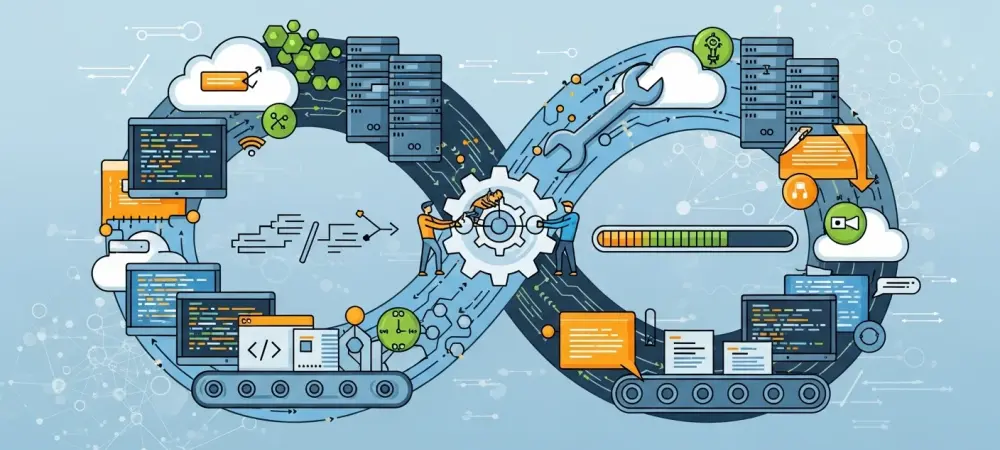
The traditional boundaries separating application logic from infrastructure management have dissolved into a single, cohesive engineering discipline that mandates end-to-end accountability. This evolution reflects a broader transformation in the software engineering sector, where the historic “full-stack” definition—once limited to the mastery of user interfaces and databases—has expanded into a comprehensive full-lifecycle model. In the current technological landscape, a developer is no longer just a builder of features but a steward of the entire “code-to-cloud” journey. This review examines how this convergence is redefining the role of the modern engineer, the tools facilitating this change, and the long-term implications for industry standards.
The Evolution of the Full-Lifecycle Engineering Model
The evolution toward a integrated engineering model was born out of a fundamental necessity to eliminate the friction inherent in traditional software delivery cycles. Historically, the development process was segmented into isolated silos where engineers would write code and then hand it off to a separate operations team for deployment and maintenance. This “throw-it-over-the-wall” culture frequently resulted in extended release timelines and a lack of accountability when production issues arose. As organizations transitioned from monolithic architectures to microservices, the sheer complexity of managing dozens or hundreds of independent services made these old hand-off points unsustainable. The modern full-stack developer has consequently evolved into a full-lifecycle engineer who owns the application from its inception to its final execution in a cloud environment. This shift is not merely a change in job titles but a fundamental realignment of how software is conceptualized. By internalizing operational concerns such as scalability, security, and uptime, developers can make more informed architectural decisions from the outset. This “code-to-cloud” ownership model ensures that the person who understands the logic of the application is also the one responsible for the environment in which it lives, leading to a more resilient and performant final product.
Core Components of the Modern Full-Stack Pipeline
The Shift-Left Methodology and Proactive Testing
The “Shift-Left” paradigm serves as a primary feature of this convergence by fundamentally altering the timeline of quality assurance and security audits. In traditional models, security scanning and performance testing occurred at the end of the development cycle, often leading to costly delays when critical flaws were discovered late. By “shifting left,” these processes are integrated into the earliest stages of development, providing engineers with immediate feedback within their local environments or integrated development environments. This proactive stance significantly improves economic efficiency, as addressing a defect during the coding phase is exponentially cheaper than fixing a failure in a production environment.
Beyond the financial benefits, the integration of security and testing early in the pipeline increases deployment velocity. Automated tools now allow for real-time vulnerability scanning of third-party dependencies and custom logic as the code is being written. This means that by the time a pull request is submitted, much of the quality assurance work has already been completed. This methodology fosters a culture of continuous improvement, where developers are constantly aware of the security implications of their work, resulting in a more robust codebase that is less prone to the “emergency patches” that often plague legacy systems.
Infrastructure as Code (IaC) and Environment Standardization
Infrastructure as Code has revolutionized how engineers interact with hardware resources by allowing them to manage servers, networks, and databases via version-controlled scripts. Tools like Terraform and Pulumi have enabled developers to define their entire cloud environment in a human-readable format that can be tested and reviewed just like application code. This eliminates the risk of configuration drift, a common problem where staging and production environments diverge due to manual changes made through cloud dashboards. By using versioned scripts, teams can ensure that every environment is an identical clone of the verified configuration, which drastically reduces the “it works on my machine” syndrome.
Furthermore, containerization through Docker has provided a standard unit of software that packages code and its dependencies together. This level of standardization allows for “build once, run anywhere” capabilities, ensuring that an application behaves the same way on a developer’s laptop as it does on a massive production cluster. This technical advancement allows developers to manage the entire runtime environment, choosing specific versions of libraries and operating system components that their application requires. Consequently, the operational burden is shifted from the system administrator to the code, allowing the infrastructure to scale elastically in response to demand without manual intervention.
Current Trends and Innovations in Development Workflows
One of the most notable trends in modern workflows is the rise of the “all-in-one” engineering role, which collapses the silos between builders and maintainers. Integrated security scanning and real-time observability have become standard parts of the developer’s toolkit rather than external services managed by a separate department. We are seeing a movement toward a unified engineering experience where the tools for writing, testing, deploying, and monitoring code are all accessible through a single interface. This consolidation reduces the context switching that often slows down development and allows engineers to maintain a better mental model of the entire system.
Moreover, the industry is increasingly focusing on developer experience (DevEx) as a way to manage the rising cognitive load of these expanded responsibilities. Modern platforms are being designed to abstract away the underlying complexity of cloud-native architectures, providing developers with simplified interfaces for complex tasks like service mesh management or secret rotation. This trend acknowledges that while developers are taking on more responsibility, they need highly intuitive tools to avoid burnout and minimize the risk of human error in high-stakes production environments.
Real-World Applications of DevOps-Integrated Development
In industries where rapid deployment and high availability are non-negotiable, such as Fintech and SaaS, the convergence of full-stack development and DevOps is a critical success factor. For instance, high-frequency trading platforms or mobile banking applications require automated CI/CD pipelines to deploy security patches or feature updates multiple times a day without disrupting service. Notable implementations often leverage GitHub Actions or GitLab CI to automate the entire testing and deployment sequence. This automation ensures that every code change is rigorously vetted for both functionality and security before it reaches the customer, maintaining a high standard of reliability.
In the SaaS sector, the use of container orchestration platforms like Kubernetes has allowed small development teams to manage massive, globally distributed applications. By automating the deployment of microservices, these teams can scale individual components of their application independently based on user demand. This level of granular control, managed entirely through developer-written configurations, allows companies to remain agile and respond to market changes in hours rather than months. The ability to deploy a new feature to a subset of users through “canary releases” further illustrates how integrated DevOps practices minimize risk while maximizing the pace of innovation.
Technical Hurdles and Market Obstacles
Despite the clear advantages of this model, the transition to full-lifecycle engineering faces significant technical and cultural hurdles. The most prominent challenge is the steep learning curve for developers, who must now master a vast array of operational tools in addition to their core programming languages. The sheer volume of knowledge required to manage modern cloud architectures can lead to a high cognitive load, potentially distracting engineers from solving the primary business problems. There is a persistent concern that by making developers responsible for everything, they may become “jacks of all trades and masters of none,” leading to suboptimal implementations in either the code or the infrastructure.
Furthermore, cultural resistance within traditional organizations remains a significant obstacle. Many established firms have rigid departmental structures that were designed for an era of manual hand-offs and oversight. Merging these departments requires a fundamental shift in management philosophy and a willingness to empower developers with more authority over production environments. Additionally, the complexity of managing distributed systems can introduce new types of failures that are difficult to debug, requiring a sophisticated understanding of networking and distributed consensus that many developers have not yet acquired.
The Future Trajectory of Full-Stack DevOps
The future of this convergence is pointing toward a higher degree of AI-driven automation and self-healing infrastructure. It is anticipated that the next generation of DevOps tools will utilize machine learning to predict potential failures before they occur and automatically adjust infrastructure parameters to maintain performance. This would move the industry from simple automation toward “autonomous operations,” where the system itself can handle routine maintenance tasks like scaling resources or rotating security credentials. Such advancements will likely reduce the cognitive burden on engineers, allowing them to focus on high-level architectural design rather than the minutiae of cloud configuration.
Another major development on the horizon is the refinement of “serverless” and “platform-as-a-service” models that further abstract away the underlying infrastructure. These technologies aim to provide a “NoOps” experience where the developer truly only needs to focus on the application logic, while the platform handles the scaling, security, and reliability automatically. This trajectory suggests a future where the current convergence of roles reaches a state of total integration, making the distinction between a “developer” and an “operations engineer” entirely obsolete. The long-term impact will be an unprecedented level of organizational agility and a global standard for software reliability that is built directly into the fabric of the development process itself.
Final Assessment of the Convergence Model
The transition of the full-stack developer into a full-lifecycle engineer represented a fundamental milestone in the history of software production. This convergence model successfully addressed the chronic bottlenecks of the past by fostering a culture of total ownership and technical accountability. By integrating security and infrastructure management directly into the development workflow, organizations were able to achieve a level of speed and reliability that was previously thought to be impossible. The model effectively turned infrastructure into an extension of the application code, allowing for a more cohesive and manageable engineering environment. Ultimately, the adoption of these integrated practices became a prerequisite for market competitiveness in an increasingly digital world. While the initial learning curve was steep and the technical complexity was significant, the long-term benefits of increased deployment velocity and reduced operational failure were undeniable. The full-lifecycle engineering model proved to be more than just a trend; it was a necessary evolution that ensured software systems could scale to meet the demands of the modern era. This shift established a new baseline for software quality, where the reliability and security of a system became just as important as the features it delivered.