

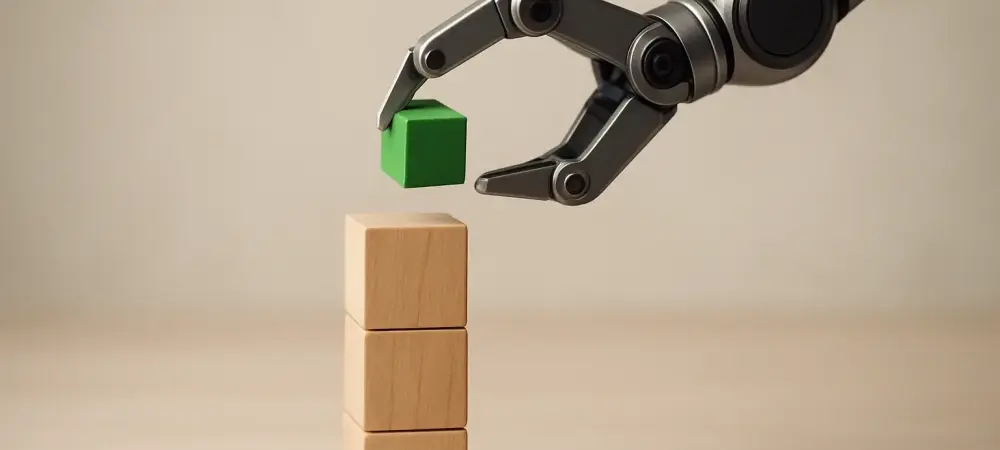
The rapid convergence of generative modeling and mechanical execution has fundamentally altered the trajectory of automation, moving beyond digital pixels to the tangible control of physical hardware. This shift is most evident in the recent output from Black Forest Labs, a startup that initially gained recognition for its high-fidelity image and video generation tools like FLUX.1. Now, the organization has pivoted toward the physical world with FLUX 3 Action, a 7-billion-parameter model designed to navigate the complexities of robotic movement and environmental interaction. This transition marks the emergence of “Physical AI,” a field where the primary objective is no longer just seeing or describing the world, but actively manipulating it through a World Action Model architecture.
Unlike previous digital-only iterations, FLUX 3 Action is engineered to translate visual observations and natural language instructions into precise motor commands. This puts it in direct competition with established giants and specialized research institutes. NVIDIA has been a dominant force in this space with its Cosmos3-Nano-Policy and the GR00T foundation model, while Google DeepMind continues to iterate on its proprietary Gemini Robotics systems. Meanwhile, the Allen Institute for AI (Ai2) has introduced MolmoAct 2 to address similar challenges. These systems are typically tested on versatile hardware like the SO-101 and Franka robot arms, serving as the bridge between computational reasoning and physical labor in fields ranging from logistics to drone flight.
The fundamental purpose of these modern frameworks is to provide a cohesive brain for machines that previously relied on rigid, pre-programmed scripts. By interpreting the environment in real-time, models like FLUX 3 Action allow robots to handle the unpredictability of the physical world. Whether it involves a drone navigating a changing flight path or a robotic arm sorting objects of varying shapes and weights, the goal remains the same: seamless interaction between human intent and machine execution. This development represents a significant departure from traditional robotics, which often struggled to generalize tasks beyond a highly controlled factory floor.
The Evolution of Physical AI and Robotic Systems
Black Forest Labs transitioned from the creative domain of FLUX.1 to the rigorous demands of physical execution by leveraging their expertise in latent diffusion and video modeling. The rationale behind this evolution is that a model capable of generating realistic video already possesses an inherent understanding of physical laws, such as gravity, collision, and object permanence. By repurposing this foundational knowledge, BFL moved toward the World Action Model (WAM) architecture. This approach differs from earlier methods that treated robotics as a simple translation problem, where a vision-language model would output a text-based description of an action that a separate controller would then try to execute.
In the current landscape, the concept of Physical AI encompasses models that act as unified decision-making engines. Companies like NVIDIA have integrated these capabilities into their Cosmos and GR00T platforms, aiming to provide a comprehensive suite for humanoid and industrial robots. Google DeepMind’s Gemini Robotics also follows a similar trajectory, though it remains largely within a closed ecosystem. In contrast, Black Forest Labs has opted for an open-weight strategy with FLUX 3 Action, allowing developers to customize and fine-tune the model for specific hardware, such as the affordable SO-101 arm or more sophisticated research platforms like the Franka Emika arm.
This evolution is not merely about adding “action” to a vision model; it is about creating a system that understands the consequences of its movements. When a system interacts with a computer interface, a drone, or a mechanical arm, it must process a continuous stream of visual data and internal sensor feedback. The objective of FLUX 3 Action is to condense this high-dimensional input into actionable outputs that can be understood by various actuators. By doing so, BFL has positioned itself at the center of a movement that treats physical interaction as the next major frontier for artificial intelligence, moving the technology out of the data center and into the warehouse, the office, and the home.
Technical Architecture and Operational Performance
Parameter Efficiency and Inference Speed
When comparing the technical specifications of FLUX 3 Action to its competitors, the most striking detail is its 7-billion-parameter architecture. In a field where bigger is often equated with better, BFL has demonstrated that efficiency can yield superior results. For example, NVIDIA’s Cosmos3-Nano-Policy utilizes a much larger 16-billion-parameter count. Despite having less than half the parameters of the NVIDIA model, FLUX 3 Action achieved a 42.92% success rate on the RoboLab-120 benchmark. This metric is a crucial indicator of a model’s ability to perform diverse and complex tasks in a simulated environment, suggesting that BFL has optimized its model for density and functional accuracy rather than raw size.
Beyond mere success rates, the inference speed of FLUX 3 Action provides a significant advantage for real-world deployment. The model operates approximately 1.43 times faster than its primary 16B competitors, a factor that is vital for mobile robotics and high-speed manipulation. High latency in a robotic system leads to “jittery” movements or delayed reactions to environmental changes, which can be catastrophic in applications like drone piloting or collaborative robotics. By reducing the computational requirements, BFL allows the model to run on less expensive, edge-based hardware, making it more accessible for startups and research labs that cannot afford massive GPU clusters for every localized robot.
This efficiency is the result of a deliberate focus on the “real-time factor,” which measures the ratio of inference latency to the duration of the robotic action produced. In competitive benchmarking, FLUX 3 Action variants have consistently stayed on the Pareto frontier, meaning they offer the best possible balance between task success and execution speed. This makes the model particularly suitable for deployment in environments where power consumption and thermal management are restrictive. By prioritizing a smaller parameter footprint, BFL has addressed one of the most persistent bottlenecks in robotics: the need for massive computing power to handle sophisticated visual reasoning.
World Action Modeling vs. Vision-Language-Action (VLA)
Traditional robotics often relies on Vision-Language-Action (VLA) models, which function primarily by mapping visual inputs and text instructions directly to a set of discrete motor commands. While effective for simple tasks, VLA models frequently struggle with the “why” and “what next” of physical interaction. In contrast, FLUX 3 Action operates as a World Action Model (WAM). This means the system does not just predict an action; it simultaneously predicts the future visual state of the environment. When the robot moves a block, the model “imagines” what the scene will look like after the move is completed, allowing it to detect errors or miscalculations before they become physical failures.
The dual-prediction system of FLUX 3 Action is sophisticated, generating a sequence of 32 physical movements in a single pass while imagining the visual consequences. This foresight is critical for tasks involving contact or delicate manipulation, where the model must understand how objects might roll, slide, or deform. This internal “simulation” capability is a direct result of BFL’s “Self-Flow” research. This technical innovation is significant because it eliminates the need for external, frozen representation models like CLIP, which are common in other architectures. By learning its own internal visual representations, FLUX 3 Action achieves a more cohesive and task-aligned understanding of the world it inhabits.
Furthermore, the WAM approach allows for a higher degree of temporal consistency. Traditional VLA models might calculate actions frame-by-frame, leading to disconnected or erratic behavior if the visual input changes slightly. Because FLUX 3 Action plans in sequences and visualizes the outcome, its movements appear smoother and more purposeful. This methodology bridges the gap between high-level reasoning and low-level control, ensuring that the robot’s “physical intuition” is as developed as its ability to follow verbal instructions. This shift from simple mapping to predictive modeling represents a fundamental change in how AI researchers approach the problem of mechanical autonomy.
Data Efficiency and Training Requirements
One of the most daunting barriers in traditional robotics has been the “data-hungry” nature of training. Historically, teaching a robot a single complex task required thousands of hours of data, often collected through labor-intensive teleoperation or expensive simulations. FLUX 3 Action challenges this paradigm by demonstrating extreme data efficiency. In practical tests, the model was able to master complex pick-and-place tasks using only 200 teleoperated episodes. This is a remarkably small dataset, especially when compared to the massive amounts of task-specific data typically required by VLA models or traditional reinforcement learning agents.
This efficiency stems from the model’s pre-training on vast quantities of video data. By watching millions of hours of physical movement, FLUX 3 Action develops a “common sense” foundation of the physical world before it ever encounters a specific robot arm. This pre-existing knowledge means that when it is fine-tuned for a specific task, it only needs to learn the nuances of the new hardware and the specific goal, rather than learning the basic rules of physics from scratch. This makes it feasible for small teams to deploy specialized robotic policies without the need for an industrial-scale data collection operation.
Moreover, the model’s ability to generalize from video data reduces the reliance on perfect simulations. While many models are trained in virtual environments, they often fail when transitioned to the real world because the simulation does not perfectly match reality. Because FLUX 3 Action’s foundation is built on real-world video, it is better equipped to handle the “messiness” of physical environments, such as varying lighting conditions or background clutter. This reduces the time and cost associated with the “sim-to-real” pipeline, allowing for faster iteration cycles in development.
Implementation Challenges and Industry Considerations
Despite the impressive benchmarks, the robotics industry still lacks a “unified benchmark” that allows for a perfectly transparent comparison between models. While FLUX 3 Action performs exceptionally well on the RoboLab-120 benchmark, other models like Ai2’s MolmoAct 2 or Google’s proprietary systems are often evaluated on different metrics or in private testing environments. This fragmentation makes it difficult for industrial users to determine which model is truly the best fit for their specific use case without conducting their own extensive internal testing. The absence of a standardized “IQ test” for robots remains a hurdle for the widespread adoption of Physical AI.
Another persistent challenge is the “sim-to-real” gap. Success in a simulation like RoboLab-120 is a strong indicator of a model’s logic and planning capabilities, but it does not account for all the variables of the physical world. Real-world environments are plagued by sensor noise, mechanical friction, and unpredictable human interference. While the WAM architecture of FLUX 3 Action helps mitigate these issues through visual prediction, ensuring that a 42.92% success rate in a simulation translates to 99.9% reliability in a factory setting is a massive undertaking. Developers must still account for the physical limitations of their hardware, such as the precision of the motors in an SO-101 or the payload capacity of a Franka arm.
Accessibility also plays a major role in how these technologies are adopted across the industry. Google DeepMind and NVIDIA often maintain “closed” or highly managed ecosystems, which can provide a high level of support but limit the developer’s ability to modify the core model. Black Forest Labs’ “open-weight” strategy provides a different path, offering the transparency needed for deep customization and private infrastructure deployment. However, this also means that the burden of safety and security falls more heavily on the end-user. As the industry moves from 2026 to 2028, the tension between proprietary managed services and open-source flexibility will likely define the market’s structure.
Comparative Summary and Deployment Recommendations
Comparing the current leading models reveals a clear divide in philosophy and performance. FLUX 3 Action stands out for its high success rates on public benchmarks and its exceptional parameter efficiency, making it the most agile choice for projects where computational resources are at a premium. In contrast, NVIDIA’s Cosmos family offers a broader, integrated ecosystem that may be more suitable for large-scale industrial operations already invested in the Omniverse platform. While Google DeepMind’s systems are highly capable, their lack of public availability makes them a secondary consideration for independent developers looking to build and deploy systems immediately. For teams working with affordable hardware like the SO-101 or building mobile platforms that require low-latency responses, FLUX 3 Action is the recommended starting point. Its open-weight nature and the availability of fine-tuning recipes through frameworks like Hugging Face’s LeRobot make it the most developer-friendly option currently on the market. Organizations that prioritize data privacy and specialized internal infrastructure will also find BFL’s model attractive, as it can be hosted and modified without sending sensitive operational data to an external provider.
Industrial users with highly managed ecosystems or those requiring a “turnkey” solution might still find value in the proprietary models offered by NVIDIA or Google. These closed systems often come with extensive support and guaranteed compatibility with specific industrial standards. However, for those looking to push the boundaries of what is possible with limited data and high-efficiency hardware, the World Action Model approach of Black Forest Labs provides a compelling alternative. As the field of Physical AI matured, the decision between these platforms became a matter of balancing specific operational needs against the desire for architectural transparency and local control. The emergence of FLUX 3 Action signaled a significant shift toward efficiency and visual reasoning in the robotics sector. It proved that a smaller, well-trained model could outperform larger competitors by internalizing the laws of physics through predictive modeling. Developers who adopted this framework found that the reduction in training data requirements allowed for much faster deployment of specialized robotic tasks. Looking back, the transition toward World Action Models represented a turning point where machines stopped simply following instructions and started understanding the visual and physical consequences of their actions. This change empowered a new wave of automation that was more adaptable, faster, and significantly easier to implement across diverse hardware platforms.