

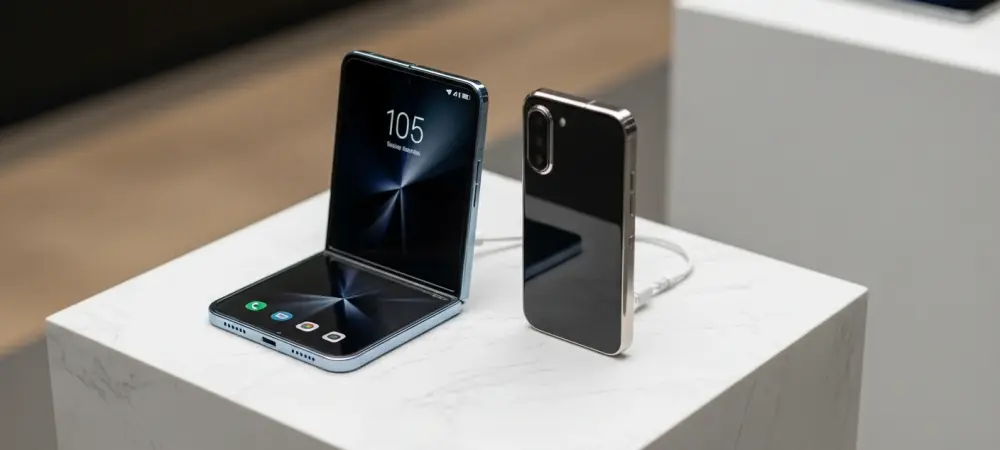
The rapid evolution of mobile technology has created a landscape where the once-impenetrable wall between premium luxury and budget utility is starting to crumble under the weight of innovation. As high-end features migrate toward more accessible price points, consumers are forced to decide whether the prestige of a flagship is still worth the steep financial investment.
Understanding the Modern Smartphone Landscape: A Shifting Reality
Major sales events like the Amazon Spring Deal Days serve as a perfect barometer for this shifting price-to-performance ratio. These periods of aggressive discounting reveal how quickly hardware matures, allowing mid-range devices to challenge the dominance of established giants. The market currently sees a fascinating collision between the Google Pixel 10 series, which includes the Pro Fold and Pro XL, and high-performance challengers like the vivo X300 or the Poco F8 Ultra. In this environment, the definition of value has transformed from simply finding the cheapest phone to identifying which device offers the best longevity. Premium foldables and traditional flagships now share the stage with “performance kings” from Poco and Motorola. While a Google Pixel 10 Pro Fold represents the pinnacle of engineering, the Motorola Moto G56 proves that essential modern connectivity is no longer a luxury reserved for the wealthy.
Key Performance and Feature Benchmarks: Power vs. Practicality
Hardware Innovation and Display Technology: The Visual Divide
Innovation in the premium tier is currently defined by specialized form factors and sheer memory capacity. The Google Pixel 10 Pro Fold utilizes a complex hinge mechanism and foldable glass to provide a tablet-like experience that fits in a pocket, while the Pixel 10 Pro XL focuses on high RAM capacities to handle intensive AI tasks. These devices represent the bleeding edge of what mobile hardware can achieve in terms of multitasking and screen real estate.
In contrast, affordable alternatives have significantly improved their baseline offerings to stay competitive. The Motorola Moto G56, despite its entry-level positioning, now features a 120Hz refresh rate display that was exclusive to flagships just a few years ago. While it cannot match the peak brightness or color accuracy of the Samsung Galaxy S25+, it provides a fluid user experience that satisfies the needs of most daily users without the premium surcharge.
Camera Systems and Imaging Power: Professional Optics
Mobile photography remains one of the primary reasons consumers gravitate toward the high end. The vivo X300 exemplifies this trend with its massive 200MP camera system, designed as a professional-grade tool for those who prioritize optical clarity and zoom capabilities. This level of hardware allows for extreme cropping and low-light performance that cheaper sensors simply cannot replicate, regardless of software optimization.
Balanced options like the base Google Pixel 10 and the Poco F8 Ultra attempt to bridge this gap by focusing on smart trade-offs. The Pixel 10 utilizes Google’s superior computational photography to deliver stunning results with fewer lenses, whereas the Poco F8 Ultra leans on powerful processors to quickly process high-resolution images. Both models provide excellent results for social media, even if they lack the specialized telephoto reach of their more expensive siblings.
Battery Longevity and Charging Efficiency: The Power Race
The rise of silicon-carbon battery technology has revolutionized endurance in the mid-range segment. Devices like the Poco F-series are now equipped with massive capacities that often outlast the more power-hungry flagship models. Furthermore, the vivo X300 offers rapid charging speeds that can top up a battery in minutes, a feature that remains surprisingly absent from some of the most expensive phones on the market.
Samsung and Google take a different approach, focusing on software-optimized power management rather than raw charging speed. The Samsung Galaxy S25+ balances its battery life through efficient display tech and refined background processing. While it may take longer to charge than a Poco or vivo device, the consistency of its battery drain throughout a workday provides a different kind of reliability that professional users often prefer.
Challenges and Considerations in Device Selection: Long-Term Value
The Longevity Gap: Software and Support
One of the most significant differences between price tiers is the commitment to software longevity. The Google Pixel 10 series comes with an industry-leading promise of extended updates, ensuring the phone remains secure and functional for many years. Budget models, however, often see their support cycles cut short, which can lead to a shorter functional lifespan and a higher total cost of ownership over time.
Build Quality and Durability: Physical Resilience
The physical construction of a device often reflects its price tag, with IP68 water and dust resistance remaining a staple of the premium market. Flagships like the Google Pixel 10 Pro Fold are built to withstand the elements, whereas entry-level options like the Moto G56 are typically more fragile. For users who work outdoors or are prone to accidents, the upfront cost of a rugged flagship may be cheaper than replacing a broken budget phone.
The Value Depreciation Trap: Timing the Purchase
Choosing between a new mid-range release and a previous-generation flagship like the Samsung Galaxy S25+ requires careful calculation. Older flagships often provide better build quality and superior cameras than brand-new budget models, but they may lack the latest battery innovations. Navigating these trade-offs is essential for consumers looking to maximize their investment during major sales events.
Choosing the Right Device for Your Needs: Final Considerations
The current market trajectory suggested that features once considered exclusive, such as high-speed charging and high-refresh-rate screens, successfully transitioned into standard expectations for all price points. This democratization of technology allowed for a more diverse range of choices, where users could prioritize specific needs like battery size or camera resolution without being forced into the most expensive category.
Strategic purchasing decisions were ultimately driven by identifying which specific compromises were acceptable. Enthusiasts gravitated toward the Google Pixel 10 Pro Fold for its unique utility, while performance seekers found immense value in the Poco F8 Ultra. Meanwhile, the Motorola Moto G56 solidified its place as the reliable choice for basic utility. These developments paved the way for a more competitive future where brand loyalty mattered less than the actual hardware specifications provided for the price.