

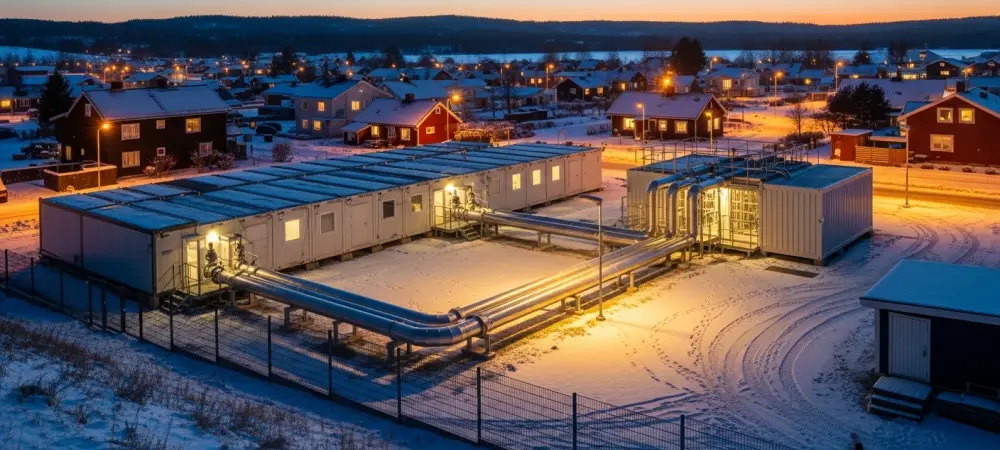
In the small Finnish town of Honkajoki, the constant hum of computer servers has become the primary source of warmth for hundreds of homes, signaling a profound shift in how society views digital waste. This innovative approach addresses two of the modern era’s most pressing environmental challenges by transforming the byproduct of our digital lives into a cornerstone of sustainable urban living. The collaboration between technology and public utilities offers a compelling glimpse into a future where energy systems operate in a truly circular fashion.
What if Your Internet Search Could Heat a Finnish Home
The massive digital infrastructure that powers the global economy is a double-edged sword. On one hand, it enables unprecedented connectivity and innovation; on the other, its energy consumption is staggering. Data centers, the backbone of this infrastructure, generate immense amounts of waste heat as a byproduct of their operations, which is typically vented into the atmosphere at a significant cost.
Simultaneously, nations in colder climates like Finland face the urgent task of decarbonizing their heating sectors. The reliance on fossil fuels for warmth is not only environmentally damaging but also economically volatile. The solution emerging in Finland connects these two problems directly, creating a system where the waste from one industry becomes the fuel for another, eliminating the need for combustion and creating a cleaner energy cycle.
The Twin Dilemmas of Digital Growth and Urban Energy
As the demand for data processing and storage escalates, so does the energy footprint of the facilities that provide it. These data centers are essentially powerful computers that require constant cooling to prevent overheating. The energy used for this cooling process, combined with the heat generated by the servers themselves, represents a significant untapped thermal resource. This digital exhaust has long been treated as a liability, an operational challenge to be managed and discarded.
This challenge is juxtaposed with the energy needs of cities, particularly those with extensive district heating systems. These networks, which distribute centrally-generated heat to residential and commercial buildings through a system of insulated pipes, are common in Nordic countries. They are exceptionally well-suited to integrate new, sustainable heat sources. By feeding the captured warmth from data centers into these existing networks, communities can displace traditional, carbon-intensive heat production methods.
The Vatajankoski E-Heat Partnership a Blueprint in Action
The partnership between Finnish energy provider Vatajankoski and data center operator E-Heat has produced a powerful proof of concept. In the Kirkkokallio eco-industrial park, a 1MW containerized data center now supplies the majority of the heat for the town of Honkajoki. The system captures server exhaust and uses it to heat water to nearly 80°C, feeding it directly into the municipal grid. A conventional boiler that once served as the primary heat source has been relegated to a backup role.
This success builds on a foundation of previous joint ventures that have demonstrated the model’s scalability. In Kankaanpää, a 2MW facility already provides 20% of the local district heating, while another 1.5MW module operates in Merikarvia. The collaboration is expanding further north, with a 1.8MW project planned for Ivalo in Finnish Lapland. This upcoming facility is projected to cover approximately half of the local heating network’s demand, solidifying repurposed data heat as a primary energy source.
Voices from the Vanguard the Synergy of Tech and Utilities
From the perspective of an energy utility like Vatajankoski, this collaboration offers a reliable and low-cost green energy source that aligns perfectly with decarbonization mandates. It provides a stable supply of heat that is independent of volatile fuel markets and combustion processes, enhancing energy security and sustainability. For a data center operator like E-Heat, the model transforms an operational expense into a revenue stream. Instead of paying to dissipate heat, the company sells it as a valuable commodity, creating a powerful business case for a circular economy.
This arrangement transcends a simple transactional relationship. It represents a fundamental integration of digital infrastructure with public utilities for mutual and societal benefit. By co-locating data centers with communities that need heat, both entities create value that would not exist if they operated in isolation. The result is a system that is more efficient, resilient, and environmentally responsible.
A Replicable Framework for a Warmer Greener Future
The Finnish model has established a clear and replicable framework for other regions to follow. The critical first step was the strategic co-location of data centers near existing district heating infrastructure, minimizing the energy loss and cost associated with transporting heat. Leveraging modular, containerized data centers has also been crucial, as it allows for flexible and rapid deployment that can be scaled to match a community’s specific energy needs.
Ultimately, the success of this initiative rested on forging robust public-private partnerships. These agreements created a symbiotic economic model where energy firms purchase a reliable, green heat source while data firms gain an efficient cooling solution and an additional revenue stream. This win-win financial structure made the system not only sustainable but also highly attractive for investment, proving that ecological responsibility and economic profitability can go hand in hand.