

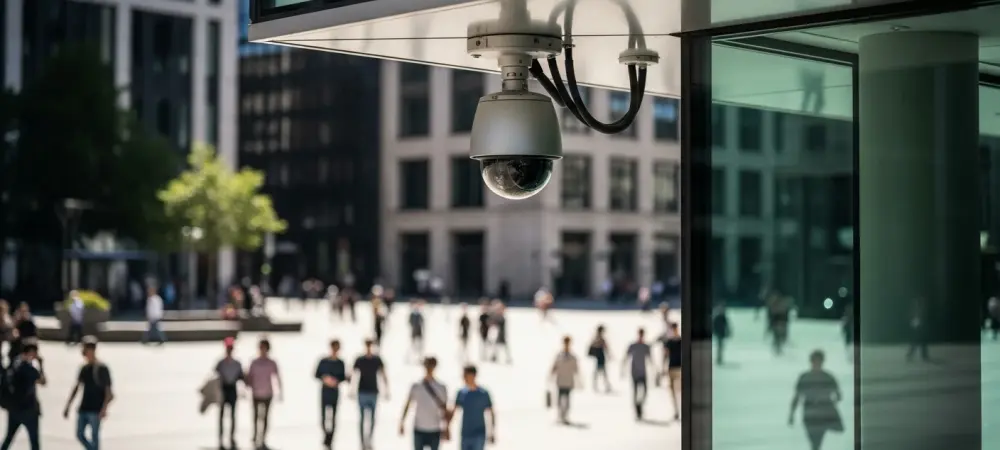
The act of public protest, a cornerstone of American democracy, is undergoing a profound transformation as federal law enforcement agencies increasingly deploy sophisticated facial recognition technology to monitor and identify demonstrators. By sifting through a vast digital dragnet of social media videos, citizen journalism, and public surveillance feeds, the Federal Bureau of Investigation (FBI) and U.S. Immigration and Customs Enforcement (ICE) are turning constitutionally protected assemblies into sources of criminal investigation. This methodical integration of advanced surveillance tools blurs the critical line between legitimate law enforcement and the monitoring of protected speech, raising urgent questions about civil liberties, technological accuracy, and the unsupervised expansion of government oversight into the public square. This new reality suggests a future where the simple act of attending a demonstration could subject any individual to a digital lineup, powered by algorithms of questionable reliability and data gathered without consent.
From Public Dissent to Criminal Charges
The abstract threat of this technology has materialized into concrete legal action, demonstrating a direct pipeline from protest to prosecution. In Minneapolis, following demonstrations sparked by an ICE agent’s fatal shooting of a local resident, the FBI initiated a comprehensive review of footage from YouTube and city-owned surveillance cameras. Investigators flagged an individual allegedly vandalizing a federal courthouse and submitted the image to the agency’s internal “Facial Recognition Services” unit. The system returned a match for Thomas James-Jones, whose identity was subsequently corroborated by examining his social media profiles, which reportedly included discussions on immigration policy. He was later charged with the destruction of government property. Tellingly, Andrew Mercado, the citizen journalist whose YouTube footage was used in the investigation, was unaware of the FBI’s actions and publicly condemned the use of his work to facilitate this type of surveillance, highlighting a growing rift between content creators and law enforcement’s appropriation of their material.
This trend of leveraging protest footage is not an isolated incident but part of a broader, systemic strategy. In a separate case arising from the same series of Minneapolis protests, an anonymous source provided the FBI with a self-recorded video. The agency applied facial recognition to this private footage, successfully identifying two individuals who were then charged with theft of property from a government vehicle. The surveillance ecosystem has also expanded beyond official channels, empowering private citizens to participate. In another instance, a civilian used what the criminal complaint described as “commercially available facial recognition software” to analyze a social media video of a man allegedly stealing a rifle from an unmarked FBI vehicle. This citizen provided the man’s identity and social media details directly to the FBI, leading to his arrest and federal charges. This case exemplifies the proliferation of powerful surveillance tools and the normalization of a crowdsourced approach to law enforcement, where anyone with a camera and the right software can contribute to a federal investigation.
The Double-Edged Sword of Technology
The widespread deployment of facial recognition at protests poses a substantial threat to the fundamental rights of free speech and assembly, creating a chilling effect that may deter citizens from engaging in public dissent. The knowledge that any participant can be indiscriminately scanned and cataloged by law enforcement, regardless of their actions, could discourage participation in lawful demonstrations out of fear of being misidentified or targeted for their political views. This danger is magnified by the technology’s well-documented fallibility, which includes significant racial biases and a troubling history of producing false matches that have led to wrongful arrests, disproportionately affecting Black individuals. Civil liberties advocates, such as Nate Wessler from the ACLU’s Speech, Privacy and Technology Project, warn that these inaccuracies could easily result in retaliatory law enforcement activity against innocent protestors, a risk that becomes particularly acute in the charged atmosphere of demonstrations against government agencies like ICE.
This powerful surveillance apparatus is sustained through a robust partnership between government agencies and private technology firms. A central figure in this ecosystem is Clearview AI, a controversial company backed by Peter Thiel, which has amassed a colossal database by scraping billions of facial images from the internet and social media platforms without user knowledge or consent. This practice has drawn heavy scrutiny and over $50 million in fines from European regulators. Both the FBI and ICE are significant clients, with contracts totaling millions of dollars to use Clearview’s technology for identifying suspects by matching images from investigations against its vast, proprietary database. The Department of Homeland Security (DHS) has also confirmed that its components, including Customs and Border Protection (CBP), utilize Clearview to find links to national security threats, although official policy stipulates that a facial recognition match alone should not be the sole basis for an enforcement action, a guideline that offers little comfort to privacy advocates.
Surveillance in the Field and the Path Forward
The surveillance capabilities of federal agents are not limited to remote, after-the-fact analysis but extend directly into field operations. ICE agents are equipped with Mobile Fortify, a mobile facial recognition application developed by the Japanese tech conglomerate NEC Corporation. This tool allows officers to perform on-the-spot facial scans of individuals during encounters, comparing their biometric data against government databases in real-time. The app’s deployment has elicited sharp criticism from lawmakers, including Senator Edward Markey, who argued that such on-demand surveillance represents a grave threat to the privacy and First Amendment rights of everyone in the United States. The accuracy of Mobile Fortify has also been seriously questioned. In one reported case, a CBP officer testified that scanning a woman’s face with the app returned two different and entirely incorrect names, underscoring the potential for flawed technology to produce disastrous outcomes in high-stakes field interactions and further eroding public trust in these systems.
The systematic integration of this powerful yet error-prone technology into the policing of public protests marked a significant shift in the balance between security and civil liberties. Through partnerships with controversial private firms and the use of data from both public and private sources, federal law enforcement agencies constructed a pervasive surveillance apparatus with minimal judicial or public oversight. While these agencies maintained that the technology was a tool for investigating illegal acts, its application created a reality where the act of attending a protest could subject any individual to a digital investigation. The potential for mission creep, wrongful identification, and the subtle suppression of dissent became central and unresolved consequences of this new surveillance paradigm, leaving a lasting legacy of eroded privacy and a public increasingly wary of exercising its right to assemble.