

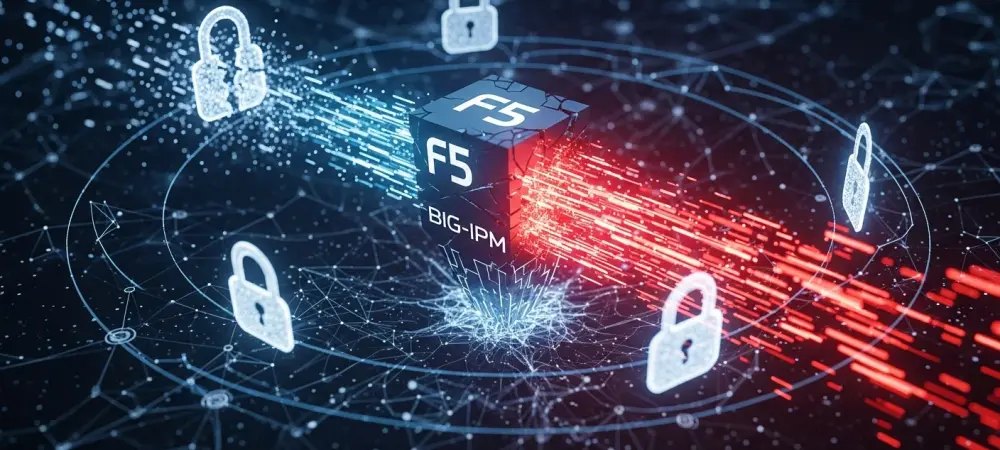
The modern enterprise perimeter has shifted from a physical office wall to the digital authentication prompts of the F5 BIG-IP Access Policy Manager (APM), a critical gatekeeper now facing its most significant architectural challenge to date. For years, the APM has served as the backbone for secure remote access, providing a unified platform for identity federation and context-aware traffic management. However, the discovery of CVE-2025-53521 has fundamentally altered the trust model associated with this technology. What began as a perceived minor service disruption has escalated into a critical security crisis, forcing organizations to rethink the stability of their consolidated access layers.
Understanding F5 BIG-IP APM and Its Security Context
The BIG-IP APM functions as a high-performance proxy that integrates authentication, authorization, and endpoint inspection into a single point of control. By consolidating these functions, F5 allows administrators to enforce complex “Zero Trust” policies before a user ever reaches the internal application. This design is intended to reduce the attack surface by hiding sensitive backend resources behind a hardened virtual server. In a landscape where identity is the new perimeter, the APM acts as the ultimate filter, processing millions of requests while ensuring that only verified users gain entry.
Beyond simple login pages, the platform operates as a sophisticated policy engine that evaluates the health of the connecting device and the geographic location of the user. It bridges the gap between legacy on-premises applications and modern cloud environments, making it an indispensable tool for hybrid infrastructure. However, this central role also makes it a single point of failure. When the gatekeeper itself contains a flaw, the very mechanism designed to provide security becomes the primary vector for a total network breach.
Key Technical Components and the CVE-2025-53521 Threat
Access Policy Management and Virtual Servers
At the heart of the APM are access policies—visual workflows that define the steps a user must take to be granted access. These policies are attached to virtual servers, which handle the heavy lifting of SSL termination and traffic steering. Under normal conditions, these components offer unparalleled performance, scaling to accommodate massive surges in remote traffic without compromising latency. This efficiency is why the APM remains a preferred choice over competitors like Cisco or Palo Alto for large-scale service provider environments.
The emergence of CVE-2025-53521 has directly targeted this policy-processing logic. By sending specially crafted packets to the virtual server, an unauthenticated attacker can bypass the entire authentication workflow. This is not just a failure of a single feature; it is a breakdown of the core logic that defines the APM. Instead of being stopped at the login prompt, the malicious traffic is processed by the system in a way that allows the attacker to execute commands, effectively turning the security appliance against the network it is supposed to protect.
Remote Code Execution (RCE) and System Integrity
The transition of this vulnerability from a denial-of-service (DoS) classification to a pre-authentication Remote Code Execution (RCE) represents a catastrophic shift in threat level. With a CVSS score of 9.3, the flaw grants attackers the ability to run arbitrary code with elevated privileges. This means an adversary does not just crash the system; they take ownership of it. In real-world exploitation scenarios, this allows for the installation of persistent backdoors and the exfiltration of sensitive session tokens, compromising every user currently logged into the system.
Maintaining system integrity under these conditions requires more than just standard monitoring. Forensic investigations have revealed that attackers are using sophisticated techniques to mask their presence, such as modifying the sys-eicheck tool which is responsible for verifying file hashes. When the very tools meant to detect tampering are themselves compromised, the operating system’s reported health becomes unreliable. This level of technical depth in the exploit shows that attackers are moving beyond simple script execution toward deep-seated system persistence.
Emerging Trends in Threat Intelligence and Reclassification
The industry is currently witnessing a trend where initial vulnerability assessments are being proven inadequate as researchers uncover multi-stage exploitation paths. The reclassification of CVE-2025-53521 highlights a critical gap in early-stage threat intelligence. Often, what appears to be a simple memory leak or a process crash is actually a gateway to full system takeover. This shift suggests that security teams can no longer afford to wait for “critical” ratings to begin patching; they must treat “high” severity bugs with equal urgency.
Furthermore, there is a growing trend toward memory-resident malware that avoids the physical disk entirely. In the case of the BIG-IP APM, many observed webshells exist only in the system’s RAM. This makes traditional antivirus and file-integrity monitoring obsolete, as there is no “malicious file” to find. This shift toward “fileless” persistence is forcing a move toward behavioral analysis and live memory forensics, changing the way vendors approach the underlying architecture of their security appliances.
Real-World Applications and Deployment Scenarios
The deployment of F5 BIG-IP APM is most prevalent in high-stakes environments like global finance and federal healthcare systems. These sectors rely on the iControl REST API to automate the deployment of thousands of access policies across distributed data centers. While this automation provides agility, it also creates a broader target for attackers. Exploiting the API allows for rapid lateral movement, where a single compromised appliance can be used to push malicious configurations to an entire fleet of BIG-IP devices.
Government agencies, particularly those under CISA oversight, have been forced into an aggressive remediation cycle due to the vulnerability’s inclusion in the Known Exploited Vulnerabilities catalog. The pressure to patch is immense, yet the complexity of these environments often makes “immediate” updates a logistical nightmare. For a global enterprise, taking down a primary access gateway to apply a patch involves coordinated maintenance windows across multiple time zones, illustrating the friction between security requirements and operational continuity.
Technical Hurdles and Remediation Challenges
The primary obstacle to resolving this issue lies in the stealth of the exploitation. Because the webshells are often memory-only, administrators may apply a patch to an already compromised system, effectively locking the attacker inside. Without a full system wipe or a deep forensic audit, the patch only prevents future entry but does not remove existing threats. This creates a false sense of security that can lead to long-term data breaches.
Moreover, patching legacy versions such as 15.x and 16.x presents significant technical hurdles. These older systems often run on hardware with limited resources or host custom iRules that may break after an update. F5’s development of the sys-eicheck utility is a step toward better integrity management, but it remains a reactive measure. The challenge is not just writing the code for the fix, but ensuring that the fix can be deployed safely across thousands of unique configurations without causing a self-inflicted denial of service.
Future Outlook for Secure Access Technology
The trajectory of secure gateway technology is moving toward hardened, immutable architectures where the underlying operating system is read-only. This would theoretically prevent even RCE-based attacks from gaining a foothold on the disk. Additionally, the integration of AI-driven anomaly detection at the packet level could help identify the “jitter” or “patterns” of an exploit attempt before it reaches the policy engine. Such proactive defenses would represent a significant leap over the current reactive patching model.
In the long term, the industry must move toward a “Self-Healing Firmware” model. In this scenario, appliances would continuously compare their running state against a known-good cryptographic baseline in the cloud. If a discrepancy is found—such as a modified binary or an unauthorized pipe—the system would automatically isolate itself and roll back to a clean state. This evolution would reduce the reliance on manual forensic analysis and move the burden of defense from the administrator to the system itself.
Final Assessment and Review Summary
The investigation into CVE-2025-53521 served as a stark reminder that even the most robust security tools are susceptible to fundamental flaws. Organizations should immediately prioritize the transition to fixed versions like 17.5.1.3 or 15.1.10.8, but the process must not end with a simple reboot. A comprehensive strategy involves auditing the iControl REST logs for unauthorized localhost access and utilizing advanced forensic tools to scan for memory-resident shells that bypass traditional file checks.
Moving forward, the focus should shift from perimeter defense to internal visibility. Relying on a single gateway for all security logic is a risk that must be mitigated by implementing secondary layers of authentication and continuous monitoring. While the BIG-IP APM remains a powerful and versatile tool for managing complex access needs, its recent vulnerabilities underscore the necessity of an adaptive security posture. True resilience will come from assuming that the gateway is already compromised and building internal defenses that can withstand a breach at the edge.