

The relentless pace of mobile innovation is often measured by the silicon heart powering our devices, where each new generation promises to unlock previously unimaginable speed and efficiency. In this high-stakes arena, Samsung’s upcoming Exynos processors are set to define the next chapter of flagship performance, creating a clear dividing line between the capabilities of today and the possibilities of tomorrow.
Setting the Stage for Samsung’s Flagship SoCs
At the forefront of Samsung’s mobile strategy are two pivotal system-on-chips (SoCs): the Exynos 2600 and its successor, the Exynos 2700, codenamed ‘Ulysses’. These processors are not merely incremental updates; they represent Samsung’s ambition to compete at the highest level against rivals like Qualcomm. The Exynos 2600 is slated to power the Galaxy S26 series, while the Exynos 2700 is engineered for the subsequent Galaxy S27 lineup, positioning them as the central nervous system for Samsung’s future flagship smartphones.
The purpose of these chips extends beyond raw power. They are strategic assets in the fiercely competitive smartphone market, designed to deliver a seamless, high-performance user experience that encompasses everything from professional-grade photography and immersive gaming to advanced on-device AI. Their success or failure directly impacts the appeal of the Galaxy S series and Samsung’s standing as a vertically integrated tech giant that can produce its own world-class components.
Core Architecture and Performance Breakdown
Manufacturing Node and CPU Enhancements
The foundational difference between the two chips lies in their manufacturing process. The Exynos 2700 is built on Samsung’s advanced SF2P node, a notable improvement over the SF2 process used for the Exynos 2600. This more refined fabrication technology is not just a minor tweak; it is claimed to yield a significant 12% boost in performance while simultaneously reducing power consumption by an impressive 25%. Such efficiency gains are critical for extending battery life without sacrificing speed.
This architectural superiority is further amplified by the Exynos 2700’s higher clock speeds. Leaks suggest its high-performance cores can reach a maximum frequency of 4.2 GHz, a substantial jump from the 3.8 GHz ceiling of the Exynos 2600. This increased clock speed, combined with the efficiency of the SF2P node, directly translates to faster processing, enabling quicker app launches, smoother navigation, and more responsive overall system performance.
Projected Benchmark and Processing Power
While architectural specifications provide a technical roadmap, benchmark scores offer a tangible glimpse into real-world potential. Leaked Geekbench results paint a compelling picture of the Exynos 2700’s capabilities, indicating a staggering 40% increase in single-core performance and a 30% rise in multi-core performance compared to the Exynos 2600. A single-core jump of this magnitude is particularly important, as it affects the snappiness and responsiveness of everyday tasks.
For users of the upcoming Galaxy S27, these gains promise a transformative experience. The enhanced multi-core performance will make demanding multitasking scenarios, such as editing high-resolution video while running multiple apps in the background, feel effortless. Moreover, the raw processing power will be instrumental in handling increasingly complex computational photography algorithms and sophisticated AI features, solidifying the device’s flagship status.
GPU, Memory, and Thermal Innovations
The Exynos 2700’s enhancements extend well beyond its CPU. The SoC is set to feature a next-generation Xclipse GPU, which is projected to deliver a performance gain of up to 40%. This leap in graphics capability will enable console-level gaming experiences with higher frame rates and more detailed visual effects, pushing the boundaries of what is possible on a mobile device.
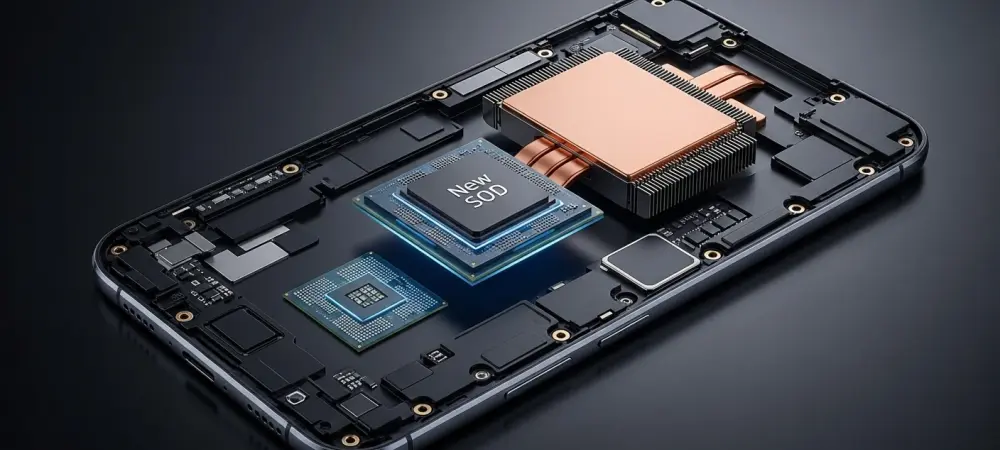
This graphical prowess is supported by a comprehensive upgrade to the memory and storage architecture. The integration of LPDDR6 RAM and UFS 5.0 storage is expected to deliver 80% to 100% faster data transfer speeds. This bottleneck reduction ensures the GPU and CPU are fed data almost instantaneously, minimizing load times and maximizing performance. To manage the heat generated by this powerful hardware, the Exynos 2700 employs an improved FOWLP-SbS packaging design with a unified copper Heat Path Block (HPB), allowing for more efficient heat dissipation and sustained peak performance.
Market Strategy and Release Considerations
Samsung’s deployment strategy for these powerful chips adds a layer of complexity for consumers. The Exynos 2600 is rumored to have a very limited and targeted release, potentially appearing exclusively in the Galaxy S26 Ultra models sold in South Korea. This approach suggests it may serve as a precursor or a trial run for the more ambitious technologies featured in its successor.
Furthermore, uncertainty clouds the global launch plan for the Exynos 2700. Samsung has historically followed a dual-chip strategy, equipping its Galaxy flagships with its in-house Exynos processors in some regions and Qualcomm’s Snapdragon chips in others, including North America. Whether the company will pursue a wider global release for the Exynos 2700 in the Galaxy S27 lineup remains to be seen and will heavily influence the device’s performance characteristics across different markets.
Conclusion: A Generational Leap or an Incremental Step?
The analysis of the Exynos 2700 revealed it was not just an incremental update but a significant generational leap. The chip’s key advantages were its superior SF2P manufacturing process, substantially higher clock speeds, and comprehensive architectural upgrades that touched every critical component. The next-generation Xclipse GPU, coupled with groundbreaking LPDDR6 and UFS 5.0 integration, represented a holistic approach to boosting performance, while the advanced thermal management system ensured that power was both usable and sustainable.
For consumers, the decision to upgrade was made compelling by these on-paper specifications. The Galaxy S27, powered by the Exynos 2700, was positioned as a device that could offer a monumental jump in speed, efficiency, and overall user experience compared to its predecessor. The final verdict on its value, however, depended heavily on Samsung’s global release strategy and how its real-world performance stacked up against the competing Snapdragon processor of its generation.