

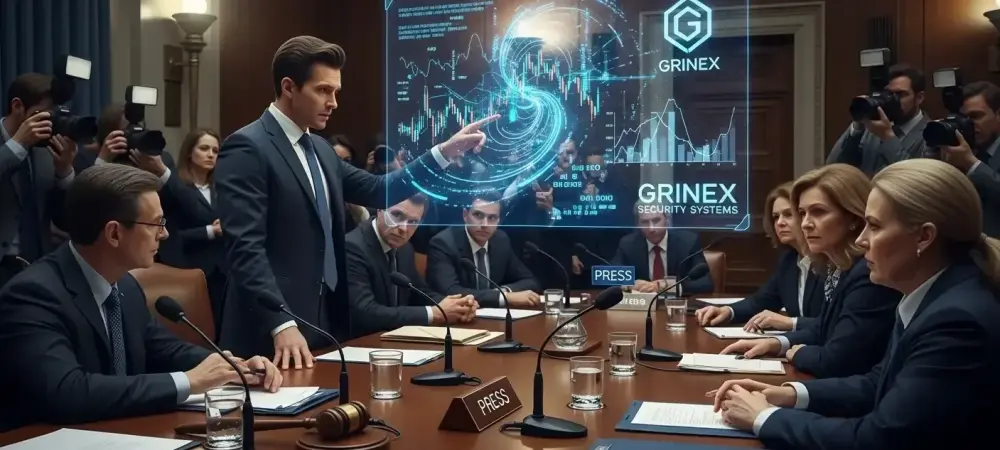
The sudden disappearance of one billion rubles from a cryptocurrency exchange might seem like a plot from a high-budget spy thriller, yet for the users of the Kyrgyzstan-based platform Grinex, the digital void is a cold, hard reality that has sparked a fierce geopolitical debate. This staggering $13.2 million breach has quickly escalated beyond a simple security failure, morphing into a complex narrative battle. While the exchange leadership claims the theft was a calculated strike by Western intelligence agencies, the transparent nature of the blockchain suggests a very different motive. This incident serves as a critical case study in how digital asset platforms navigate the murky waters of international sanctions and domestic accountability. The vanishing funds represent more than just lost wealth; they highlight a growing trend where technical failures are repackaged as acts of cyber warfare. As observers peel back the layers of this heist, the tension between state-led narratives and decentralized forensics becomes the focal point of a global investigation.
The Billion-Ruble Heist: Shadow of Geopolitics
When assets worth one billion rubles evaporate overnight, the immediate focus is usually on the “who,” but for Grinex, the “why” has become an instrument of international intrigue. The platform was quick to characterize the event as a sophisticated raid aimed at destabilizing the regional financial sector. This framing allowed the company to position itself as a victim of state-sponsored aggression rather than a target of opportunistic hackers or internal mismanagement.
The $13.2 million loss created an immediate liquidity crisis, yet the exchange focused its communication on the precision of the attack. By claiming that only a government-level actor could bypass their security protocols, the leadership attempted to shift the burden of proof away from their own operational integrity. This strategic use of geopolitical tension serves to shield the organization from immediate legal repercussions while appealing to nationalist sentiments within its primary user base.
From Garantex to Grinex: The High-Stakes Evolution of Sanctioned Exchanges
The gravity of the Grinex situation cannot be fully grasped without examining its history as the spiritual and functional successor to Garantex. That predecessor platform faced heavy international sanctions for its documented role in laundering illicit funds, making Grinex a vital piece of gray-market infrastructure. In a landscape where traditional banking access is restricted, such exchanges offer a necessary conduit for capital movement, albeit one fraught with systemic risk.
As financial pressures mount, these exchanges operate in a volatile intersection of digital security and high-stakes diplomacy. The breach highlights how easily a sanctioned entity can use its precarious status to justify massive asset losses. In this environment, a security breach is rarely just a technical error; it is a potential act of war that provides a convenient cover for firms struggling to maintain insolvency or hide internal malfeasance from prying eyes.
Deconstructing the Breach: State Sabotage or Standard Cybercrime?
Despite assertions that the raid required the resources of a nation-state, the technical mechanics of the theft align with standard criminal methodologies. Forensic investigators observed that the stolen funds did not follow the legal asset-freezing protocols typically utilized by Western authorities. Instead, the capital was moved through decentralized exchanges and rapidly swapped for Tron (TRX), a common tactic used by cybercriminals to obfuscate the paper trail and bypass centralized oversight.
The movement of funds specifically through liquidity pools previously associated with Garantex further complicates the “state-led” narrative. Rather than the surgical precision of an intelligence agency, the digital footprint mirrors the behavior of professional money launderers. This discrepancy suggests that the theft was less about geopolitical destabilization and more about efficient, high-speed asset extraction designed to evade the very transparency that blockchain technology provides.
Forensic Discrepancies: The Exit Scam Hypothesis
Independent blockchain analysts have identified several red flags that cast doubt on the official explanation provided by the exchange. By framing the loss as a maneuver by foreign actors, Grinex might be attempting to deflect accountability for what many suspect is an “exit scam.” This occurs when platform administrators orchestrate a theft to liquidate holdings before shutting down, using the chaos of a purported hack to pacify burned investors and law enforcement.
The transparent ledger reveals that the movement of the $13.2 million aligns more closely with internal fraud than external sabotage. Experts noted that the ease with which the perpetrators navigated internal controls suggests a level of access typically reserved for high-level employees. Consequently, the criminal complaints filed by the exchange are viewed by some as a strategic smoke screen intended to provide a veneer of legitimacy while the stolen assets are laundered into untraceable private wallets.
Navigating the Red Flags: Politicized Crypto Losses
For those operating within the digital asset space, the Grinex incident provides a vital framework for identifying when an organization uses politics to mask its own failures. Prioritizing “Proof of Reserves” and monitoring the destination of moved funds remained the most effective ways to distinguish between genuine security threats and coordinated deception. If assets flow into high-liquidity, non-custodial tokens via obscure decentralized platforms immediately following a breach, the probability of internal fraud increased significantly. Maintaining a skeptical eye toward claims of international sabotage was essential for investors seeking to protect their capital in an increasingly politicized market. Verification of on-chain data provided the only objective truth in a sea of competing narratives. Ultimately, the industry learned that while geopolitical tensions were real, they often served as a convenient scapegoat for the age-old problem of financial mismanagement and the calculated exploitation of trust.