

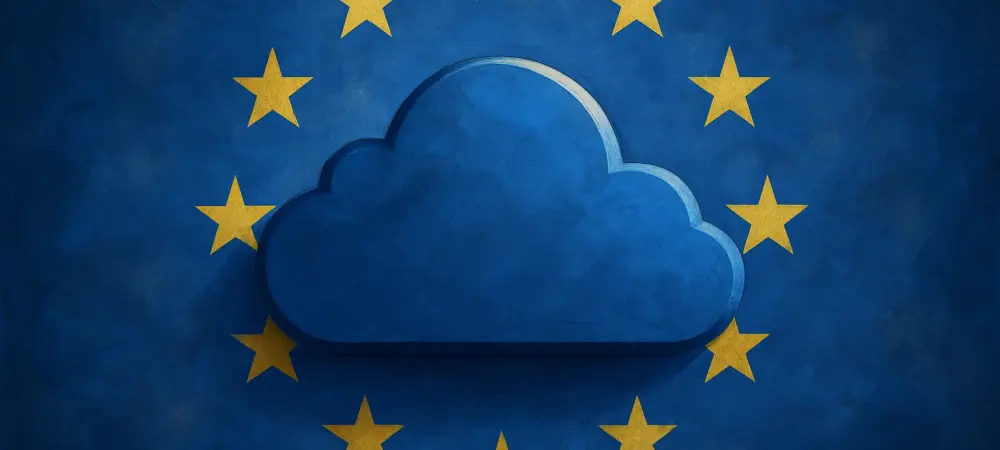
In an era where data reigns as a critical asset, often likened to the new oil driving global economies, the European Union’s (EU) aggressive pursuit of digital sovereignty in cloud computing has ignited a significant transatlantic controversy, placing the EU in direct tension with the United States. This initiative, centered on reducing dependence on American tech giants such as Amazon Web Services, Microsoft Azure, and Google Cloud—commonly referred to as hyperscalers—has become a focal point of debate. At the core of this movement lies the proposed European Cybersecurity Certification Scheme for Cloud Services (EUCS), a regulatory framework aimed at safeguarding sensitive data by enforcing European ownership and localized data storage. This push reflects profound concerns over security vulnerabilities, economic autonomy, and the overreach of US legal jurisdiction on European data. As both regions grapple with these issues, the debate underscores a critical global challenge: balancing national interests with the undeniable advantages of cutting-edge technology and innovation that American providers currently dominate.
Driving Forces Behind Europe’s Digital Autonomy
The EU’s quest for cloud sovereignty stems from a potent mix of security apprehensions and economic imperatives. The overwhelming market presence of US hyperscalers in Europe has sparked unease about data protection, particularly in vital areas like government operations and critical infrastructure. The EUCS, championed by influential nations such as France and Germany, introduces a stringent “sovereignty requirement” that mandates cloud providers to be European-owned and to process data strictly within EU boundaries. This measure is designed to insulate sensitive information from foreign interference, addressing fears of potential surveillance or breaches under US extraterritorial laws like the CLOUD Act, which permits American authorities to access data held by US firms globally. The initiative is seen as a bold step toward ensuring that Europe’s digital future remains under its control, free from external vulnerabilities that could compromise strategic interests.
However, this drive for autonomy is far from universally accepted within the EU itself. Several smaller or technologically reliant member states, including Ireland and the Netherlands, express significant reservations about the restrictive nature of the sovereignty clause. These nations contend that such measures risk morphing into protectionism, potentially severing access to the superior scalability, innovation, and infrastructure that American providers offer. They highlight a fundamental tension: while safeguarding data is paramount, the cost of excluding global leaders could hinder technological advancement and economic competitiveness. This internal discord within the EU reveals a deeper question of whether a balance can be struck between ideological goals of independence and the practical benefits of leveraging established, world-class technology.
American Reactions and Strategic Shifts
From the vantage point of the United States, the EU’s sovereignty push serves as both a cautionary signal and a prompt for strategic reevaluation. American hyperscalers, who currently lead the global market in cloud infrastructure and cutting-edge fields like artificial intelligence, face the looming threat of market exclusion if the EUCS regulations are rigorously applied. To counter this, there is a growing consensus that these providers must adapt by tailoring their offerings to comply with European legal standards, such as developing “sovereign cloud” solutions that align with local data protection requirements. Such adaptability not only addresses regulatory challenges but also positions US companies to maintain their competitive edge in a shifting landscape, turning potential obstacles into opportunities for deeper market penetration through customized services.
Beyond the providers, American businesses that rely heavily on cloud services are also prompted to reassess their operational strategies. The EU’s actions spotlight the risks of vendor lock-in and the geopolitical instability that can arise from dependence on a single provider or region. This has led to a noticeable shift toward diversified approaches, such as adopting multicloud or hybrid cloud architectures, to enhance resilience against regulatory or political disruptions. This strategic pivot echoes the EU’s own concerns about over-reliance on dominant players, underscoring a shared recognition across the Atlantic of the need for flexibility and robustness in digital infrastructure. For US stakeholders, the evolving European policies are a wake-up call to prioritize adaptability and risk mitigation in an increasingly fragmented global tech environment.
Navigating a Fragmented Global Digital Landscape
Europe’s cloud sovereignty debate is not an isolated phenomenon but rather a reflection of a broader global struggle to reduce dependence on a small cadre of dominant cloud providers. This transatlantic tension serves as a microcosm of a larger, universal challenge faced by nations worldwide: fostering diverse and competitive digital ecosystems while mitigating the risks of centralization. Both the EU and the US confront similar systemic issues, including geopolitical vulnerabilities and the stifling of competition that accompanies reliance on a handful of hyperscalers. The potential for data to be weaponized or access to critical services to be disrupted in times of international conflict adds urgency to the need for policies that promote a more balanced and resilient digital infrastructure across borders. Rather than resorting to exclusionary or protectionist measures, a more promising path forward lies in pragmatic collaboration between the EU and the US. Establishing common security protocols and operational standards could help reconcile the dual imperatives of sovereignty and innovation. Such cooperative efforts would minimize the inefficiencies and economic drawbacks of regulatory fragmentation, creating a framework where data protection does not come at the expense of technological progress. By prioritizing dialogue over division, both regions can work toward a digital future that emphasizes stability, fair competition, and mutual benefit, ensuring that the global tech landscape evolves in a way that serves diverse national interests without sacrificing collective advancement.
Building Bridges for a Balanced Digital Future
Reflecting on the trajectory of this debate, it’s evident that past efforts to address cloud sovereignty revealed deep-seated tensions between autonomy and interdependence. The EU’s initial steps to enforce strict data localization and ownership rules through frameworks like the EUCS exposed significant rifts, not just across the Atlantic but within Europe itself. American hyperscalers and businesses, in response, began recalibrating their approaches, with many investing in localized solutions to meet stringent requirements. These early skirmishes set the stage for a broader realization that neither side could fully achieve its objectives in isolation, highlighting the limitations of unilateral policies in a deeply interconnected digital realm.
Looking ahead, the focus must shift to actionable collaboration and shared innovation. Establishing joint task forces to develop transatlantic data security standards could serve as a critical next step, ensuring that sovereignty concerns are addressed without stifling global tech advancements. Encouraging investment in European cloud alternatives, supported by public-private partnerships, offers another avenue to build competitive capacity over time. Simultaneously, US providers should continue refining sovereign cloud offerings to align with regional needs. By fostering an environment of mutual trust and aligned goals, both the EU and the US can navigate this complex landscape, crafting a digital ecosystem that harmonizes national priorities with the imperatives of a connected world.