

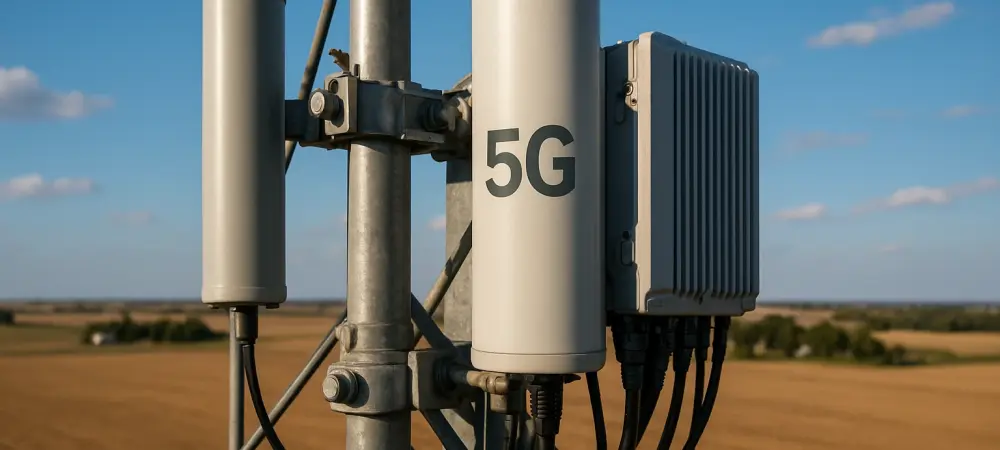
The vast golden wheat fields of Kansas are witnessing a profound technological revolution as tractors and combines evolve into data-hungry hubs that demand instant connectivity to function. High-speed internet is now a foundational utility for the Heartland, serving as the backbone for healthcare and commerce. Without these digital bridges, rural regions risk falling behind in a global economy. A four-year partnership from 2026 to 2030 between Ericsson and Nex-Tech Wireless aims to reshape the local economic landscape. This collaboration replaces aging equipment with high-capacity systems to support long-term digital growth across the state. By investing in these local networks, the initiative creates a ripple effect of opportunity for residents.
The shift targets “future-proof” infrastructure in low-density areas. Moving toward a reliable network ensures rural residents receive urban-quality service, securing the viability of small-town businesses and municipal services. This transformation focuses on long-term scalability rather than just temporary coverage fixes.
The Critical Need for Infrastructure Modernization in Rural Markets
Legacy Radio Access Networks struggle with the growth of mobile data, causing congestion and dropped signals. In rural Kansas, existing hardware reached its limits years ago, unable to provide the low latency required for modern applications. Consequently, a comprehensive upgrade became unavoidable to meet the soaring expectations of users. Over 85% of the Nex-Tech network requires a complete overhaul to support modern enterprise and public sector tools. This ensures the physical layer can handle 5G throughput while allowing for more efficient spectrum use by regional carriers. Modernization allows for better performance across precious frequency bands. The economic stakes are particularly high for precision agriculture. Instant connectivity allows farmers to maximize yields through autonomous machinery and sensor arrays, supporting a cornerstone of the regional financial identity. Strengthening this sector is vital for maintaining the competitive edge of the local economy.
Core Technologies Driving the Kansas 5G Transformation
Transitioning to a 5G Standalone Core unlocks features like network slicing for critical services. By decoupling from legacy systems, the network achieves better responsiveness and reliability. This architecture allows the operator to dedicate specific bandwidth to emergency response or industrial automation. Artificial intelligence is implemented through the Ericsson RAN Processor 6655. This technology enables intelligent traffic management by adjusting resources during demand spikes, ensuring bandwidth remains available during harvests or community events. Such automated optimization reduces the need for manual intervention. Cloud-native architecture allows Nex-Tech to deploy services in hours rather than weeks. Shifting to software-defined environments reduces the physical footprint and energy costs of traditional data centers. This flexibility ensures the network can adapt to new technological breakthroughs as they emerge.
Strategic Operations: The Telco DataOps Advantage
The Ericsson Telco DataOps Platform simplifies billing and revenue management for the carrier. This automation reduces human error, allowing technical staff to focus on optimizing network performance rather than administrative tasks. Streamlined operations are essential for maintaining profitability in areas with lower subscriber density. Data-centric insights help the carrier understand customer behavior and traffic patterns across wide coverage zones. This precision allows for smarter capital allocation and a more tailored user experience. By analyzing these flows, the provider can identify exactly where infrastructure expansion will yield the most benefit.
Scaling Growth: Network Hosting and Wholesale Models
The “Network Hosting” strategy generates new revenue by hosting other mobile operators on the modernized equipment. This wholesale model reduces infrastructure redundancy while lowering the financial burden on regional carriers. It transforms towers and fiber links into versatile assets that serve multiple stakeholders.
Regional leaders looked toward integrating these technical capabilities into broader community development. Future efforts prioritized empowering local entrepreneurs to build 5G applications for the Kansas market. This approach transformed technical potential into sustainable growth for every corner of the Heartland.