

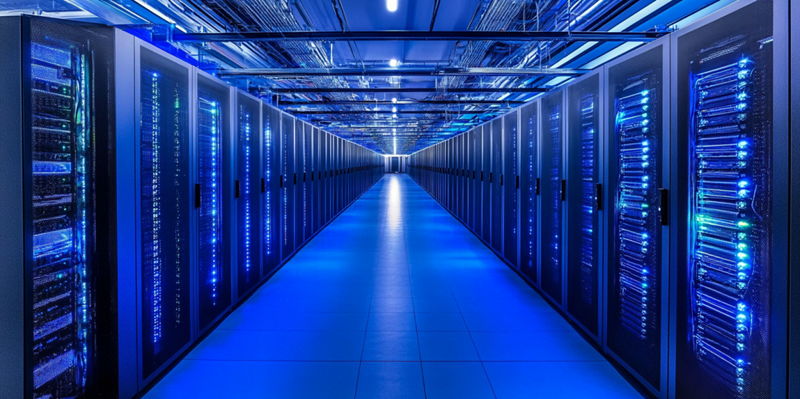
Equinix and Omantel recently inaugurated the SN1 data center in Salalah, Oman, marking a significant milestone in enhancing global connectivity and digital infrastructure. This facility marks Equinix’s sixth establishment in the Middle East and its second in Oman, following the successful launch of the MC1 data center in Muscat. As a carrier-neutral and open-access Equinix International Business Exchange™ (IBX®) data center, SN1 is poised to optimize the routes of crucial connections, enabling businesses and service providers to reach four continents more directly and cost-effectively. The strategic positioning of SN1 in Salalah is expected to significantly reduce latency and improve global network resilience.
The new data center aims to enhance traffic flows across the Middle East, reinforcing the region’s digital infrastructure by providing direct fiber connectivity to the existing MC1 facility in Muscat. This connection facilitates carriers, hyperscalers, content providers, and cloud service providers to co-locate their critical infrastructure, thus improving their regional operations. The establishment of SN1 supports Equinix’s overarching strategy to create network-dense and highly interconnected ecosystems, benefiting both local and international stakeholders. By offering multiple subsea cable extensions, SN1 contributes to bolstering global connectivity across various continents, a move that is expected to have substantial implications for international data routes.
Strategic Positioning and Global Impact
Kamel Al-Tawil, Managing Director of Equinix for the MENA region, emphasized the importance of the SN1 data center’s extension to multiple subsea cables, which align with Equinix’s goal of fostering highly interconnected ecosystems worldwide. The introduction of SN1 is not only expected to improve regional traffic flows but also enhance global connectivity by providing a vital link between continents. This aligns with Equinix’s strategy of fostering network-dense environments, thereby allowing businesses to seamlessly interact within a robust digital ecosystem. Talal Al Mamari, CEO of Omantel, highlighted the SN1 data center’s role in advancing their vision of establishing Salalah as a global connectivity hub. He mentioned future plans to land multiple subsea cables in Salalah within the next year, further solidifying the city’s reputation as a critical node at the crossroads of major international routes between Asia, Europe, Africa, and Australia.
The joint venture Zain Omantel International (ZOI) signifies a substantial leap in the wholesale telecom sector, offering comprehensive connectivity solutions throughout the Middle East and beyond. Omantel’s substantial investment of more than USD 1 billion in international networks and data centers over the past decade has successfully attracted global hyperscalers to establish their regional hubs in Oman. This is indicative of the country’s growing prominence and strategic importance in the global digital landscape. The formation of ZOI not only strengthens the region’s telecommunication infrastructure but also positions Oman as a pivotal player in global connectivity. The SN1 data center, therefore, represents more than just a new facility; it symbolizes Oman’s increasing integration into the global digital economy.
Future Prospects and Regional Benefits
Equinix and Omantel have celebrated the launch of the SN1 data center in Salalah, Oman, marking a significant advancement in global connectivity and digital infrastructure. This facility is Equinix’s sixth in the Middle East and second in Oman, following the opening of the MC1 data center in Muscat. As a carrier-neutral and open-access Equinix International Business Exchange™ (IBX®) data center, SN1 is designed to enhance connection routes, making it easier and more cost-effective for businesses and service providers to reach four continents.
Strategically located in Salalah, the SN1 data center aims to reduce latency and strengthen global network resilience. It also intends to boost traffic flows across the Middle East by offering direct fiber connectivity to the MC1 facility in Muscat. This setup allows carriers, hyperscalers, content providers, and cloud service providers to co-locate their essential infrastructure, improving regional operations.
With its multiple subsea cable extensions, SN1 plays a crucial role in enhancing global connectivity and supporting Equinix’s strategy to develop network-dense, highly interconnected ecosystems. This development will benefit both local and international stakeholders, significantly impacting international data routes.