

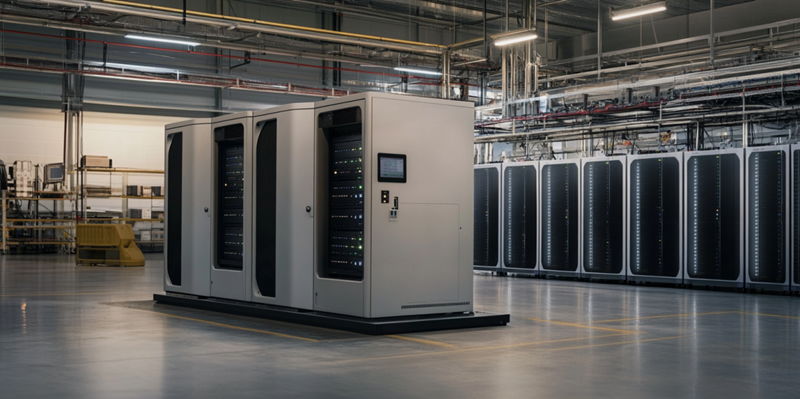
Data centers are the backbone of modern technology firms like Amazon and Google, providing the necessary infrastructure to support their vast digital operations. However, constructing these facilities presents significant challenges, particularly in terms of power supply. The growing adoption of artificial intelligence (AI) has further intensified the pressure on data center construction timelines, necessitating rapid and efficient power solutions. This article explores how innovative battery solutions are transforming data center construction, addressing power supply challenges, and promoting sustainability.
The Power Demands of Data Center Construction
Data center construction requires substantial power, especially during the building phase. Heavy construction equipment such as boom lifts, scissor lifts, and excavators demand around 300 kilowatts of electricity. Traditional power sources, like oversized generators, have been used to meet these high-capacity demands. However, these generators come with significant drawbacks, including increased emissions, higher fuel consumption, and noise pollution. As the push for sustainable practices intensifies, these issues highlight the need for more efficient and environmentally friendly power solutions on construction sites.
Mercury Engineering, a Dublin-based construction firm, has recognized these challenges and is pioneering the use of battery storage solutions to meet the temporary high-capacity power demands during data center construction. By incorporating battery storage, Mercury Engineering aims to mitigate the issues posed by unreliable grid supplies and reduce the environmental impact of construction activities. This strategy not only ensures a reliable power supply but also aligns with broader industry goals to minimize carbon footprints and adopt greener construction practices.
Benefits of Battery Storage Solutions
Battery storage solutions offer several advantages over traditional power sources. One of the primary benefits is the reduction of emissions. Oversized generators, while capable of meeting peak loads, contribute significantly to carbon emissions. Battery storage, on the other hand, provides a cleaner alternative, helping to create lower-emission construction sites. This shift is particularly relevant as industries strive to meet stricter environmental regulations and enhance their sustainability profiles. Implementing battery storage solutions can also improve the overall efficiency of construction projects, as batteries can be charged during off-peak hours and discharged as needed.
Additionally, battery storage solutions are more efficient in terms of fuel consumption. Generators often run at partial loads, leading to inefficient fuel use. Batteries can be charged during off-peak hours and discharged as needed, optimizing power generation and reducing overall fuel consumption. This efficiency is particularly beneficial in remote locations, where constructing dedicated substations or grid connections can be cost-prohibitive and logistically challenging. By reducing the reliance on fuel-hungry generators, construction firms can cut costs and lessen their environmental impact, making battery storage an attractive alternative.
Temporary Electrical Installations
To ensure reliable power delivery throughout the construction process, Mercury Engineering employs meticulously planned temporary electrical installations. These installations are commissioned at the beginning of projects and decommissioned upon completion. While they are expensive and can impact project timelines, they are necessary to provide a consistent power supply during construction. Thorough planning and execution of these installations ensure that power needs are met without interruptions, thus maintaining construction project momentum and meeting deadlines.
The use of temporary electrical installations, combined with battery storage solutions, allows construction firms to meet the high power demands of data center construction without relying solely on traditional power sources. This approach not only enhances efficiency but also aligns with broader industry efforts to reduce carbon emissions and embrace sustainable practices. By integrating battery storage with temporary electrical setups, firms can create more resilient and adaptable power systems that cater to the fluctuating demands of the construction process, ultimately leading to more streamlined and eco-friendly operations.
Modular Construction Techniques
Another innovative solution to the power challenges of data center construction is modular construction techniques. Compass Datacenters, a company specializing in constructing and operating hyperscale and cloud computing facilities, is at the forefront of this approach. Modular construction involves off-site manufacturing and prefabrication, which accelerates construction timelines and reduces on-site power requirements. This method allows better control over the construction process, ensuring higher quality standards and minimizing waste generation during the build phase.
Nancy Novak, Chief Innovation Officer at Compass Datacenters, emphasizes the importance of sustainable manufacturing processes. By creating standardized components in controlled factory environments, modular construction reduces the need for on-site power and increases overall efficiency. This method also prioritizes the use of local materials and sustainable practices, further contributing to the reduction of carbon emissions. Through the adoption of modular techniques, companies like Compass Datacenters can significantly cut the environmental impact of data center construction, driving the industry toward greener and more responsible building practices.
Industry-Wide Coordination for Sustainable Practices
Modern technology giants like Amazon and Google rely heavily on data centers for their digital operations. These centers form the crucial infrastructure that supports their vast array of online services. However, building these facilities comes with significant hurdles, especially when it comes to guaranteeing a stable power supply. The fast-growing use of artificial intelligence (AI) has only heightened the pressure on data center construction schedules, demanding swift and efficient power solutions to keep up. This article delves into the ways innovative battery solutions are revolutionizing data center construction. By tackling power supply issues head-on, these technologies facilitate quicker build times and enhance sustainability. As power requirements continue to surge, these new battery solutions are more than just convenient—they’re essential for meeting the ever-growing demands of the digital age. Consequently, they not only make construction faster and more efficient but also contribute to the broader goal of promoting environmental sustainability within the tech industry.