

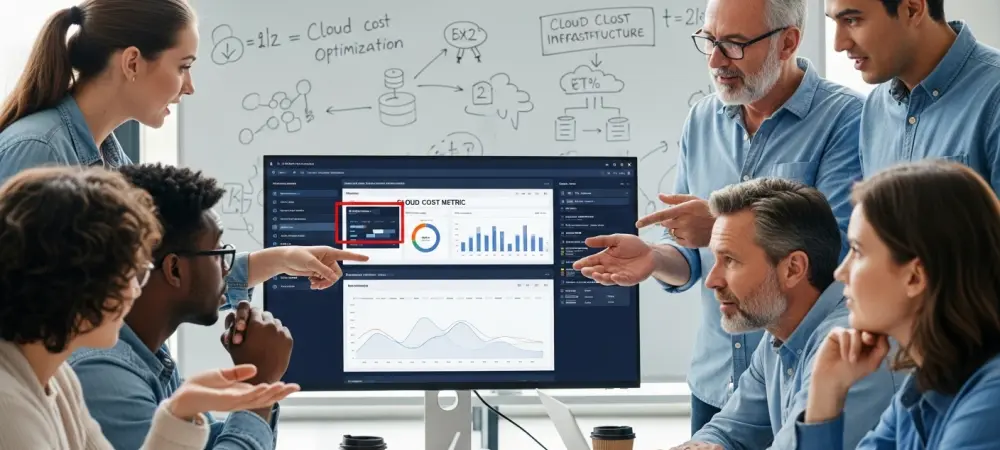
The silent, accumulating cost of an unchecked cloud deployment can often overshadow the value of the very features it supports, turning a technical achievement into a significant financial liability before anyone on the finance team even sees an invoice. For years, cloud expenditure was treated as a problem to be solved retroactively—a line item for the finance department to scrutinize long after the architectural decisions were made. This outdated model is crumbling under the pressure of modern, agile development. The new paradigm redefines cloud cost not as an operational expense to be managed, but as a core feature metric to be engineered, measured, and optimized right alongside performance indicators like latency and error rates. This guide outlines the best practices for embedding this cost-aware mindset directly into the engineering culture.
The Shift from Financial Afterthought to Core Engineering Concern
In fast-paced engineering environments, the velocity of innovation often leads to an unintended consequence: unmanaged and rapidly escalating cloud spending. The traditional separation of duties, where engineers build and finance manages the bills, creates a critical information gap. Engineers, who possess the deepest understanding of the system’s architecture, lack the cost visibility to make financially sound decisions. Conversely, finance teams have the cost data but lack the technical context to identify the root causes of overspending. This disconnect is no longer sustainable.
Treating cloud cost as a feature metric bridges this divide by placing ownership directly with the teams making the technical choices. Just as an engineer would not ship a feature with 500ms latency, they should not deploy infrastructure with an unexamined and disproportionate cost impact. By integrating cost into the development lifecycle, it becomes a tangible, measurable attribute of the software itself. This shift empowers engineers to build not just functional and performant systems, but also efficient and profitable ones.
Why the Traditional Approach to Cloud Cost Management Fails
Legacy FinOps models are fundamentally reactive. They operate on monthly billing cycles, analyzing historical data to identify spending anomalies and recommend optimizations. This approach is inherently flawed in a DevOps world where infrastructure can be provisioned and destroyed dozens of times a day. By the time a finance team flags a cost spike on a monthly report, the engineer responsible may have moved on to other tasks, and the context behind the change is often lost. This latency between action and consequence makes meaningful optimization nearly impossible.
Shifting cost ownership to engineers transforms this reactive process into a proactive one. When developers can see the cost implications of their code changes in real-time, they can make smarter architectural choices from the outset. This immediate feedback loop prevents budget overruns before they happen and fosters a deeper understanding of how system design translates to operational expenditure. The result is a more resilient, efficient, and cost-effective architecture built by teams who are fully accountable for the entire lifecycle of their services.
Actionable Strategies for Building a Cost-Aware Engineering Culture
Integrating cost management into the software development lifecycle requires a combination of cultural shifts, new workflows, and tactical habits. The following practices provide a clear roadmap for engineering teams to take control of their cloud spending and build efficiency into their daily operations. Each step is designed to make cost a visible, measurable, and owned component of the engineering process.
Treat Cost as Code by Embedding it in Your Workflow
The most effective way to manage cloud costs is to treat them as an engineering problem that can be solved with code and automation. This involves shifting from periodic, manual analysis to a system where cost is a quantifiable metric embedded directly into the development workflow. By making cost estimates a standard part of the development and deployment process, teams move from reactive damage control to proactive, data-driven decision-making.
Case Study: Integrating Cost Previews into CI/CD Pipelines
A powerful application of this principle is the integration of cost estimation tools directly into Continuous Integration and Continuous Deployment (CI/CD) pipelines. Teams using Infrastructure as Code (IaC) tools like Terraform can incorporate utilities such as Infracost to generate cost previews for any proposed change. Before a developer merges a pull request, the pipeline automatically comments with a clear summary: “This change will increase the estimated monthly cost by $340.” This simple, automated check serves as a crucial guardrail, flagging potentially expensive changes and prompting a discussion before they ever reach production, effectively preventing costly mistakes.
Foster a Culture of Ownership Through Radical Visibility
Technical solutions alone are insufficient; a fundamental cultural shift is required. Engineers must see themselves not only as builders of features but also as stewards of the resources required to run them. This sense of ownership cannot be mandated; it must be cultivated by providing teams with the tools and data they need to understand their impact. Radical visibility is the cornerstone of this cultural change, making cost data accessible, understandable, and actionable for every engineer.
Case Study: Empowering Teams with Real-Time Dashboards and Budgets
One team successfully fostered this culture by creating a dedicated AWS CloudWatch dashboard for each service, tracking real-time spending against a pre-agreed monthly budget. Automated alerts were configured to notify the team’s communication channel when spending reached 80% of the budget. Crucially, these alerts were not punitive. Instead, they triggered a proactive conversation: “Looks like we are tracking ahead of budget. What changed?” This approach empowers the team to own the narrative, explain variances—such as scaling for a product launch or running a new experiment—and take corrective action themselves, transforming cost management from a top-down mandate into a collaborative, team-driven responsibility.
Implement Tactical Habits for Continuous Cost Optimization
Beyond strategic shifts, significant savings can be realized through simple, high-impact routines that eliminate waste. Many cloud environments accumulate “zombie” resources—assets that are provisioned but no longer in use, silently consuming the budget. Establishing automated or regular manual processes to identify and decommission these resources ensures that teams are only paying for what they actively use, promoting continuous efficiency.
Case Study: The Zombie Cleanup Job That Saved $8,000 a Month
An organization implemented a simple yet highly effective weekly automated script to scan its cloud environment for common sources of waste. The script identified resources like unattached EBS volumes, idle EC2 instances with CPU utilization below 5% for over 30 days, and old snapshots. Instead of deleting them immediately, it tagged them as “candidate-for-deletion” and notified the owning team. If no action was taken within seven days, the resources were automatically decommissioned. This single, low-effort automation resulted in immediate and recurring savings of over $8,000 per month, demonstrating the immense value of tactical cost hygiene.
Focus on the Metrics and Cost Drivers That Truly Matter
Not all cloud costs are created equal. To achieve the greatest impact, teams must look beyond top-line compute numbers and focus on the underlying unit economics of their services and the often-overlooked cost centers. Understanding the cost per customer or cost per transaction provides a much clearer picture of efficiency than an aggregate monthly bill. Similarly, non-production environments and data transfer fees are frequently major sources of waste that can be dramatically reduced with targeted policies.
Case Study: Slashing Non-Production Spending by 60 Percent
A development organization noticed that a significant portion of its cloud bill was attributed to development, testing, and staging environments that ran 24/7. Recognizing that these resources were only needed during business hours, they implemented an automated scheduler. This system automatically shut down all non-production environments at 7 p.m. on weekdays and kept them off through the weekend, starting them back up at 8 a.m. Monday morning. This straightforward policy change required minimal engineering effort but successfully reduced their non-production spending by over 60%, freeing up a substantial budget without affecting developer productivity.
The Future of FinOps: An Integrated Engineering Discipline
The evolution of cloud cost management has transformed FinOps from a siloed financial function into an intrinsic part of engineering excellence. It is no longer a separate discipline but a set of principles and practices woven into the fabric of modern software development. In this model, architecture reviews naturally include cost analysis, and post-mortems evaluate financial impact alongside reliability. The goal is not to achieve perfect, absolute optimization but to foster a state of continuous visibility, measurement, and ownership.
This journey begins with small, incremental steps. Whether it is implementing rigorous tagging, setting up a single team budget, or adding cost previews to one CI/CD pipeline, the key is to start. By empowering engineers with the right data and context, organizations found that their teams naturally became better stewards of their infrastructure. They learned that understanding cost forced a deeper understanding of the systems they built because one cannot truly optimize what one does not fully comprehend. This integration of financial accountability and technical execution marked the true arrival of a mature cloud operating model.