

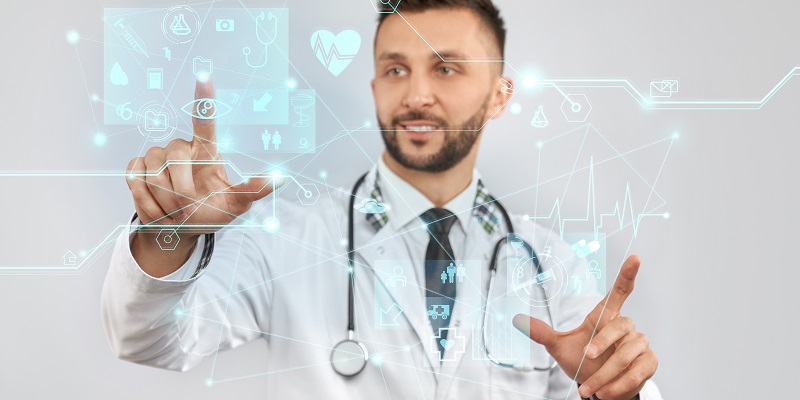
The rapid digitization of healthcare services is transforming the industry and reshaping the way healthcare is delivered. With advancements in technology, healthcare providers are harnessing the power of digital solutions to enhance patient care, improve outcomes, and increase efficiency. This article explores the various ways in which digitization is revolutionizing healthcare delivery.
Blockchain Technology and Healthcare Data Management
Blockchain technology is expected to revolutionize healthcare data management by ensuring security, transparency, and interoperability. By utilizing distributed ledger technology, healthcare organizations can securely store and share patient information, allowing for seamless and efficient data exchange between different stakeholders.
Ensuring security, transparency, and interoperability
Blockchain offers unmatched security, as each transaction is encrypted and linked to the previous one, creating an incorruptible chain of information. Additionally, it provides unparalleled transparency, enabling patients to have greater control over their medical data and access to their complete health history. Furthermore, the interoperability of blockchain allows different healthcare entities to easily communicate and share information, eliminating the need for redundant data collection and reducing medical errors.
Artificial Intelligence and Machine Learning in Healthcare
Artificial intelligence and machine learning are playing a crucial role in transforming healthcare. These technologies analyze vast amounts of medical data to aid in diagnosis, treatment planning, and drug discovery. By recognizing patterns and predicting outcomes, AI algorithms help healthcare professionals make more accurate and timely decisions, ultimately leading to improved patient outcomes.
Improved patient outcomes
With AI-powered systems, healthcare providers can optimize treatment plans based on individual patient characteristics and previous medical records. This personalized approach leads to more effective and tailored treatments, resulting in better patient outcomes. Machine learning algorithms also enable the identification of risk factors and early detection of diseases, facilitating proactive interventions and preventive care.
Telemedicine and Remote Patient Monitoring
Telemedicine and remote patient monitoring are becoming increasingly popular, allowing patients to access healthcare services from the comfort of their homes. Through video consultations and virtual visits, patients can seek medical advice, receive diagnoses, and obtain prescriptions without physically visiting a clinic or hospital. This convenient and accessible healthcare delivery model is particularly beneficial for individuals with mobility limitations or those living in remote areas with limited access to medical facilities.
Comfortable access to healthcare services from home
Remote patient monitoring further enhances the capabilities of telemedicine by enabling continuous monitoring of patients’ health parameters from a distance. Wearable devices and IoT-connected sensors capture and transmit vital signs, activity levels, and other relevant data, providing healthcare professionals with real-time insights into patients’ well-being. This proactive approach allows for the early detection of health issues and prompt intervention, significantly improving patient outcomes and reducing emergency situations.
Internet of Things in Personalized Healthcare
The Internet of Things (IoT) has revolutionized healthcare by enabling better remote monitoring of patients’ health parameters. Wearable devices, such as smartwatches and fitness trackers, collect valuable data on heart rate, sleep patterns, and physical activities. This information, combined with other health records, offers healthcare providers a holistic view of patients’ health, enabling personalized treatment plans and proactive interventions.
Valuable data for personalized healthcare
The data collected from IoT devices also forms the foundation for personalized healthcare. Analytics and machine learning algorithms analyze this data to identify trends, patterns, and potential health risks. With this knowledge, healthcare professionals can deliver targeted interventions and preventive measures, empowering individuals to take control of their health and well-being.
Data Analytics and Predictive Modelling
Data analytics and predictive modeling are transforming healthcare by identifying patterns, predicting outcomes, and improving decision-making processes. By leveraging large datasets and advanced algorithms, healthcare providers can uncover insights that were previously hidden, allowing for early diagnosis, precise treatment plans, and targeted interventions.
Improved decision-making processes
The integration of data analytics and predictive modeling enables healthcare professionals to make more informed and evidence-based decisions. By utilizing algorithms that analyze patients’ medical history, genetic information, and lifestyle factors, healthcare providers can tailor treatment plans to individuals’ needs, minimizing adverse effects and maximizing the likelihood of successful outcomes.
Virtual and Augmented Reality in Healthcare
Virtual and augmented reality technologies are revolutionizing medical training, patient education, and surgical procedures. Through realistic simulations, medical students and professionals can practice complex procedures, enhancing their skills and confidence. Moreover, these technologies aid in patient education by providing interactive and immersive experiences that explain medical conditions, treatments, and surgical procedures in a visually engaging manner.
Enhanced capabilities for healthcare professionals
Virtual reality also enhances the capabilities of healthcare professionals during surgical procedures. Surgeons can utilize augmented reality overlays to visualize medical images, such as CT scans and MRIs, directly on the patient’s body, enabling precise and minimally invasive interventions. These technologies improve patient safety, reduce surgical complications, and shorten recovery times.
Wearable Devices and Mobile Health Apps
Wearable devices and mobile health apps are empowering individuals to actively manage their health and participate in their own care. These technologies enable individuals to track their physical activity, monitor vital signs, and manage chronic conditions from the convenience of their smartphones or wearable devices. By having continuous access to their health information, patients can make informed decisions, set personalized goals, and take proactive steps to improve their well-being.
Cloud Computing in Healthcare
The use of cloud computing in healthcare is increasing, enabling the secure storage, analysis, and sharing of extensive patient data. Cloud-based electronic health record systems allow healthcare organizations to securely store and access patient information from anywhere, facilitating seamless care coordination among different providers. Additionally, cloud-based analytics platforms offer scalable computing power for processing large datasets, advancing medical research, and accelerating discoveries.
Efficient and accessible healthcare information management
Cloud computing also enables efficient and accessible healthcare information management. Healthcare providers can securely share patient records across different institutions, eliminating the need for physical copies and reducing administrative burdens. Furthermore, cloud storage ensures data backup and disaster recovery mechanisms, safeguarding patient information from potential loss or damage.
The rapid digitization of healthcare services is revolutionizing the delivery of patient care. Technologies such as blockchain, artificial intelligence, telemedicine, IoT, wearable devices, and cloud computing are transforming healthcare by ensuring security, personalization, accessibility, and efficiency. As collaboration and interoperability strengthen, the seamless exchange of patient information will become more prevalent, leading to improved patient outcomes and a transformed healthcare landscape. The future of healthcare lies in the digital realm, offering unprecedented opportunities to enhance the health and well-being of individuals worldwide.