

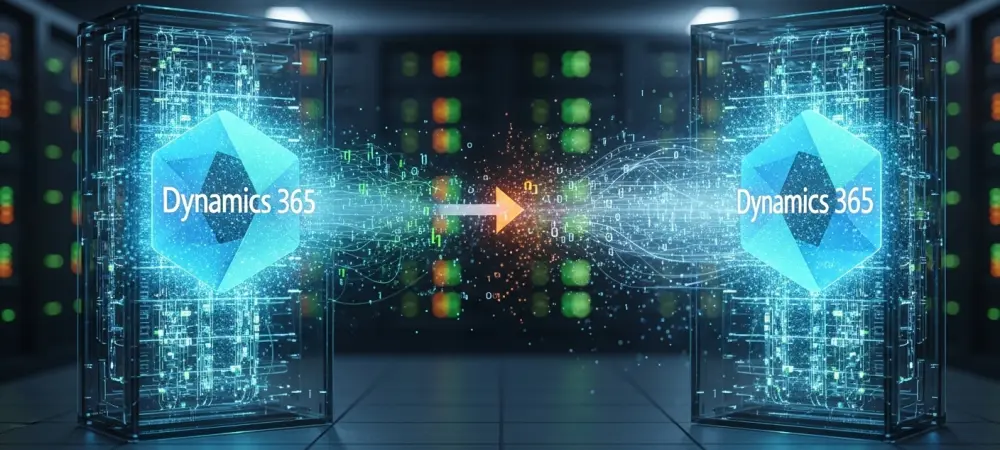
Modern enterprise resource planning demands a level of agility that traditional, manual cloning methods simply cannot provide without introducing catastrophic operational risks. As organizations lean more heavily on Microsoft Dynamics 365 to manage their core business logic, the ability to create high-fidelity, non-production environments has transitioned from a convenience to a mission-critical necessity. This review examines how automated replication technology has redefined the standard for environment isolation and data synchronization, moving away from the error-prone “lift and shift” approach that once dominated the sector.
Evolution and Principles of Dynamics 365 Cloning
The shift from manual database restoration to sophisticated environment cloning reflects a broader trend toward infrastructure as code. In the past, developers often struggled with “dirty” data or mismatched configurations that rendered sandbox environments useless for authentic testing. Current replication principles prioritize environment isolation, ensuring that a clone remains a functional mirror of production without the risk of bleeding over into live operations. This separation is vital for maintaining the integrity of complex business logic during development cycles.
Relevance in the current technological landscape cannot be overstated, as businesses face increasing pressure to innovate faster while maintaining strict uptime. By decoupling the replication process from manual administrative oversight, organizations can now generate mirrors that accurately reflect the state of their ERP. This evolution allows for a more fluid movement between development stages, providing a safe harbor for experimentation that was previously hindered by the latency of traditional environment refreshes.
Technical Pillars of Secure Replication
Automated Data Masking and Privacy Protection
One of the most significant advancements in modern replication tools is the implementation of automated data masking. This technology goes beyond simple obfuscation; it intelligently identifies and replaces sensitive financial records and personally identifiable information (PII) with synthetic data that maintains the original data’s relational integrity. This ensures that while the numbers are fake, the system’s reaction to those numbers remains statistically identical to production behavior.
The performance of these masking algorithms is a critical metric for any enterprise-grade solution. High-speed masking allows for the rapid turnover of test environments without compromising compliance with global privacy regulations. By scrubbing sensitive assets during the replication flight, tools like Clone Commander eliminate the window of vulnerability where raw production data might otherwise sit unprotected in a less secure development tier.
Integration Suppression and Redirection
A frequent hazard in cloning is the “integration collision,” where a non-production environment unintentionally triggers a live external service, such as a shipping provider or a payment gateway. Advanced replication frameworks solve this by implementing strict redirection protocols. These tools automatically identify outbound connection points and reroute them to mock services or internal listeners, effectively “silencing” the environment from the outside world while keeping its internal logic intact.
This level of isolation is achieved through a deep understanding of the D365 connectivity layer. By suppressing these integrations at the architectural level, the technology prevents the accidental corruption of third-party data or the dispatch of erroneous notifications to actual customers. This technical guardrail is what distinguishes a professional replication tool from a standard sandbox refresh, providing the confidence needed to test high-stakes integration logic safely.
Emerging Trends in Environment Management
The industry is currently witnessing a departure from basic, all-or-nothing sandbox refreshes toward granular, automated cloning. This shift allows administrators to exercise precise control over data retention, choosing exactly which modules or historical periods to replicate. Such granularity reduces the storage footprint and speeds up the provisioning process, making it possible to spin up specialized environments for specific sprint goals or troubleshooting tasks on demand.
Furthermore, there is a growing movement toward “clean-room” testing environments that prioritize data privacy compliance over sheer data volume. These trends reflect a change in corporate behavior where the “more is better” philosophy regarding data is being replaced by a focus on “high-quality, safe” data. This shift ensures that the development pipeline remains lean and compliant, reducing the legal liabilities associated with holding vast amounts of sensitive information in non-production tiers.
Real-World Strategic Applications
Replicated environments have become indispensable for performance validation in high-volume industries like retail and manufacturing. In these sectors, a minor bug in the ERP can lead to massive logistical delays. By using a mirrored environment, technical teams can stress-test remediation efforts against production-scale data loads without any risk to the live system. This provides a realistic benchmark for how a patch will perform once it is deployed to the primary production instance.
Beyond routine testing, these tools are vital for reproducing the “edge-case” bugs that only appear under specific, complex data conditions. When a production error occurs, the ability to clone the environment exactly as it was during the failure allows for deep-root cause analysis. This strategic application of replication technology ensures that fixes are validated against the exact logic that failed, leading to higher stabilization rates and more predictable release cycles.
Critical Obstacles and Compliance Risks
Despite these advancements, the technology faces significant hurdles, particularly regarding broken security models. Manual data movement often fails to account for the nuanced differences in user permissions between production and testing tiers, leading to unauthorized access within the clone. Additionally, organizations must navigate the complexities of Microsoft’s licensing regulations, as improper replication can lead to unintended compliance violations if non-production usage exceeds specific contractual limits.
To combat these risks, developers are increasingly building “guardrails” directly into the software. Tools like Clone Commander serve as a regulatory layer, preventing the replication of data if certain safety conditions are not met. These built-in constraints help mitigate the inherent dangers of unguided data movement, providing a structured framework that guides the administrator through the process while enforcing best practices for security and compliance.
Future Outlook for Automated Provisioning
The future of replication lies in its transition from a reactive administrative task to a proactive, strategic diagnostic tool. We can expect breakthroughs in automated data scrubbing that use machine learning to identify and mask sensitive fields without manual configuration. This would allow for even more rapid environment provisioning, further reducing the gap between identifying a problem in production and having a safe, mirrored space in which to solve it.
Long-term development will likely focus on the “self-healing” environment, where replication tools can automatically detect and fix configuration drifts between tiers. This modernization will fundamentally change how enterprise software is maintained, allowing for a faster and safer evolution of the D365 ecosystem. As these tools become more intelligent, the speed of innovation within the Microsoft ecosystem will accelerate, driven by the ability to test complex changes in near-real-time.
Summary of Findings and Technological Impact
The evaluation of Dynamics 365 environment replication revealed that the transition from manual cloning to automated frameworks was a decisive turning point for ERP management. Organizations that adopted these structured tools successfully mitigated the high risks of data exposure and integration collisions that plagued earlier methods. The analysis demonstrated that while standard sandbox refreshes offered a basic level of functionality, they ultimately lacked the sophisticated masking and isolation features required for modern compliance and performance testing.
In retrospect, the shift toward strategic provisioning empowered technical teams to treat replication as a diagnostic asset rather than a clerical burden. This technological leap ensured that data integrity remained intact across the Microsoft ecosystem, fostering a safer environment for modernization. The implementation of specialized guardrails proved essential in maintaining user confidence and navigating the complex legal landscape of data privacy. Ultimately, the move toward automated, high-fidelity cloning established a new benchmark for enterprise stability and security.