

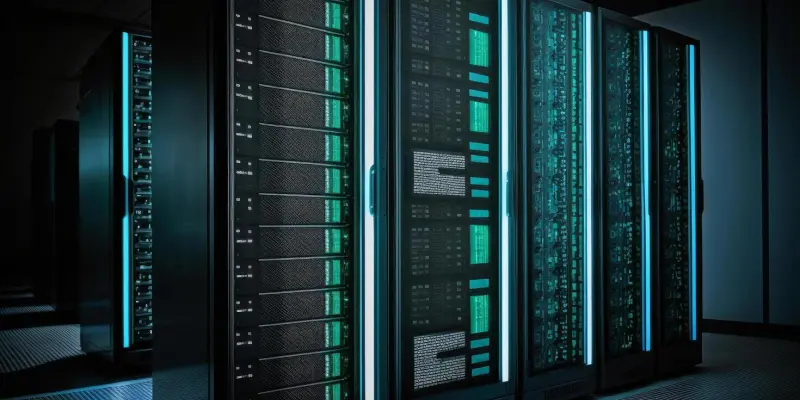
As efforts to reduce carbon footprints gain prominence across global sectors, one pressing challenge remains: ensuring that data centers—a backbone of the digital era—align with net-zero sustainability goals. The growing exchange of data underscores the urgent need for innovative solutions to curb the energy consumption of these crucial facilities. The complexity of managing massive data operations efficiently has placed Vertiv at the forefront of transforming data center dynamics. Vertiv’s strategy hinges on the comprehensive integration of hardware and software, ensuring seamless operations even under the heaviest loads. Balancing sustainability with technological advancement, the company employs state-of-the-art cloud and edge networking services. The eco-friendly orientation of Vertiv is evident in its relentless pursuit of innovative cooling solutions designed to reduce heat-related energy losses. This synergy between power, cooling, and IT is pivotal for the ongoing transformation into net-zero data centers. Such efforts also promote resilience, ensuring systems withstand digital infrastructure’s evolving challenges while simultaneously fulfilling sustainability pledges.
The paradigm shift towards more decentralized data networks relies heavily upon reinforcing the connectivity backbone. Vertiv’s cloud and edge network services serve as a crucial conduit for this transition, blending reliability with sustainability. These services effectively cater to escalating data-driven demands while optimizing network performance. Such cutting-edge innovations underscore the role of digital infrastructure as an enabler rather than a hindrance to sustainability objectives.
On the connectivity front, Stelia has emerged as a disruptive force by addressing inherent limitations within high-capacity wide-area networking. By expanding its footprint into 600 sites across 30 countries, Stelia is reshaping the narrative of connectivity for the digital era. Their efforts effectively eliminate barriers, thereby ensuring seamless communication channels that are not only faster but also environmentally mindful. This advancement is particularly significant, aligning Stelia with broader sustainability goals and indicating a conscious shift towards green technology.
Stelia’s transformation into a global connectivity powerhouse is further exemplified by its initiative to forge a community that thrives on shared digital infrastructure. Such an expansive network architecture is fortified by software-driven solutions, ensuring optimized operations and enhanced resilience. The collaborative efforts embedded within their strategy underscore the importance of unified progress toward data management that harmonizes with net-zero mandates. By positioning themselves at the nexus of connectivity and sustainability, Stelia propels the discussion of future digital infrastructure into territories that champion innovation without sacrificing environmental priorities.
Within the realm of digital infrastructure, Virtus Data Center stands out for its unwavering commitment to reliable and sustainable operations throughout the UK and Europe. This promise of operational excellence is further strengthened through its association with ST Telemedia Global Data Centres and strategic partnerships for green investments. The foresight embodied in their strategy is indicative of their long-term vision to sculpt a responsible infrastructure capable of satisfying stakeholder needs. By nurturing such sustainable frameworks, Virtus fosters accountability and balance, enhancing their reputation as industry leaders in sustainable data center operations.
The specialized focus of Accelsius on redefining data center cooling systems through its patented NeuCool™ technology underscores a commitment to sustain viable and ecologically responsible methods. By integrating real-time monitoring and sustainable cooling techniques, Accelsius provides risk-free scalability that ensures performance benchmarks align with sustainability targets. These pioneering methods ensure cooling processes are energy-efficient, contributing to the broader sustainability narrative. Accelsius’s innovations facilitate the reduction of carbon footprints while laying a foundational framework for future advancements in cooling and performance.
In the quest to reduce carbon footprints across various global sectors, one significant hurdle is ensuring data centers align with net-zero sustainability ambitions. Pioneering companies such as Vertiv, Stelia, Virtus Data Center, and Accelsius are spearheading innovative approaches that pave the way toward achieving these ambitious sustainability objectives. Each firm contributes uniquely to ensuring that data centers not only fulfill escalating digital needs but also play a positive role in advancing environmental responsibility. By driving change in infrastructure and operational protocols, they aim to create a sustainable digital future, aligning technological advancement with environmental stewardship.