

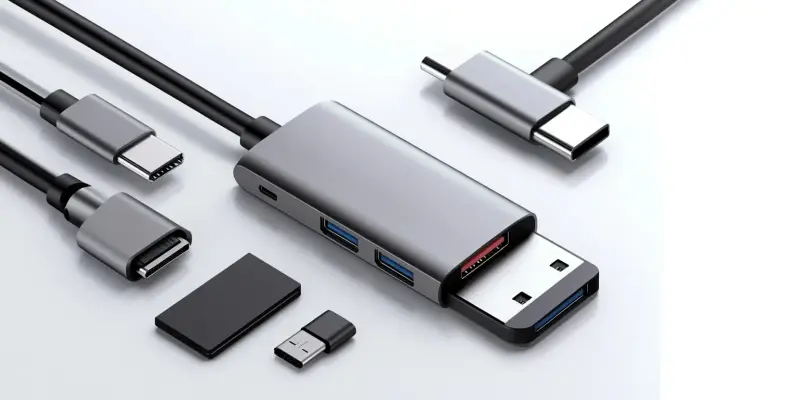
In an era where multitasking and portability are essential for productivity, the Dockcase Smart USB-C “7-in-1” Hub with M.2 SSD Enclosure is shaping the future of USB hub technology. Featuring a modern design with a dedicated touchscreen interface, this hub offers both functionality and a premium aesthetic.
Extensive Connectivity Options
Multiple Ports
The Dockcase Smart USB-C Hub boasts an impressive array of seven ports, meticulously crafted to enhance productivity and streamline connectivity for a wide range of devices. The inclusion of both legacy and modern ports ensures that this hub caters to a broad audience, from professionals using older peripherals to early adopters of current technology.
What sets the Dockcase Hub apart is its user-centric design that prioritizes ease of use. The 100W USB-C PD port is especially notable, providing ample power to charge laptops, tablets, and even some smartphones, ensuring that your devices stay charged throughout the day. The HDMI 2.1 port supports 4K resolution at 120Hz, offering crisp and smooth visuals for those needing detailed and high-quality displays.
SSD Enclosure
Another unmatched feature of this hub is its built-in SSD slot, which supports the M.2 form factor (2230/2242). For users dealing with large files or requiring extensive data transfer capabilities, the SSD slot is a game-changer. When tested, the SK hynix BC711 NVMe SSD achieved read speeds of 1,018 MB/s and write speeds of 940 MB/s, showcasing its ability to handle high data throughput efficiently.
Advanced Features and Performance
Touchscreen Interface
One of the hallmarks of the Dockcase Smart USB-C Hub is its touchscreen interface, a feature rarely seen in similar devices. With a simple touch, users can access vital information about the hub’s performance, including transfer speeds and power delivery metrics. The ability to view and control these parameters can prevent potential bottlenecks in transfer speeds and ensure connected devices receive adequate power.
Cooling and Heat Management
Maintaining optimal performance often hinges on efficient heat management, and Dockcase has addressed this with a robust cooling solution. Effective heat dissipation is critical, particularly when transferring large files or connecting multiple high-power devices simultaneously. With heat management being a critical factor in sustained performance, the cooling features embedded within this hub are a welcome addition.
Market Reception and Considerations
Price Point and Value
The premium cost reflects the advanced capabilities and added functionalities of the device, but it also means that potential buyers must weigh its benefits against their budget constraints. For those who prioritize connectivity, storage, and device performance, the investment may be justified, considering the high-quality experience and increased productivity the hub provides.
Kickstarter Campaign
This state-of-the-art device offers unique features and significant advantages, such as its 7-in-1 configuration and M.2 SSD enclosure, which ensures speedy data transfers and ample storage. The touchscreen interface adds a layer of intuitive control, setting this hub apart from traditional models.