

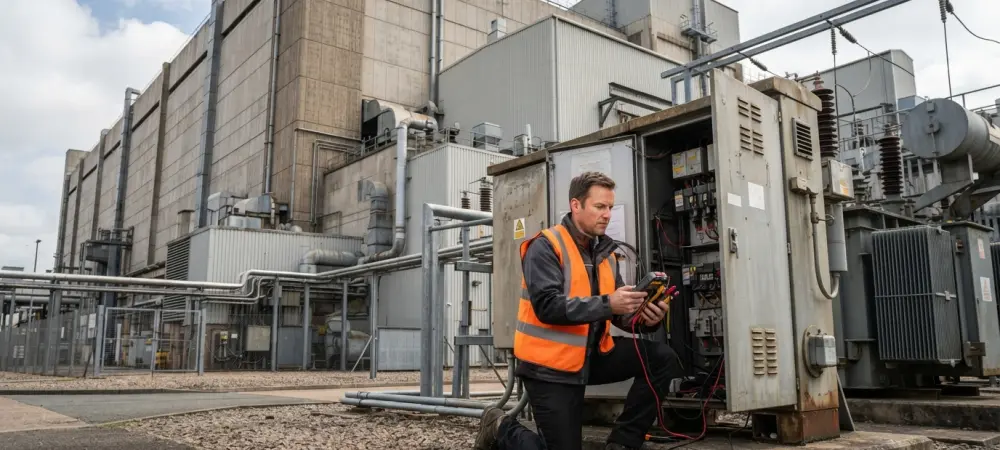
The sight of a billion-dollar industrial facility sitting quietly behind a perimeter of high-security fencing often suggests a bustling hub of human activity, yet the parking lots of modern data centers remain remarkably empty. These structures, often the size of several football fields, house the silicon brains of the modern era, processing everything from global financial transactions to the latest artificial intelligence models. However, for the neighboring communities, the physical silence of these sites often translates to a loud concern regarding the actual return on investment. As we navigate the technological landscape of 2026, the question of whether these “digital warehouses” are true economic engines or merely high-voltage shells has moved to the center of local politics. With governments offering massive tax incentives to attract tech giants, the pressure to prove that these facilities foster long-term prosperity for the average citizen is reaching a fever pitch. Understanding the mechanics of data center employment is no longer a niche concern for economists; it is a vital necessity for any town facing a proposed “cloud” expansion.
The Paradox of Massive Investment and Empty Hallways
Data centers represent a unique industrial contradiction where billions of dollars in capital investment do not equate to thousands of daily commuters. These facilities are designed for machines, not people, operating with a lean staff of specialized technicians, security personnel, and facility managers. This low employee density often creates a perception of “jobless growth,” leading residents to wonder if the tax breaks granted to these companies are being wasted on projects that do not provide a sustainable livelihood for the local population.
Furthermore, the aesthetic of these facilities—windowless concrete boxes surrounded by layers of security—does little to signal community integration. Unlike a traditional factory that hums with visible energy, a data center sits as a static monument to automation. This isolation fuels the debate over whether the economic benefits are staying within the county or simply flowing back to Silicon Valley via the high-speed fiber lines that connect these nodes.
Why the Data Center Job Debate Matters Now
The current surge in high-performance computing, driven by the relentless integration of artificial intelligence into every sector, has triggered a construction boom that shows no signs of slowing down. From the established “Data Center Alley” in Virginia to new rural frontiers in Oregon and South Carolina, these facilities are fundamentally altering the physical and economic geography of the American landscape. Local leaders find themselves caught between the desire to be part of the tech frontier and the responsibility of managing finite local resources like land, water, and electricity.
The debate is particularly sharp because of the scale of the incentives involved. When a county waives millions in property or sales taxes, it is making a calculated bet that the long-term gains will outweigh the immediate fiscal loss. In 2026, as infrastructure demands become more complex, the transparency of these deals has become a primary focus for public advocacy groups. Proving that a data center is a “good neighbor” now requires more than just a press release; it requires a deep dive into the secondary and tertiary jobs that these giants generate over time.
Decoding the Economic Impact: Beyond the Machine Room
Recent research suggests that the economic ripple effect of a data center is rarely instantaneous, often requiring a three-to-five-year period to fully integrate into the local economy. While the construction phase provides a massive, temporary spike in labor demand, the real measure of success lies in the non-construction roles that emerge as the facility matures. Observations indicate that from 2026 to 2031, host counties can expect a gradual but steady increase in employment as the data center establishes its operational footprint.
To accurately predict this growth, economists have moved away from using square footage as a metric, opting instead for power capacity. Data from the last decade suggests that for every megawatt of capacity, approximately 2.7 local jobs are eventually supported. This means a 100-megawatt facility, while appearing empty on the surface, can indirectly bolster roughly 275 positions across the region through long-term maintenance contracts, hardware logistics, and specialized utility management. The “clustering effect” further compounds these gains. Once a community invests in the high-capacity fiber and power grids necessary to support one major tenant, it becomes significantly more attractive for existing operators to expand or for new competitors to enter. This leads to a concentration of technical expertise in the area, creating a self-sustaining ecosystem where the presence of one facility acts as a magnet for further high-tech investment and stable, long-term employment.
Analyzing the Shifting Local Job Market
When looking at where the actual jobs are created, the data reveals that the primary beneficiaries are business-to-business sectors rather than the local consumer economy. Significant employment gains are frequently seen in transportation and warehousing to manage the constant cycle of hardware upgrades and logistics. Additionally, the need for professional and technical services—such as specialized electrical engineering and mechanical cooling maintenance—provides high-wage opportunities for local contractors who can meet the rigorous standards of the tech industry.
In contrast, the “lifestyle” boost that often accompanies office parks or retail centers is largely absent. Local restaurants and small boutiques rarely see a measurable increase in foot traffic because the daily headcount at a data center is simply too small to move the needle. This disconnect means that while the county’s gross domestic product might rise, the traditional main street economy may not feel the impact in the way many hope, leading to a bifurcated economic reality within the same community.
Furthermore, the massive land holdings of these facilities have created a specialized niche for local real estate and industrial property management. Maintaining these vast campuses requires ongoing services that sustain roles in landscape architecture, security operations, and site management. While these are not the “tech” jobs often featured in promotional materials, they represent a stable layer of the local workforce that remains long after the initial construction cranes have departed.
Strategies for Communities to Maximize Employment Gains
To turn these facilities into true community assets, policymakers must look beyond the initial investment and focus on the surrounding supply chain. Rather than just chasing the data center itself, successful local economic development boards targeted the mechanical and electrical firms that service these high-tech giants. By attracting the specialized vendors who maintain cooling systems and power grids, communities captured a much larger share of the secondary employment that these facilities naturally generate. Strategic planning also involved negotiating for community benefit agreements that went beyond simple tax payments. These agreements often included dedicated funding for local workforce training programs or preferential hiring clauses for county residents. By ensuring the local population was prepared for high-skill maintenance and operational roles, municipalities transformed a potential drain on resources into a ladder for upward mobility.
Finally, managing the strain on utilities became a central pillar of successful integration. Leaders worked closely with utility providers to ensure that the massive electricity and water demands of the data centers did not compromise the quality of life or cost of living for existing residents. This proactive stance allowed communities to embrace the digital boom while protecting the long-term stability of their infrastructure, ensuring that the data centers of today did not become the stranded assets of tomorrow.
The path toward sustainable economic growth required a fundamental shift in how local leaders viewed the data center industry. It became clear that success was not measured by the number of people walking through the front door, but by the strength of the industrial ecosystem built around the facility. Policymakers who prioritized the supply chain and local workforce development found that the “empty hallway” paradox was manageable if the broader regional impact was carefully cultivated. Ultimately, those who moved away from short-term retail expectations toward a focus on high-skill B2B growth secured a more resilient economic foundation. The transition toward this specialized model ensured that the digital economy provided tangible benefits to the physical world, turning silent warehouses into anchors for long-term regional prosperity.