

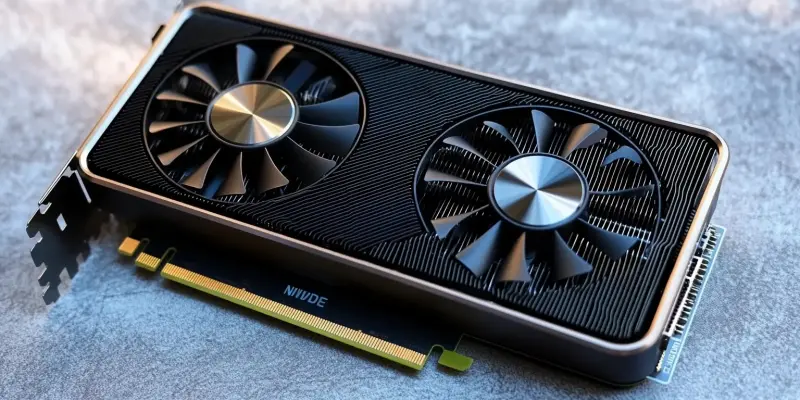
In a recent untimely mishap, Zotac inadvertently revealed Nvidia’s upcoming line-up of next-generation desktop graphics cards, including the RTX 5090 GPU with an impressive 32GB of VRAM, on their website. This leak, discovered by VideoCardz, sheds light on the Blackwell GPUs Nvidia plans to debut, albeit prematurely. The identified models include the Nvidia GeForce RTX 5090, RTX 5090D, RTX 5080, RTX 5070 Ti, and RTX 5070. Notably absent from this list is the RTX 5060, suggesting it may launch later in 2025.
Sneak Peek at Blackwell GPUs
The Revealed Models
The RTX 5090D appears to be a variant targeted at the Chinese market, continuing the trend from its predecessor, the RTX 4090D. An interesting revelation from the leak is the inclusion of GDDR7 VRAM in all the listed models, with the flagship RTX 5090 equipped with a substantial 32GB of video memory, marking a significant upgrade from the current-generation maximum of 24GB. This substantial increase in VRAM capacity positions the RTX 5090 as a powerhouse for handling intense graphical computations, pushing the boundaries of what users can expect from their gaming and professional rendering tasks.
Another aspect to consider is Nvidia’s choice to escalate the memory configuration across the range. The inclusion of GDDR7 hints at higher bandwidth capabilities, which could mean quicker data processing and generally enhanced performance metrics. Gamers, content creators, and professionals in fields requiring extensive graphical power will likely benefit from these upgrades. This indicates a considerable leap in technology and shows Nvidia’s intent to maintain its competitive edge in the high-stakes GPU market.
Targeted Market Variants
While the global market will see the launch of several new models, the RTX 5090D is particularly noteworthy for its specific targeting. The ‘D’ variant traditionally focuses on the Chinese market, a trend Nvidia appears committed to continuing. These models often come with slight tweaks in their features or performance settings to cater to local preferences and requirements. By customizing its offerings, Nvidia can penetrate deeper into regional markets and solidify its presence.
The staggering capacity of the RTX 5090 models does not overshadow the importance of the other entries in the lineup. Each has been designed to meet niche requirements within the broader graphics card market. The RTX 5080, for instance, offers a balanced combination of performance and affordability, making it suitable for mainstream gamers who demand high quality without breaking the bank. Meanwhile, the RTX 5070 Ti and RTX 5070 aim to satisfy mid-range consumers who need reliable performance for day-to-day tasks and moderate gaming. Nvidia seems committed to offering a spectrum of products that cater to various user needs, ensuring that each segment of the market is appropriately addressed.
Unveiling Advanced Memory Configurations
GDDR7: The Game Changer
The inclusion of GDDR7 VRAM in these new models is one of the most compelling aspects of the leak. The transition from GDDR6 to GDDR7 represents a significant milestone in memory technology. GDDR7 promises higher bandwidth and better energy efficiency, which can translate into better performance and lower power consumption. For consumers, especially gamers and content creators, the shift to GDDR7 means experiencing faster load times, smoother gameplay, and more responsive workflows in creative applications.
The flagship RTX 5090, with its 32GB of GDDR7 VRAM, is a testament to Nvidia’s focus on advancing their hardware to cater to high-end users. Such a vast amount of video memory is likely to appeal to professionals who work with 3D rendering, video editing, and other resource-intensive applications. Moreover, the increased memory will also benefit future-proofing the card, ensuring that it remains relevant even as software demands continue to grow more complex.
Strategic Pacing and Release Plans
The potential launch timeline has sparked considerable speculation among tech enthusiasts. The absence of the RTX 5060 in this initial reveal hints at a staggered release strategy from Nvidia. By not launching all models at once, Nvidia can build sustained anticipation and interest in its new products. This approach also allows the company to make adjustments based on initial consumer feedback and market conditions, optimizing each release for maximum impact.
Furthermore, speculation about a CES 2025 debut highlights the importance Nvidia places on major tech events for introducing its groundbreaking innovations. These events provide the perfect platform to showcase new technology to a global audience, and Nvidia has historically used them to present its most significant advancements. While the exact release details and specifications remain speculative, the expected announcements at CES could set new benchmarks and redefine industry standards.
Nvidia’s Vision for Future GPUs
Performance Benchmark Anticipation
This leak highlights the keen interest and speculation surrounding Nvidia’s future GPU architecture, as the company continues to advance in high-memory, powerful graphics solutions. The RTX 5090’s rumored high clock speeds and slim form factor add to the anticipation, suggesting a possibly groundbreaking performance tier. Based on the data revealed, Nvidia’s Blackwell architecture appears designed to deliver unprecedented computational power, aiming to outshine both current and forthcoming competitors’ offerings.
The disclosed details underline Nvidia’s commitment to pushing the envelope in graphical performance and efficiency. By incorporating advancements like GDDR7 and optimizing various aspects of the hardware, Nvidia aims to elevate the user experience for gamers, professionals, and tech enthusiasts around the world. These innovations not only promise immediate benefits but also ensure that Nvidia’s products remain relevant as new applications and technologies arise.
Industry Implication and Consumer Impact
In a recent and unexpected incident, Zotac unintentionally disclosed Nvidia’s forthcoming series of next-generation desktop graphics cards on their website, including the high-end RTX 5090 GPU, which boasts a substantial 32GB of VRAM. This leak, brought to wider attention by VideoCardz, illuminates Nvidia’s planned Blackwell GPUs, revealing more information than the company likely intended at this stage. The unveiled models encompass the Nvidia GeForce RTX 5090, RTX 5090D, RTX 5080, RTX 5070 Ti, and RTX 5070. Interestingly, the lineup appears to be missing the RTX 5060, indicating that its release might be slated for a later date, potentially in 2025. This inadvertent disclosure has generated significant buzz in the tech community, as enthusiasts and industry watchers were given an early look at what to expect from Nvidia’s next big leap in graphics technology. The Blackwell series, based on early indications, could represent a major shift in performance and capability, clearly setting high expectations for what’s to come.