

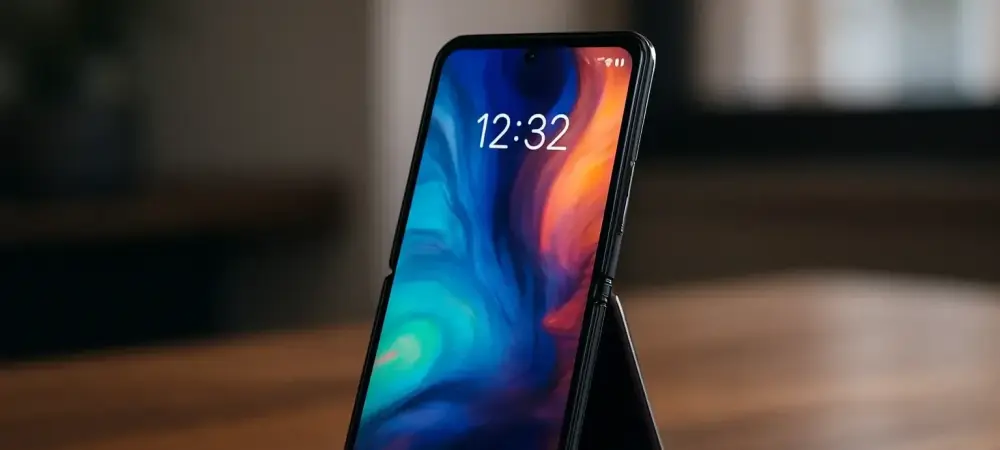
A legacy brand’s journey back from the edge of irrelevance is often defined by a single, audacious move that captures the public imagination and reshapes its entire narrative. For Motorola, a company that once defined mobile communication, 2025 was the year it placed a monumental bet on the foldable form factor, seeking to reclaim its standing in a market dominated by titans. The question that echoed through the industry at year’s end was whether this singular focus was enough to secure its future.
From the Brink of Obscurity: Motorola’s High-Stakes Bet on Foldables
For years, Motorola navigated the hyper-competitive smartphone arena as a respected but secondary player, struggling to carve out a significant niche against the unyielding dominance of Apple, Samsung, and Google. While its near-stock Android software and solid value proposition earned it a loyal following, the brand lacked a true “halo” product that could command attention and drive aspirational sales. This was especially true in the critical U.S. market, where it stood as one of the few remaining mainstream alternatives to the big three, making its survival a matter of consumer choice and market health.
The pressure to deliver a market-defining product reached a boiling point with its 2025 lineup. More than just an annual refresh, this portfolio represented a pivotal test of a daring hypothesis: could one supremely executed and innovative product line not only generate massive profits but also lift the perception of an entire company? The Razr series became the vehicle for this high-stakes experiment, tasked with the monumental challenge of redefining Motorola’s trajectory from a reliable budget option to an industry innovator.
A Tale of Two Strategies: The Razr’s Triumph and the Edge’s Turbulence
The Foldable Gambit: How the Razr Lineup Redefined the Market
By every metric, Motorola’s foldable gambit was an unqualified success. The 2025 Razr series did not just compete; it aggressively reshaped the landscape. Analyst firm Counterpoint Research confirmed this seismic shift, with data from the second quarter showing that Motorola had effectively doubled its global foldable market share year-over-year. This explosive growth was a direct result of a brilliantly executed two-pronged strategy that attacked both the high-end and, for the first time, the mass market.
The strategic genius was most evident in the standard Razr model, which launched at a game-changing price of $700. This move shattered the long-held perception of foldables as an exclusively premium luxury, making the cutting-edge form factor accessible to a much wider audience. Meanwhile, the premium Razr Ultra confidently challenged its flagship rivals by addressing historical weaknesses. It incorporated the powerful Snapdragon 8 Elite chipset, a class-leading 4,700mAh battery that solved endurance anxiety, and, crucially, a new IP48 durability rating. This final enhancement, also found on the U.S.-exclusive Razr+ (a refresh of the 2024 model), closed a critical gap with competitors and signaled that Motorola’s foldables were ready for the mainstream without compromise.
Navigating the Mid-Range Maze: A Portrait of Inconsistent Ambition
In sharp contrast to the clear-eyed vision of the Razr line, the mid-range Edge series presented a muddled and inconsistent portfolio. The Edge 70 exemplified this strategic indecision. Marketed as a “super-slim” device, its impressively thin 6.0mm frame required significant trade-offs, including the removal of the telephoto camera and a downgrade from UFS 4.0 to UFS 3.1 storage. While its sleek design and decent 4,800mAh battery made it an intriguing proposition, its ultimate success hinged entirely on a price low enough to justify its compromises.
Elsewhere in the series, the results were just as polarized. The Edge 60 Pro emerged as a surprise winner, offering tremendous value by pairing the powerful Dimensity 8350 Extreme chipset with a massive 6,000mAh battery, delivering a tangible performance leap for its mid-range price. Conversely, the Edge 60 Neo was a definitive loser. As a rare compact option, it failed to deliver on its promise. Its camera system, despite including a telephoto lens, produced disappointing results, and its entry-level processor was simply not powerful enough to justify its price tag, leaving a significant gap between its ambition and its execution.
When “Power” Fails to Deliver: The Cautionary Tale of the Moto G Series
The strategic disarray was most pronounced in the budget segment, where the Moto G Power (2025) became a cautionary tale of mismatched value. Launched with an ambitious $300 price tag, the device was fundamentally misaligned with its core hardware. Its entry-level Dimensity 6300 chipset was too underpowered for the cost, and its camera system was subpar, lacking even basic features like 4K video recording.
This failure highlighted a critical disconnect in Motorola’s product planning. On paper, the G Power boasted an impressive list of features for a budget phone, including wireless charging, stereo speakers, and a headphone jack—amenities often reserved for more expensive devices. However, these superficial strengths could not compensate for its core performance failures. Most damningly for a phone named “Power,” its battery life was merely average, failing to deliver on the one promise inherent in its branding. This misstep exposed a deep-seated weakness in Motorola’s ability to compete effectively where it once dominated: the crucial budget sector.
Balancing the Scales: Did Razr’s Momentum Outweigh Portfolio Weaknesses?
Juxtaposing the year’s results reveals a company operating with two different mindsets. The Razr’s incredible commercial and critical success was a testament to focused innovation and aggressive market strategy. Yet, this brilliance stood in stark relief against the strategic confusion and outright failures seen in the Edge and G series. This raises a fundamental question about whether the immense profits and brand elevation generated by a single hero product line can truly compensate for deeper, systemic issues across a company’s wider portfolio.
The long-term sustainability of such a model remains a subject of intense debate. Relying so heavily on one category for growth, reputation, and profitability creates a precarious situation. While the Razr line provided a powerful engine for Motorola in 2025, the sputtering performance of its other product lines suggests that the vehicle itself may have a faulty foundation, posing significant risks for the road ahead.
The Blueprint for 2026: Lessons from a Year of Polarizing Results
The core takeaway from Motorola’s polarizing 2025 is an object lesson in corporate focus. An aggressive, visionary strategy in a high-growth segment like foldables yielded spectacular, market-altering results. In contrast, a lack of clear vision and an inconsistent value proposition in the traditional mid-range and budget segments led to mediocrity and missed opportunities. This stark difference provides a clear blueprint for the company’s path forward. The immediate strategy for 2026 must be to double down on the Razr’s winning formula of innovation and accessibility, cementing its market leadership. Concurrently, the Edge series requires a unified vision, ensuring each device offers a clear and compelling value proposition without self-defeating compromises. The G series needs a more fundamental reboot, returning to its roots of delivering reliable core performance over a checklist of secondary features. For competitors, Motorola’s 2025 performance offers its own lessons: its foldable dominance is a force to be reckoned with, but its vulnerabilities in the conventional smartphone market are ripe for exploitation.
A Precarious Victory: The Future of Motorola Beyond the Fold
In the final analysis, the Razr series did indeed provide a critical, life-saving victory for Motorola in 2025. It pulled the brand back from the brink of obscurity, thrusting it into the center of the innovation conversation and generating the momentum it desperately needed. This success was not merely a financial boon; it was a powerful reassertion of the brand’s relevance in the modern smartphone era.
However, this salvation is undeniably fragile. It rests almost entirely on the continued success of a single product pillar while other foundational elements of the company’s portfolio remain unstable and inconsistent. The triumph of 2025 has bought Motorola invaluable time and a new lease on life. The ultimate question that now defines its future is whether the discipline, innovation, and strategic clarity of its Razr team can be translated across the entire organization, or if 2025 will be remembered as a fleeting moment of brilliance in a much longer, more uncertain journey.