

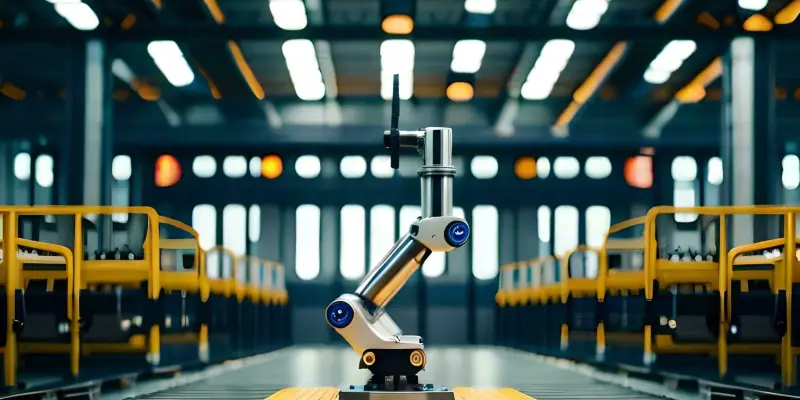
In response to escalating demands in e-commerce, warehouses increasingly seek innovative solutions to optimize operations while guaranteeing worker safety. As consumer expectations rise and the pace of commerce accelerates, traditional warehouse systems struggle to keep up, often resulting in physical strain on workers. Dexterity’s Mech robot emerges as a pioneering technology designed specifically for warehouse environments, addressing these challenges with unmatched efficiency. By taking on labor-intensive tasks such as lifting, stacking, and sorting, Mech not only alleviates human workload but also advances the field of industrial automation. Its ability to autonomously navigate and operate in dynamic settings signifies a shift toward more sophisticated, adaptive technology that mimics human dexterity and performance.
Collaborative Automation Redefining Roles
Balancing Human Work with Machine Assistance
Dexterity’s Mech represents a revolutionary approach that complements rather than replaces human workers, reshaping the dynamics of warehouse labor. Equipped with dual arms that replicate human limb movements, Mech integrates seamlessly within existing workforce systems, facilitating a transition where human workers move from strenuous physical duties to supervisory roles. This shift can lead to a substantial reduction in strain-related injuries, promoting overall workforce well-being. Capable of carrying loads up to 130 pounds and stacking up to eight feet, Mech’s mobility and strength redefine expectations and performance standards in warehouses, operating autonomously amidst crowded environments.
Moreover, Mech’s ability to integrate into “brownfield” facilities negates the need for extensive infrastructure upgrades, emphasizing adaptability. This capability ensures that companies can enhance efficiency without significant disruption or additional investment in legacy systems. As workers manage up to 10 Mech units, they exert influence over operations without bearing the physical toll, effectively bridging the gap between human effort and mechanical assistance, highlighting a pivotal shift towards collaborative automation.
The Integration of AI and Robotics
Central to Mech’s functionality is its embedded AI system, coordinating multiple models to tackle tasks with precision and flexibility. Integrating 16 embedded cameras, Mech excels in recognizing intricate item patterns, adjusting force for delicate goods, and mapping autonomous routes across busy warehouse floors. Its adaptability extends to environmental conditions, operating efficiently across a broad temperature range from 32 to 122°F, reflecting a more resilient and versatile design. Consistent software updates allow Mech to expand its capabilities similarly to smartphone apps, ensuring continuous improvement and relevance.
Currently, Mech focuses on enhancing truck loading processes, yet the potential for further functional expansions raises intriguing possibilities regarding the roles a single robot could fulfill in warehousing duties. This adaptability questions the necessity of specialized machines and explores how evolving technology can keep pace with software advancements. By leveraging artificial intelligence, Mech exemplifies sophisticated labor automation, promising significant enhancements to productivity and operational fluidity within warehouses.
Implications for the Workforce and Industry
Navigating Automation’s Role in Employment
Dexterity’s approach consciously prioritizes empowering rather than replacing human workers. Founder and CEO Samir Menon emphasizes Mech as a tool to aid workers in adapting to evolving roles rather than displacing them. This careful balance between assistance and potential displacement reflects broader conversations in logistics about the future of automation. As industries strive for scalable operations that remain safe and efficient, Mech symbolizes a future where robots enhance human roles rather than supplant them. This paradigm shift impacts operational workflows and contributes to workforce transformation, catalyzing discussions around automation’s deeper role in industry evolution.
Transforming Industrial Paradigms
Dexterity’s Mech introduces a groundbreaking method that collaborates with, rather than replaces, human workers, fundamentally altering warehouse labor dynamics. With its dual arms mimicking human limb movements, Mech integrates effortlessly into current workforce systems, allowing human workers to transition from physically demanding tasks to oversight roles. This transformation can significantly decrease strain-related injuries, enhancing workforce well-being. Mech’s capacity to handle loads up to 130 pounds and stack up to eight feet redefines warehouse expectations, operating independently in crowded settings. Furthermore, Mech’s compatibility with “brownfield” facilities eliminates the necessity for major infrastructure updates, underscoring its adaptability. This ability ensures companies can boost efficiency without causing significant disruption or needing extra investment in old systems. Supervisors manage up to 10 Mech units, maintaining control over operations without experiencing the physical fatigue, seamlessly connecting human effort with mechanical aid, marking a crucial move towards collaborative automation.