

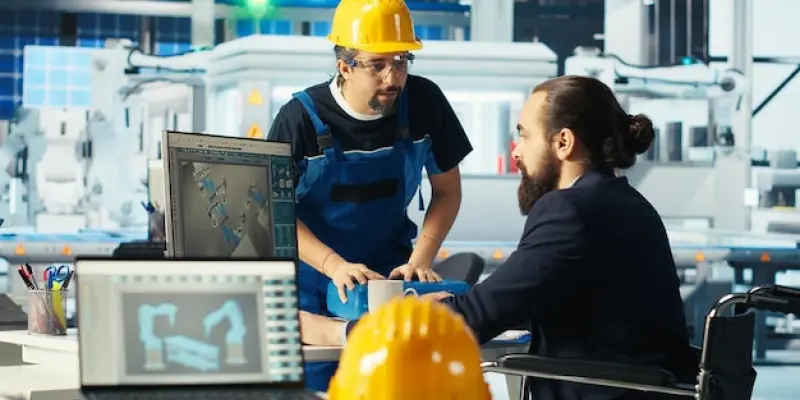
The widespread integration of artificial intelligence across various industrial sectors has transformed AI into a collaborative partner rather than just a utilitarian tool. This development was evident at Automate, a trade show centered on industrial automation, where industry leaders gathered to showcase the evolution of AI technologies. The discussions highlighted AI’s pivotal role in reshaping operational efficiencies, enhancing productivity, and fostering groundbreaking innovation, reflecting a growing optimism and curiosity about its potential rather than fear. The seamless interaction between humans and machines was repeatedly emphasized, underscoring the importance of preparing for an era marked by close human-machine collaboration.
AI’s Role in Industry Evolution
Transformative Impact on Productivity
Artificial intelligence continues to redefine how industries function, enhancing productivity by automating routine tasks and facilitating complex processes. In sectors such as manufacturing, AI-driven systems streamline operations by optimizing production schedules, reducing downtime, and even predicting maintenance needs before issues arise. The use of AI in design processes allows for rapid prototyping and simulation, drastically cutting the time and resources required for product development. These capabilities demonstrate AI’s transformative potential as companies harness its resources to achieve previously unattainable levels of productivity and operational efficiency.
Moreover, AI’s integration into office environments signifies a shift towards automation in everyday administrative tasks. From scheduling meetings to managing spreadsheets, AI tools enhance efficiency by freeing employees to focus on more strategic initiatives. The technology also plays a crucial role in data analysis, allowing companies to glean insights from vast amounts of information that would be impossible to process manually. This positions AI as an essential partner in achieving operational goals, contributing to a dynamic shift that not only redefines workflows but also encourages a more innovative approach to problem-solving across different sectors.
Innovation Through Collaboration
Understanding AI as a collaborative partner means recognizing its potential to complement human abilities rather than merely substituting them. In the realm of industrial design and manufacturing, AI’s capacity to analyze vast datasets and accommodate complex algorithms allows designers to explore new possibilities that were previously infeasible. By offering predictive insights and real-time feedback, AI systems bolster the creative process, helping engineers and designers make informed decisions with precision and agility. This union of human creativity and machine efficiency fosters an environment of innovation where technology acts not just as a tool but as an intrinsic part of the ideation process.
Furthermore, collaboration extends beyond design and production lines into broader organizational strategies. AI-driven intelligence assists executives in making data-informed decisions, understanding market trends, and responding to competitive dynamics with agility. This integration promotes a new mindset where AI becomes a strategic partner, driving forward-thinking business models and unlocking new avenues of growth. The very fabric of the industry is evolving with AI at its core, illustrating a paradigm shift where machines complement human expertise to achieve unprecedented innovations.
The Path Forward in AI Integration
Navigating Challenges and Opportunities
The widespread admiration for AI’s capabilities must be balanced with an understanding of its challenges, especially concerning ethical use and workforce dynamics. As AI systems become progressively intelligent, concerns around privacy, data security, and ethical implementation have surfaced, compelling industries to establish robust frameworks that govern AI utilization responsibly. Additionally, the implications of automation on job roles necessitate strategic planning to transition workers into roles that leverage AI’s potentials without alienating the workforce. Focused efforts on reskilling and upskilling are essential to ensure that employees thrive alongside advancing technologies rather than becoming redundant. Companies navigating this complex landscape face the task of steering AI integration responsibly and strategically. Implementing AI effectively means addressing these challenges and fostering a culture ready to embrace change. Cross-industry partnerships, coupled with regulatory bodies and educational institutions, are vital in creating guidelines that promote ethical AI use. This collaboration encourages shared learning and innovation, propelling industries towards sustainable growth where AI is a tool for inclusion and empowerment.
Embracing a Future with AI
The extensive adoption of artificial intelligence in numerous industrial sectors has evolved AI from merely a functional tool to a collaborative partner. This progression was evident at Automate, a specialized trade show focused on industrial automation, where sector leaders converged to present advancements in AI technologies. Discussions centered around AI’s critical role in redefining operational efficiencies, boosting productivity, and sparking groundbreaking innovation, signaling a growing optimism and curiosity about its capabilities rather than anxiety. The ease of human-machine interaction was consistently highlighted, stressing the necessity of gearing up for an era marked by extensive human-machine collaboration. Emphasis was on how AI can work hand in hand with humans, driving industries to new heights. This shift invites a reimagining of traditional workflows, proving AI as a catalyst for not only technological but also cultural transformation, influencing how industries will strategize for future growth and competitiveness.