

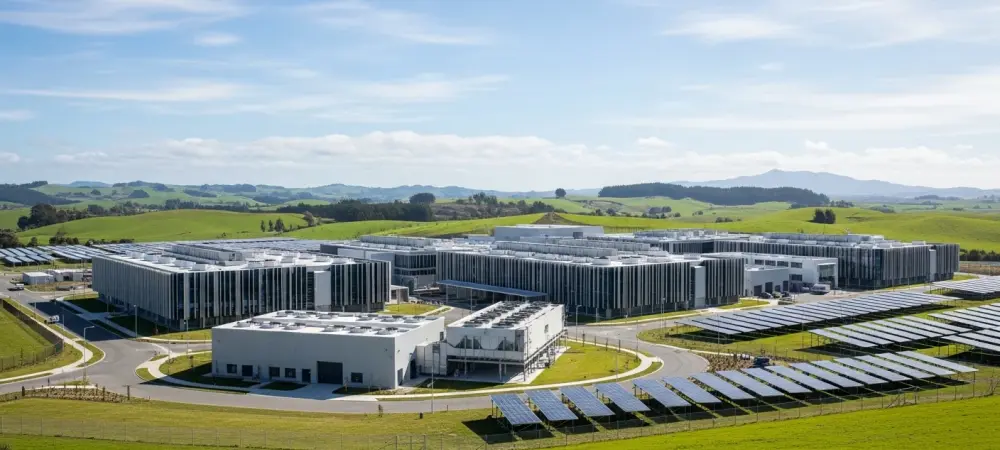
The global demand for hyper-scale computing capacity is shifting its geographical focus toward regions that offer both environmental stability and renewable energy abundance, and the South Island of New Zealand has now emerged as a primary contender for this digital migration. Datagrid New Zealand has officially cleared its final regulatory hurdles, securing full resource consent to develop a massive 280-megawatt data center campus in Makarewa, near the city of Invercargill. This landmark project represents one of the largest private infrastructure investments in the region, spanning 49 hectares of land and encompassing roughly 78,000 square meters of specialized facility space. By collaborating with the Southland District Council, Environment Southland, and the Invercargill City Council, the developers have ensured that the project aligns with local environmental standards and community expectations. This effort was further bolstered by the essential support of local iwi and landowners, creating a unified foundation for a facility that aims to redefine the country’s role in the global data economy through scale and sustainability.
International Connectivity: The Tasman Ring Network
Beyond the physical footprint of the campus, the success of this initiative hinges on the implementation of the Tasman Ring Network, a high-capacity subsea cable system that will integrate the South Island into the global fiber-optic grid. Spanning approximately 6,000 kilometers, this network is scheduled to become operational in 2027, providing the first direct international subsea link for the southern region of the country. This infrastructure will connect Invercargill and other major New Zealand urban centers to Sydney and Melbourne, boasting an impressive data transfer capacity of 540 terabits per second. Such a significant leap in bandwidth effectively eliminates the latency issues that previously hindered large-scale tech investments in more remote areas. With the University of Otago already secured as an anchor tenant, the project demonstrates immediate institutional utility. While construction activities are moving forward throughout 2026, the facility is projected to reach full operational status by 2028, aligning perfectly with the rising demand for low-latency processing and high-performance storage solutions.
Strategic Implementation: Shaping the Digital Frontier
The decision to centralize massive computing resources in the South Island established a blueprint for future developments that prioritized proximity to clean energy sources over traditional urban hubs. Stakeholders realized that the integration of sustainable power with high-speed international transit was the only viable solution for managing the exponential growth of artificial intelligence and cloud services. Operators moved toward modular cooling technologies and heat reuse systems to ensure that the massive 280-megawatt draw did not compromise local ecological integrity. Looking ahead, regional planners focused on developing a specialized workforce to manage these sophisticated assets, ensuring that the economic benefits remained localized. This approach addressed the global need for data sovereignty and resilience while creating a template for other nations to follow. The project effectively demonstrated that geographical isolation no longer served as a barrier to technological leadership when supported by robust subsea infrastructure and clear regulatory frameworks.