

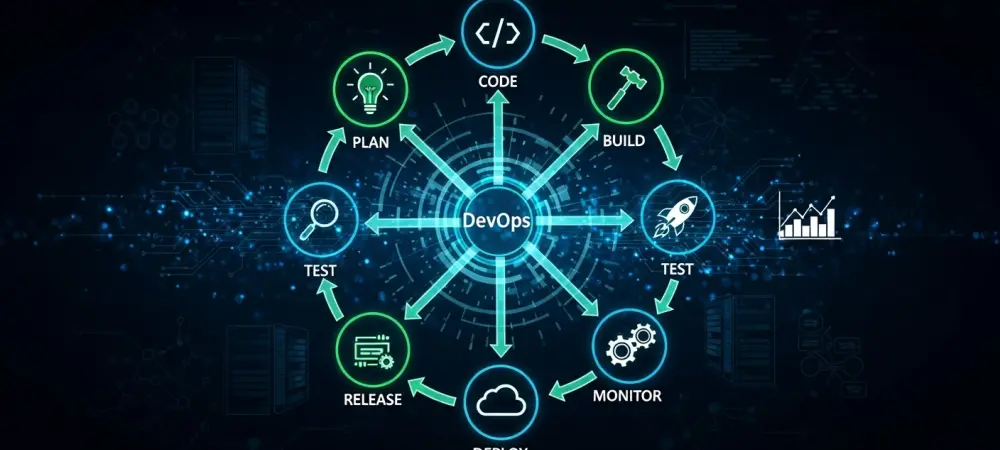
The era of engineers squinting at glowing dashboards to identify a single line of faulty code has reached its inevitable conclusion as systems surpass human cognitive limits. At the DASH 2026 conference, the conversation surrounding software health moved decisively away from simply seeing problems and toward a model of automatically solving them. This shift marks the moment when observability platforms stopped being passive observers and began acting as digital first responders. As organizations grapple with architectures that are too vast for any single person to understand, the focus has landed squarely on autonomous management systems that can think, investigate, and repair without constant manual intervention.
The End of Passive Monitoring: The Rise of Actionable AI
Software environments have reached a level of intricacy where the traditional “dashboard-and-alert” model is no longer sufficient to maintain high uptime. Datadog’s expansion of its Bits AI framework marks a pivot toward autonomous management, where AI agents do not just notify engineers of a failure; they proactively investigate telemetry, propose specific code fixes, and execute remediation scripts in real-time. This approach transforms the role of the platform from a diagnostic tool into an active participant in the DevOps pipeline, ensuring that systems remain stable even when human operators are offline or occupied with higher-level tasks.
The transition from passive monitoring to actionable AI is driven by the need for speed and precision in incident response. When a service degradation occurs, the autonomous agents analyze the logs and traces immediately, bypassing the manual triage phase that often consumes precious minutes. By integrating these capabilities directly into the existing observability ecosystem, teams can move away from reactive firefighting and embrace a strategy where the system repairs itself. This capability is essential for modern businesses that cannot afford even a few seconds of downtime in an increasingly competitive digital marketplace.
The Mental Model Gap: High-Velocity Engineering Challenges
The primary driver behind this technological shift is a fundamental human limitation: engineers can no longer maintain a complete mental map of the systems they manage. As automated code generation accelerates the volume of software being deployed, the gap between what a human can understand and what a system requires for stability continues to widen. Organizations are now facing a reality where managing code at machine speed is the only way to prevent cascading failures in hyper-complex, distributed architectures. Without an AI layer to bridge this gap, the cognitive load on developers becomes a significant bottleneck for innovation.
High-velocity engineering necessitates a change in how performance is managed and understood across the stack. When hundreds of microservices interact in a single transaction, tracing a failure to its source becomes a needle-in-a-haystack problem that defies manual logic. By utilizing AI agents that possess a persistent and comprehensive view of the entire environment, companies can ensure that their infrastructure remains resilient against the unpredictable nature of rapid deployment. This ensures that the velocity of code production does not come at the expense of system reliability or the mental health of the engineering staff.
Specialized AI Agents: The Software Development Lifecycle Suite
Datadog has introduced a suite of specialized agents under the Bits umbrella, each designed to handle specific bottlenecks in the DevOps pipeline. Bits Code focuses on bug detection and patch generation, while Bits Release governs the deployment process by validating changes in staging and managing complex rollouts. For quality assurance, the Bits Testing Agent identifies critical user paths to build synthetic test suites automatically, ensuring that new code does not break existing functionality. These tools work in tandem to create a seamless flow from the initial commit to the final production deployment.
Beyond active development, Bits Infrastructure Operations and Bits Remediation handle server-side maintenance and script execution within strict safety guardrails. Perhaps most significant is Bits Memories, a feature that allows the AI to ingest historical context from Slack archives and past postmortems to inform future autonomous actions. By remembering how previous incidents were resolved, the system builds a growing knowledge base that becomes more effective over time. This historical awareness allows the AI to apply lessons learned from past failures to current problems, creating a virtuous cycle of continuous improvement.
Expert Perspectives: The Evolution of Agentic Operations
Industry leaders suggest that observability is undergoing a fundamental transformation from a descriptive tool into a governing force. Datadog CEO Olivier Pomel highlights that as the volume of AI-generated code explodes, autonomous discovery is no longer a luxury but a prerequisite for operational survival. The move toward agentic operations allows machines to handle the heavy lifting of system maintenance, freeing human engineers to focus on architectural design and strategic growth. This consensus reflects a broader industry trend where the focus shifts from data collection to data utilization.
Market analysts at the Futurum Group describe this trend as a state where AI is granted the authority to make system changes based on telemetry evidence. This transition is supported by massive enterprise investment, with research indicating that over a third of large organizations spend upwards of $1 million annually on observability platforms to manage this complexity. The goal is to reach a level of automation where the infrastructure can heal itself without human prompts. As these technologies mature, the standard for operational excellence will increasingly be measured by the autonomy of the underlying systems.
Governance and Safety: Strategies for Autonomous DevOps Frameworks
Transitioning to an autonomous DevOps model requires a structured approach to governance and safety. Organizations established human-defined guardrails that limited the scope of AI remediation to ensure agents did not execute destructive commands during critical windows. Utilizing tools like AI Guard and Agent Eval allowed teams to monitor the AI itself, detecting anomalous behavior in automated systems before it impacted production. This layer of oversight provided the necessary confidence for leadership to delegate operational authority to non-human agents.
Furthermore, by leveraging Federated Logs, teams bridged the gap between internal telemetry and external data sources, creating a unified data layer that allowed natural language processing tools to correlate technical performance with high-level business metrics. Engineers and business analysts collaborated to define the parameters within which the AI could operate, ensuring that all autonomous actions aligned with commercial goals like churn reduction and revenue growth. This strategic alignment transformed DevOps from a technical silo into a central pillar of business intelligence and resilience.