

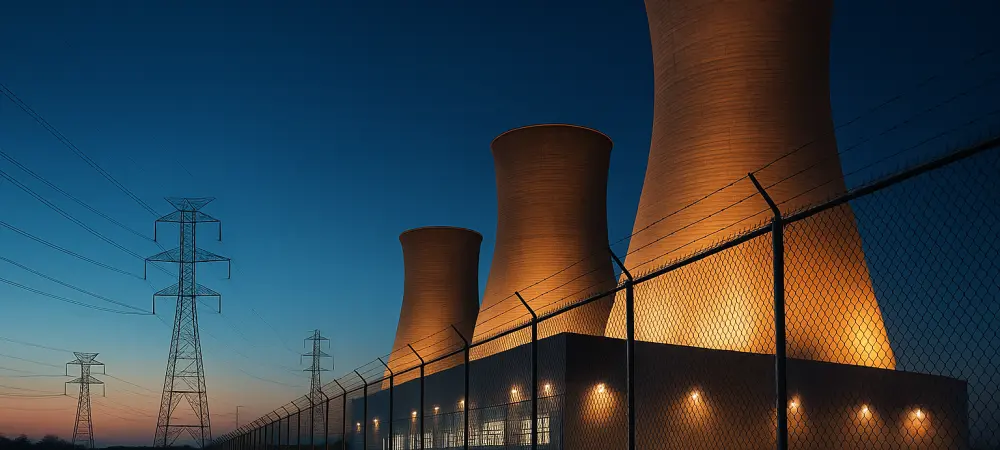
A sprawling one-hundred-and-eighty-eight-acre plot in Northern Virginia recently fetched a jaw-dropping seven-hundred-million dollars from Amazon, effectively pricing out the five hundred families who were supposed to call that land home. This transaction serves as a stark reminder that the digital world is no longer confined to the glowing screens in our pockets or the abstract “cloud” above our heads. It has descended into the physical realm with a vengeance, manifesting as massive, windowless monoliths that consume entire towns and tax the very foundations of the American infrastructure. The transition from a software-driven economy to a hardware-heavy industrial era is moving at a pace that few predicted, turning once-quiet rural counties into the front lines of a global race for artificial intelligence supremacy.
The United States is currently navigating a period of profound spatial and economic restructuring, often referred to as the “Data Center Era.” This phenomenon represents more than just a real estate boom; it is a fundamental shift in how the nation allocates its most precious resources. As technology giants scramble to secure the physical space required to host thousands of high-powered servers, they are fundamentally altering the geography of the American heartland. From the rolling hills of the Mid-Atlantic to the sun-drenched plains of the Southwest, the sheer scale of this buildout is propping up the construction sector while simultaneously pushing the national power grid toward a point of critical exhaustion.
The Silent Infrastructure: That Outbid the American Dream
The sheer financial weight behind the modern data center movement is staggering, often outmuscling even the most established residential developers. In the aforementioned Virginia sale, the land was originally intended for a modest suburban community, yet the final price tag reached a staggering $3.7 million per acre. This was not the work of a luxury hotel chain or a foreign sovereign wealth fund, but rather the logistical necessity of a tech giant seeking to expand its digital footprint. When tech companies bring “unlimited” capital to the table, the local real estate market undergoes a permanent distortion, making it nearly impossible for traditional housing projects to compete for prime locations near fiber-optic lines and electrical substations.
This shift signals a departure from the previous decade, where economic growth was largely defined by digital services that left a minimal physical footprint. Today, the demand for high-performance computing requires massive server farms that can span several million square feet. These facilities are not just warehouses; they are sophisticated industrial plants designed to maintain perfect temperatures for the hardware that powers the modern economy. Consequently, the “American Dream” of homeownership is increasingly finding itself at odds with the “Digital Dream” of seamless artificial intelligence, as the land once designated for porches and playgrounds is replaced by high-voltage fences and humming cooling towers.
Why the Data Center Era Is the Great Subplot of 2026
While the early phases of the artificial intelligence revolution focused on code and microchips, 2026 has marked a decisive pivot toward the physical constraints of reality. The bottleneck for technological advancement is no longer just a matter of clever algorithms; it is a matter of concrete, steel, and copper. This transition is significant because it places the world’s wealthiest corporations in a zero-sum game with ordinary citizens over essential resources. The five primary hyperscalers—Amazon, Microsoft, Google, Meta, and Oracle—are currently projected to spend more than $750 billion on infrastructure this year alone. This represents an unprecedented industrial overhaul that is effectively reshaping the American economic landscape.
This massive influx of capital is acting as a safety net for the broader construction industry, which has otherwise faced headwinds from fluctuating interest rates and a cooling commercial office market. Data center spending added roughly $21 billion to the sector recently, keeping heavy machinery operators and specialized contractors busy across the country. However, this growth comes with a hidden cost: the redirection of talent and materials toward server farms often leaves public works projects and residential developments understaffed and under-resourced. The data center is no longer a peripheral part of the economy; it is the primary engine driving industrial demand in the mid-twenties.
The Physical Ripple Effects of AI Infrastructure
The rapid expansion of these digital hubs has triggered a chain reaction throughout the American supply chain, creating a landscape of both immense opportunity and severe shortages. One of the most visible impacts is the gridlock in the market for high-voltage electrical components. Wait times for utility-scale transformers, which are essential for connecting these massive loads to the power grid, have now exceeded four years in many regions. This delay has turned equipment manufacturers into the ultimate gatekeepers of the technological revolution, as tech companies wait in line behind one another to secure the hardware necessary to simply turn the lights on in their new facilities.
Beyond the electrical components, the demand for specialized labor has reached a breaking point. The industry is currently facing a deficit of approximately 350,000 workers, particularly those with expertise in high-voltage systems and industrial cooling technologies. This is not a role for a general laborer; it requires a specialized set of skills that are in short supply. Moreover, the environmental footprint of these facilities is becoming a point of intense local friction. While data centers account for less than 1% of national water usage, their impact on local watersheds can be substantial. In arid regions, a single facility’s cooling needs can rival those of a small city, leading to a new form of “resource anxiety” among long-term residents who fear for their local water security.
Expert Perspectives: On the Impending Energy Crisis
Grid operators and energy experts are sounding a sustained alarm as the electricity requirements of the digital age begin to outpace the nation’s generating capacity. Utilities now forecast that peak electric demand growth by 2030 will be six times higher than the predictions made just three years ago. Data centers are the primary driver of this surge, with projections suggesting they will consume up to 12% of all electricity in the United States by the end of the decade. This is a staggering increase that the current aging grid was never designed to handle, leading to a spike in capacity prices that is increasingly reflected in the monthly bills of residential ratepayers.
To mitigate the risk of power outages or “curtailment” during times of high grid stress, tech companies are taking matters into their own hands. Major players like OpenAI have begun hiring power trading leads to manage their energy portfolios, effectively operating as private utilities. A prime example of this trend is Meta’s “Hyperion” project in Louisiana. This $50 billion site is designed to operate at a scale of 5 gigawatts, supported by ten dedicated natural gas plants. By building their own generation capacity, these companies are attempting to bypass the limitations of the public grid, though such massive private energy islands raise questions about the long-term equity and reliability of the national power system.
Navigating the New Political and Economic Landscape
The “honeymoon phase” of data center development, once characterized by local mayors and governors offering tax breaks to attract high-tech investment, has largely evaporated. Communities are becoming increasingly skeptical of facilities that occupy thousands of acres of land and consume vast amounts of energy while providing only a few dozen permanent jobs. The jobs-to-footprint ratio is a growing point of contention; while thousands of temporary workers are required during the construction phase, the long-term economic benefit to a county can be minimal once the facility is operational. This has led to a surge in grassroots opposition, with recent polling suggesting that a significant majority of Americans now oppose local data center construction.
Political leaders are being forced to navigate this bipartisan backlash as the physical presence of AI becomes an election-year issue. In states like Michigan and Texas, policymakers are exploring legislative “freezes” on new construction to allow for a comprehensive reassessment of how these facilities impact the stability of the public grid. There is also a growing movement to ensure that the influx of thousands of temporary construction workers does not lead to spiked rents and the displacement of residents in rural areas. As the industry moves forward, the focus is shifting toward transparency and shared responsibility, requiring tech companies to prove that their presence will not come at the expense of the communities that host them. The rapid expansion of data center infrastructure across the United States served as a transformative force that redefined the relationship between the digital and physical worlds. As the scale of investment grew, the necessity for a more integrated approach to energy production and land use became undeniable. Stakeholders eventually moved toward a model that prioritized grid-positive development, where facilities were required to contribute as much energy as they consumed through localized renewable projects. This transition helped stabilize utility costs for residents and ensured that the technological boom remained a sustainable part of the American landscape. By moving away from a model of unchecked consumption and toward one of mutual resilience, the industry successfully navigated the constraints of the mid-twenties, paving the way for a more balanced and reliable national infrastructure.