

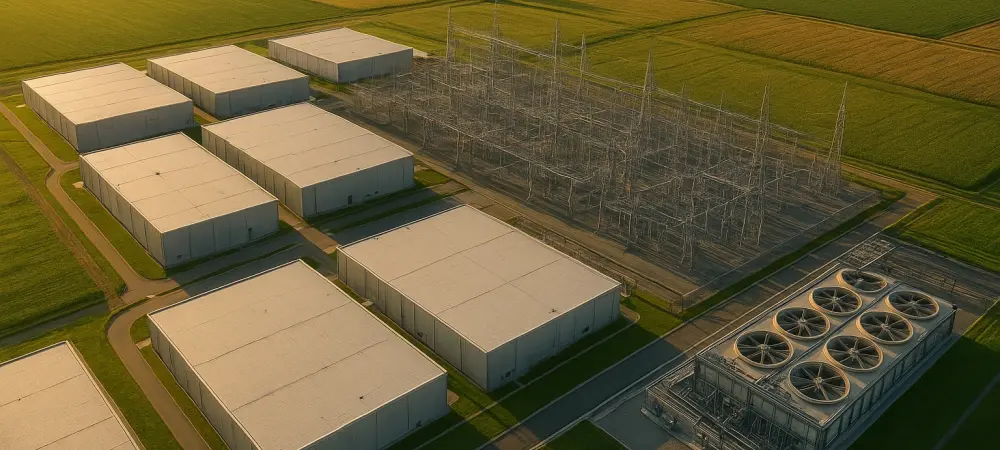
The silent, monolithic structures that once served as the proud monuments of a digital gold rush have suddenly transformed into the most radioactive landmines of the 2026 midterm election cycle. In the span of a few short years, the massive, windowless warehouses that power digital lives have shifted from quiet symbols of economic modernization to the most volatile wedge issue of the current campaign. While tech giants once received red-carpet treatment from local officials, they now find their physical infrastructure at the heart of a heated national debate. Across battleground states, the very buildings designed to house the future of artificial intelligence are being recast as industrial intruders, turning what was once a bipartisan economic win into a high-stakes electoral gamble.
The 2026 midterm elections are witnessing an unexpected and potent political phenomenon where data centers have moved from the periphery of public consciousness to the center of community activism. In previous years, the sight of a data center construction site was often accompanied by ribbon-cutting ceremonies and promises of a high-tech future. Today, those same sites are more likely to be surrounded by protestors carrying signs about grid stability and rising utility costs. This transformation highlights a fundamental change in how the electorate perceives the physical requirements of the internet, suggesting that the era of invisible infrastructure is officially over.
The Sudden Transformation of the Digital Backbone
The physical manifestation of the internet has undergone a radical rebranding in the public eye, moving from a vague cloud to a heavy, energy-hungry industrial reality. As tech giants accelerated their construction schedules to meet the insatiable demands of generative artificial intelligence, the scale of these projects began to overwhelm local capacities. What were once sold as “clean” tech jobs have been re-evaluated by residents who see only sprawling concrete boxes that offer few long-term employment opportunities for the local population. This shift in perception has forced a total re-evaluation of the economic value proposition that these facilities provide to their host communities.
In the span of a single election cycle, the narrative has moved from one of prestige to one of preservation. Local governments that previously competed to offer the most lucrative tax incentives are now facing backlash from constituents who feel those resources should have been directed toward schools or emergency services. The aesthetic impact of these facilities, often resembling massive bunkers that stretch for miles, has also become a point of contention. As these structures encroach upon suburban neighborhoods and historic rural landscapes, the tension between the global digital economy and local geographic identity has reached a breaking point.
Contextualizing the Shift: From Progress to Protest
The politicization of data centers in 2026 is not merely about zoning laws; it is a reflection of broader anxieties regarding the American digital economy and the perceived dominance of Silicon Valley. As the physical backbone of artificial intelligence, these facilities have become lightning rods for concerns over environmental sustainability and corporate accountability. This evolution matters because it signals the end of unquestioned growth for the technology sector. When voters view a new data center not as a job creator, but as a threat to their local resources and community character, the political calculus for every incumbent and challenger changes overnight.
This shift from progress to protest is anchored in the reality of resource management. In many regions, the massive energy and water requirements of these facilities have started to clash with the daily needs of citizens. The transition has been fueled by a growing realization that the digital world requires very real, very finite physical resources. As communities grapple with heatwaves and water shortages, the presence of a facility that consumes millions of gallons of water for cooling purposes becomes an easy target for political mobilization and organized resistance.
The 2026 Electoral Landscape: A Campaign Strategy Pivot
The narrative surrounding tech infrastructure has flipped entirely, creating a new set of risks for candidates across the political spectrum. In states like Ohio, support for data centers is being used as a political cudgel, with challengers framing pro-tech incumbents as being out of touch with the needs of local residents. This techlash bridges the traditional partisan divide, uniting rural Republicans concerned about land use and urban Democrats focused on corporate tax breaks. Unlike many polarized issues, the opposition to these facilities creates unlikely alliances that disrupt standard campaign modeling and force candidates to address hyper-local concerns.
Governors in key states like Texas and Pennsylvania are already pivoting toward guardrails and audits to insulate themselves from attacks, moving away from the unbridled incentives of the early 2020s. Because citizens feel they cannot control the abstract rise of algorithms, they are focusing their resistance on the physical structures required to run them. This makes data centers a tangible target for community organizing, effectively turning them into a proxy war for the public’s broader fears regarding automation. Candidates who once touted their tech-friendly policies are now finding it necessary to prove they can be tough on the very companies they once recruited.
Public Sentiment and the Economic Reality Check
Recent data highlights a stark disconnect between the tech industry’s promises and the voter’s lived experience. A staggering 77% of Americans fear that the massive energy requirements of data centers will lead to higher residential electricity rates and grid instability. In drought-prone regions, the enormous water consumption required for cooling systems has turned local communities against new developments, viewing them as competitors for life-sustaining resources. The economic argument that these facilities serve as primary engines of local prosperity has also weakened under scrutiny as the true costs of infrastructure upgrades become apparent to the average taxpayer.
The job creation illusion has become a particularly potent talking point for opposition groups across the country. While the construction phases bring temporary labor, voters are increasingly aware that operational data centers require very few long-term employees once the servers are humming. This realization, coupled with the fact that only 14% of Americans are willing to live near these facilities, has fueled a powerful “Not In My Backyard” movement. The noise, traffic, and industrialization of rural landscapes are no longer viewed as necessary trade-offs for a digital progress that feels increasingly detached from local benefit.
Strategies for Navigating the New Regulatory Frontier
As the political climate cools toward rapid expansion, the tech industry and policymakers must adapt to a more restrictive environment. States are moving toward requirements that data centers must provide their own renewable energy sources to avoid straining the public grid or driving up costs for families. New frameworks may require tech firms to pay significant premiums to offset the infrastructure and resource costs traditionally born by local taxpayers. This shift represents a move toward a user-pays model that seeks to protect the average citizen from the externalities of massive corporate scaling and resource consumption. To regain public trust, developers must embrace radical transparency regarding water usage, noise mitigation, and actual long-term employment data. Companies must also prepare for a landscape where temporary bans or moratoriums on new construction become a standard tool for municipalities seeking to conduct environmental and economic impact studies. These steps offered a path for the industry to move beyond the current period of friction by integrating more deeply and responsibly into the communities they inhabited. The successful transition of the tech sector depended on its ability to demonstrate that digital infrastructure could exist in harmony with, rather than at the expense of, the people it was built to serve. High-tech firms eventually recognized that community consent was just as vital as electrical power for their long-term survival.