

The assumption that ninety-nine point nine nine nine percent availability constitutes a complete strategy is rapidly disintegrating under the pressure of unprecedented climate volatility and shifting geopolitical landscapes. For decades, the industry treated uptime as a binary metric—either the servers were humming or they were dark—but this narrow focus ignores the cascading failures that now threaten modern infrastructure. Resilience today requires a more holistic understanding that encompasses the ability to absorb shocks, adapt to resource scarcity, and maintain operations through prolonged periods of regional instability. Rather than simply installing larger backup generators or redundant cooling loops, facility operators must rethink the fundamental relationship between their hardware and the environment it inhabits. This shift represents a transition from passive reliability to active resilience, where the goal is not just to avoid failure but to thrive in an environment defined by constant change and increasing external demands.
1. Strategic Site Selection and Integrated Physical Security
Site selection is no longer a matter of simple real estate logistics but a critical component of risk management that determines the long-term viability of high-density computing environments. Evaluating a location requires a multi-layered screening process that accounts for historical flood data, evolving wildfire perimeters, and the long-term reliability of local utility grids. This analysis must extend beyond the immediate property lines to include the stability of the local workforce and the accessibility of emergency services during a regional crisis. When a facility is built in a zone prone to seismic activity or extreme weather, the engineering costs of hardening the structure must be weighed against the potential for prolonged downtime. Furthermore, physical security has evolved into a discipline that merges perimeter protection with business continuity. Sophisticated thermal imaging, biometric access controls, and integrated surveillance systems now function as early warning mechanisms that detect threats long before they can impact the server floor.
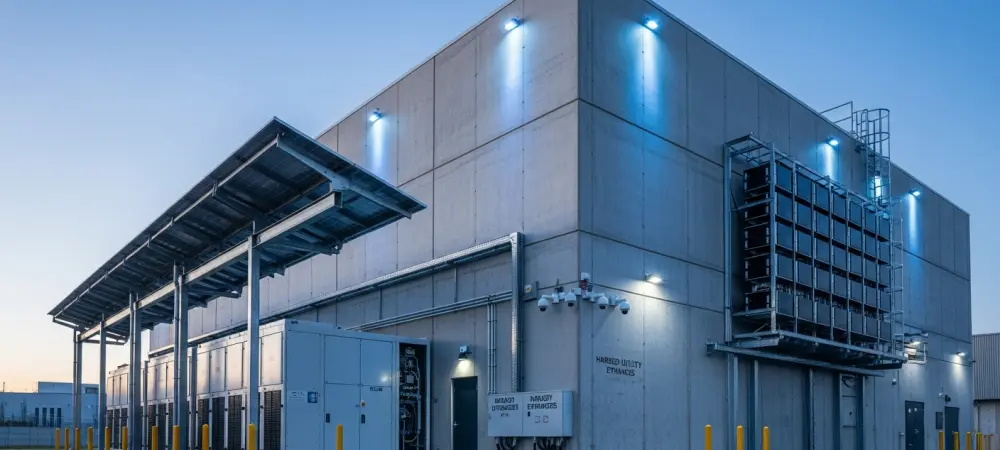
Physical security strategies must now account for complex modern threats that could disrupt digital infrastructure without ever breaching the main data hall or harming the physical assets directly. Operators are moving toward comprehensive security ecosystems that use artificial intelligence to analyze patterns of movement and identify anomalies in real-time. This integration ensures that security personnel are not just gatekeepers but active participants in the facility’s disaster recovery and business continuity initiatives. By synchronizing physical security protocols with digital threat intelligence, a facility can respond to localized unrest or infrastructure sabotage with greater precision. This level of coordination prevents the siloed decision-making that often leads to critical delays during emergency situations. Modern facilities are also incorporating hardened utility entrances and reinforced underground conduits to shield vital communication and power lines from intentional or accidental damage. These physical enhancements create a defensive perimeter that protects the digital core.
2. Advancing Resilience through Energy and Water Management
This shift toward microgrids naturally leads to a broader discussion on how facilities must decouple themselves from the fragility of the traditional power distribution network. The traditional reliance on diesel backup generators is becoming a liability as carbon regulations tighten and regional power grids face increasing instability from renewable integration. Modern resilience strategies prioritize energy flexibility by incorporating onsite power generation, such as fuel cells or solar arrays, alongside large-scale battery energy storage systems (BESS). These technologies allow data centers to function as microgrids, capable of disconnecting from the main utility during peak demand periods or grid failures. By managing their own power load, facilities can participate in demand-response programs, providing a secondary revenue stream while reducing the strain on local energy infrastructure. This dynamic approach to power management ensures that the facility remains operational if the primary grid experiences fluctuations or extended blackouts.
Complementing this energy-centric approach is the urgent need to address the environmental and operational risks associated with excessive water consumption in high-density cooling. Water scarcity has emerged as a primary operational risk, forcing operators to adopt cooling technologies that significantly reduce or eliminate the consumption of local potable water resources. In regions where drought conditions have become the norm, traditional evaporative cooling systems are being replaced with closed-loop liquid cooling or air-cooled chillers that utilize minimal water. Some advanced facilities are implementing graywater recycling systems, which treat onsite wastewater for use in cooling towers or landscape irrigation, further decoupling the facility from the municipal water supply. This focus on water neutrality is not only an environmental necessity but also a safeguard against legal challenges and community opposition that can stall expansion projects. Hybrid cooling systems that switch between air and water based on ambient temperatures provide an extra layer of resilience.
3. Developing Human Capital and Structured Operational Frameworks
While physical and energy systems are vital, the effectiveness of any technical solution is ultimately limited by the human element managing the facility under pressure. Technical resilience is a component of a larger system that makes staff training and rigorous emergency response testing essential elements of any modern infrastructure strategy. Organizations must move beyond static training manuals and invest in high-fidelity simulation drills that place operations teams in high-pressure scenarios involving multiple concurrent system failures. These drills test the decision-making capabilities of staff, ensuring that they can execute emergency procedures without hesitation when every second counts toward preventing an outage. A well-trained team acts as the final line of defense, capable of identifying subtle mechanical warnings or digital anomalies that automated systems might overlook. Regular cross-training across mechanical, electrical, and security disciplines ensures that personnel have a holistic understanding of how systems interact. Building on the strength of a trained workforce, implementing a continuous resilience cycle requires a four-stage framework that begins with the systematic identification of potential hazards. This initial phase utilizes climate projections and grid reliability reports to create a detailed risk profile that informs every subsequent decision in the facility’s lifecycle. Once the hazards are understood, the second stage involves building specific solutions into the architectural and engineering blueprints, ensuring that the infrastructure is inherently resistant to the identified threats. The third stage focuses on the execution of emergency procedures, where theoretical plans are put into practice through the aforementioned drills and stress tests. Finally, the fourth stage involves the refinement and improvement of operations based on real-world data and shifting external conditions. This iterative process ensures that the facility’s resilience strategy is never static, evolving alongside technological advancements and changing environmental realities to maintain security.
4. Future-Proofing Assets with Modular and Scalable Design
Beyond the immediate operational cycle, future-proofing a data center requires a shift toward modularity and standardization to prevent assets from becoming obsolete as hardware changes. Utilizing standardized power and cooling modules allows for the rapid reconfiguration of the facility without the need for extensive structural renovations or the decommissioning of large sections of the white space. This approach enables operators to scale their infrastructure incrementally, matching capacity to demand while incorporating the latest advancements in energy efficiency and high-performance computing. For example, a facility designed for traditional air cooling can be transitioned to liquid immersion cooling by swapping out modular components rather than rebuilding the entire cooling loop. This versatility ensures that the building remains a viable host for next-generation hardware, protecting the massive capital investment required for construction. By prioritizing flexible building blocks, organizations can respond to the rapid pace of technology. In addition to modular components, architecture must be designed with long-term versatility in mind, incorporating growth-ready layouts that accommodate higher power densities and cooling needs. This involves over-provisioning certain structural elements, such as floor loading capacities and ceiling heights, to allow for the installation of heavier or taller server racks in the future. Designers are also incorporating adaptable plenum spaces and oversized conduits to simplify the deployment of new cabling and piping as technology evolves. When purchasing equipment, favoring long-term flexibility over the lowest initial cost often proves to be the more economical choice over the facility’s lifespan. An adaptable uninterruptible power supply system that can be upgraded with new battery chemistries provides greater value than a rigid system that must be replaced entirely. This strategic approach to procurement and design ensures that the facility can adapt to shifts in the digital economy, such as the rise of specialized AI chips or new standards.
5. Evolving Operational Standards for Long-Term Infrastructure Viability
The successful integration of these resilience strategies shifted the operational paradigm from reactive maintenance to proactive risk mitigation and long-term asset preservation. Organizations that effectively implemented these frameworks moved toward a model where power and water were managed as finite resources rather than infinite commodities. They prioritized the development of standardized equipment interfaces and open-source management software, which allowed for seamless updates as new efficiency standards emerged. This transition established a foundation for sustainable growth, where the focus remained on diversifying energy sources and decentralizing critical infrastructure components. By investing in regional microgrids and localized staff expertise, these operators created a distributed network of resilience that benefited both the business and the local community. These actionable steps moved the industry away from the fragility of centralization and provided a blueprint for building adaptable systems that prioritized longevity. Forward-looking leaders expanded their focus to include the social and economic resilience of the regions where they operated, recognizing that a data center could not survive in a crumbling environment. They established partnerships with local utilities to co-develop renewable energy projects and invested in vocational programs to ensure a steady pipeline of skilled technicians. This holistic approach ensured that the infrastructure was supported by a robust local economy and a reliable resource base, further reducing the risk of regional obsolescence. By the time the digital landscape evolved to favor edge computing and decentralized processing, these resilient facilities were already prepared for the transition. They utilized the modularity built into their initial designs to pivot toward new service models without incurring massive capital expenditures. Ultimately, the industry reached a state where resilience was synonymous with sustainability, ensuring that critical data remained accessible and secure despite the challenges of a rapidly changing world.