

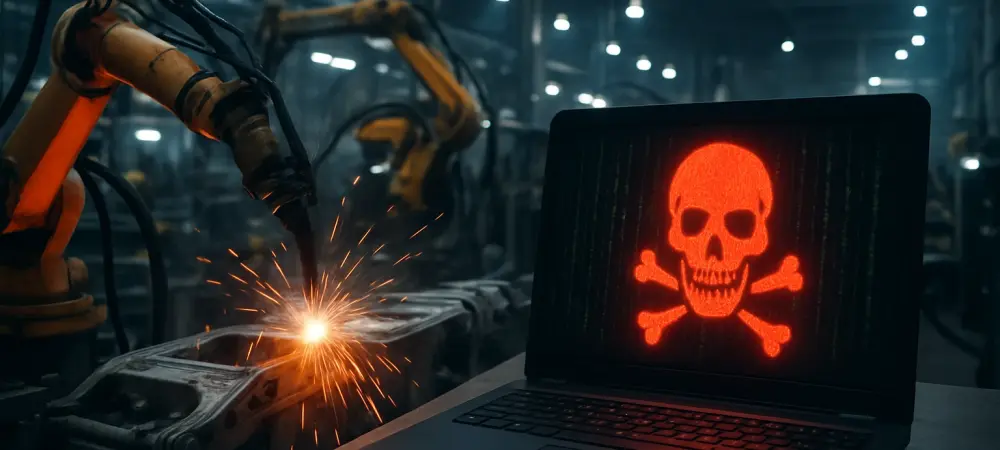
Imagine a sprawling manufacturing plant, humming with precision-engineered machinery, suddenly grinding to a halt—not due to mechanical failure, but because a silent, invisible attacker has infiltrated its digital core, posing a severe threat to operations. This scenario is no longer a distant fear but a pressing reality for the manufacturing sector, where cybersecurity has surged to rank among the top three risks, trailing only inflation and economic growth. The escalating sophistication of cyber threats, from ransomware to nation-state attacks, threatens not just data but the very operational technology (OT) systems that keep factories running. This summary delves into a comprehensive study involving over 1,500 respondents across 17 countries, shedding light on why cybersecurity has become a critical business priority for manufacturers worldwide.
Rising Cyber Threats in Manufacturing: A Critical Business Priority
The manufacturing sector finds itself at a crossroads as cyber threats emerge as a dominant concern, outranking many traditional risks. Positioned as the third most significant challenge after economic pressures, cybersecurity demands urgent attention due to its potential to disrupt entire supply chains. The stakes are high, with attackers exploiting vulnerabilities in interconnected systems to halt production or steal sensitive data.
A major challenge lies in the increasing complexity of these threats. Ransomware has evolved into a pervasive menace, often locking critical systems and demanding hefty payments, while nation-state attacks introduce geopolitical dimensions to the risk landscape. These incursions target OT assets—systems controlling physical processes—making the impact far more tangible than a typical data breach.
The consequences of such attacks ripple beyond immediate financial loss, affecting operational uptime and customer trust. Manufacturers face the daunting task of safeguarding not just their digital infrastructure but also the physical machinery integral to their business. This dual challenge underscores why cybersecurity is no longer an IT issue but a boardroom imperative.
Context and Importance of Cybersecurity in Manufacturing
Understanding the gravity of cyber risks in manufacturing requires looking at the broader landscape. A survey spanning 1,560 respondents from diverse industries like automotive, energy, and food and beverage across 17 major manufacturing nations reveals a growing acknowledgment of these dangers. This widespread recognition signals a shift in how the sector perceives its vulnerabilities.
High-profile incidents have further amplified this awareness. For instance, major attacks on critical infrastructure and consumer goods companies have demonstrated the devastating potential of cyber breaches, leading to millions in losses and prolonged operational downtime. Such events have cemented cybersecurity as a focal point, with reputational damage adding to the financial and logistical toll.
The relevance of these risks extends beyond individual companies to impact entire economies. Disruptions in manufacturing can delay essential goods, cause fuel shortages, or even compromise safety systems, affecting communities at large. As digital and physical systems become increasingly intertwined, the need to prioritize cybersecurity in this sector has never been more evident.
Research Methodology, Findings, and Implications
Methodology
The insights presented here stem from a collaborative research effort involving a detailed survey design. Conducted across 17 key manufacturing countries, the study engaged 1,560 participants from various sub-sectors, ensuring a comprehensive view of the industry. This approach captured diverse perspectives on cybersecurity challenges and strategies.
The survey methodology focused on both quantitative and qualitative data, targeting professionals in IT and OT roles. By covering a wide geographic scope and industry spectrum, the research offers a robust foundation for understanding global trends. This structured framework ensures the findings are representative of the broader manufacturing landscape.
Findings
Analysis of the survey data reveals a strong emphasis on securing OT environments, with over half of the respondents prioritizing investments in this area. This trend reflects a proactive stance, as manufacturers recognize the critical role of these systems in maintaining production continuity. The urgency to protect against disruptions is palpable across the board. Another significant finding is the adoption of advanced security platforms, with nearly two-thirds of manufacturers already implementing such solutions. Additionally, over 60% plan to incorporate artificial intelligence and machine learning into their cybersecurity strategies within the next year. These technologies are seen as vital tools to counter sophisticated threats. Supporting data from external sources further validates these concerns. Reports indicate that manufacturing remains the most targeted sector for ransomware, accounting for a substantial portion of global incidents in recent quarters. This statistic highlights the acute vulnerability of the industry and the pressing need for robust defenses.
Implications
The practical implications of these findings are clear: manufacturers must invest in cutting-edge security measures to safeguard critical infrastructure. Protecting OT systems is not merely about preventing data loss but ensuring uninterrupted operations, which are the lifeblood of the sector. Failure to act could result in cascading effects across supply chains.
Beyond individual businesses, the societal impact of cyber-physical risks looms large. As experts note, threats in OT environments extend past digital breaches to affect physical safety and operational integrity. This broader dimension necessitates a holistic approach to security, encompassing both technological and policy interventions.
The urgency to address these risks also calls for a reevaluation of existing frameworks. With attackers continuously adapting, manufacturers need agile strategies that can evolve alongside emerging threats. This dynamic environment demands constant vigilance and resource allocation to stay ahead of potential disruptions.
Reflection and Future Directions
Reflection
Looking at the survey insights, it is evident that the manufacturing sector is taking decisive steps to combat cybersecurity threats. The industry’s proactive response, marked by significant investments and strategic planning, demonstrates a commitment to resilience. Yet, the persistent high incidence of ransomware shows that gaps still exist.
Challenges remain in the complexity of securing OT systems, which differ vastly from traditional IT environments. The integration of physical and digital components adds layers of difficulty in implementing effective defenses. This reality necessitates ongoing adaptation to keep pace with rapidly evolving attack methods.
The balance between progress and persistent vulnerabilities highlights a critical tension. While strides have been made in adopting security platforms, the scale and sophistication of threats continue to test the industry’s preparedness. This duality underscores the importance of sustained effort and innovation.
Future Directions
Exploring the potential of AI-driven security solutions offers a promising avenue for further research. As manufacturers increasingly turn to these technologies, understanding their long-term efficacy and scalability will be crucial. Deeper studies could uncover how best to leverage such tools against diverse threats. Attention must also be directed toward countering nation-state attacks, which pose unique geopolitical risks. Developing tailored strategies to mitigate these sophisticated threats requires international cooperation and shared intelligence. This area remains underexplored and ripe for focused investigation.
Additionally, addressing emerging vulnerabilities, particularly those highlighted by governmental agencies, presents an opportunity to strengthen defenses. Building global collaboration frameworks within the manufacturing sector could enhance collective resilience. Such initiatives would help tackle shared challenges and foster a unified front against cyber adversaries.
Conclusion: Balancing Risks and Resilience in Manufacturing Cybersecurity
The research underscores that cybersecurity has emerged as a paramount concern for manufacturers, driven by the escalating frequency and complexity of cyber threats. The industry has shown a commendable shift toward resilience, evidenced by substantial investments in OT security and the adoption of AI technologies. Despite these efforts, the persistent threat of ransomware and nation-state attacks reveals ongoing vulnerabilities. Moving forward, manufacturers need to prioritize the development of adaptive security measures that can evolve with emerging risks. Strengthening partnerships across borders to share threat intelligence and best practices is seen as a vital step. By fostering innovation and maintaining vigilance, the sector can better navigate the dynamic threat landscape and secure its critical operations for the long term.