

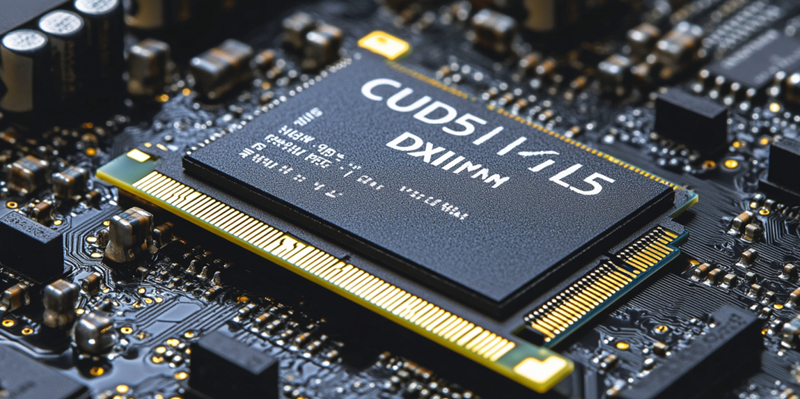
The memory industry is undergoing significant transformation with the ongoing advancements and adoption of the CUDIMM (Clocked Unbuffered Dual In-Line Memory Module) standard. Manufacturers are developing DDR5 memory kits with unprecedented speeds, setting new benchmarks in performance. Recently, Colorful has joined the ranks of Biwin, V-Color, Asgard, and Lexar, pushing the boundaries of memory speeds with their latest DDR5 CUDIMM kits reaching up to 9,600 MT/s. This progress indicates a major leap forward in memory technology and aims to redefine what is possible in computing performance.
Technological Innovations Driving CUDIMM
CKD Enhances Stability and Speeds
CUDIMM employs a CKD (Clock Driver) to regenerate the clock signal, which significantly enhances stability and allows memory modules to achieve higher frequencies. This technological innovation is crucial in overcoming the limitations of traditional UDIMM (Unbuffered Dual In-Line Memory Module) standards. As the industry continues to experiment with these modules, it is becoming increasingly evident that CUDIMM has the potential to surpass speeds of 10,000 MT/s in the not-so-distant future. Speculations are rife that major market players like Corsair or G.Skill might soon achieve this benchmark, solidifying the value of CUDIMM in high-performance computing.
The enhanced stability provided by the CKD is not merely a minor upgrade but a transformative change. This stability is fundamental for ensuring that memory modules operate reliably at higher speeds without compromising data integrity. Memory stability is critical for both consumer electronics and enterprise-level applications, as it directly impacts the efficiency and reliability of computing systems. By regenerating the clock signal, CKD allows memory to function more consistently, even under demanding conditions. This is especially relevant in applications requiring substantial computational power, such as gaming, data analysis, and real-time processing tasks.
Expanding Capabilities: Beyond 10,000 MT/s
The potential for CUDIMM to break the 10,000 MT/s barrier is a testament to the relentless innovation in the memory industry. Companies are investing heavily in research and development to push the boundaries of what memory modules can achieve. The concerted efforts to break through these speed ceilings indicate a future where high-speed memory will be commonplace. This advancement is not just about speed; it encapsulates the broader shift towards more efficient and capable computing systems.
With anticipated developments on the horizon, such as potential releases from industry giants like Corsair or G.Skill, the memory landscape is set to undergo a transformation. As these companies deliver higher-speed solutions, it could lead to widespread adoption of CUDIMM standards, making high-speed memory accessible to a broader audience. This progress signifies more than just technical milestones; it heralds a new era in computing where performance limitations are continually being shattered, allowing for innovation across various technological fields.
Hardware Support for CUDIMM Standard
MSI’s Upcoming X870E Motherboards
MSI has announced its upcoming X870E motherboards, which will support CUDIMM modules, albeit operating in standard UDIMM mode. This development marks a significant step in hardware manufacturers’ willingness to incorporate CUDIMM capabilities into their platforms, ensuring broader acceptance and integration of this technology. The support from such a reputable brand indicates the seriousness with which the hardware industry is taking this new standard and paves the way for more widespread adoption.
The announcement by MSI underscores the potential for mainstream hardware compatibility, broadening the scope for users to benefit from these advancements. Although the initial implementation might operate in standard UDIMM mode, the underlying support sets the stage for future enhancements. As more hardware manufacturers follow suit, it becomes plausible that CUDIMM could become the new standard in both consumer and enterprise markets. This shift would lead to significant performance gains, making high-speed computing more accessible.
Intel’s Arrow Lake-S CPUs
In parallel to MSI’s advances, Intel’s next-generation Arrow Lake-S CPUs are set to leverage CUDIMM capabilities. This alignment with one of the leading CPU manufacturers signifies a broader market readiness and accelerates the adoption rate of CUDIMM standards. Intel’s integration of CUDIMM support ensures that the benefits of higher memory speeds and enhanced stability will be accessible to a wider range of users, from casual consumers to tech enthusiasts and professionals demanding top-tier performance from their systems.
Arrow Lake-S CPUs are designed to maximize the potential of CUDIMM, integrating seamlessly with the memory modules to deliver unprecedented computational performance. The synergy between advanced processors and high-speed memory modules is crucial for unlocking the full capabilities of modern computing systems. This integration shows a unified commitment across the industry to push for higher performance standards, enabling more complex and resource-intensive applications. As Intel leads the charge with its CPU advancements, it is likely that more companies will follow, establishing CUDIMM as a mainstream standard.
The Promising Future of CUDIMM
Shaping the Memory Industry
The overarching trend within the memory industry is a clear shift towards embracing the CUDIMM standard due to its ability to enhance both performance and stability of memory modules. The developments made by top-tier companies in this field signify a major transition towards cutting-edge memory solutions that promise improved capabilities for various systems. This shift is not just about achieving higher speeds but also about ensuring consistent and reliable performance across numerous applications.
CUDIMM’s potential to become mainstream opens new possibilities for more advanced and efficient computing performance. The progress in this area is expected to benefit not only high-end computing applications but also everyday consumer electronics, ultimately leading to a more robust and versatile computing environment. The narrative unfolding in the memory industry suggests a future where higher speeds, greater stability, and innovative hardware compatibility become the new norm, setting the stage for continuous improvements in computing technology.
Broader Implications for Computing
The memory industry is experiencing a dramatic transformation thanks to the advancements and increasing adoption of the CUDIMM (Clocked Unbuffered Dual In-Line Memory Module) standard. Producers are pushing the boundaries of what’s possible by developing DDR5 memory kits with unprecedented speeds. These developments are setting new performance benchmarks, promising to revolutionize computing capabilities. Colorful has recently joined the ranks of Biwin, V-Color, Asgard, and Lexar, driving the industry forward with their latest DDR5 CUDIMM kits that reach astonishing speeds of up to 9,600 MT/s. This technological progress marks a significant leap, aiming to redefine the limits of memory performance and establish new standards in computing. With these advancements, the landscape of memory technology is poised for a significant shift, driving innovations and offering enhanced performance for a variety of computing needs. As memory speeds continue to escalate, we can expect an era of better, faster, and more efficient computing solutions, pushing the industry to new heights.