

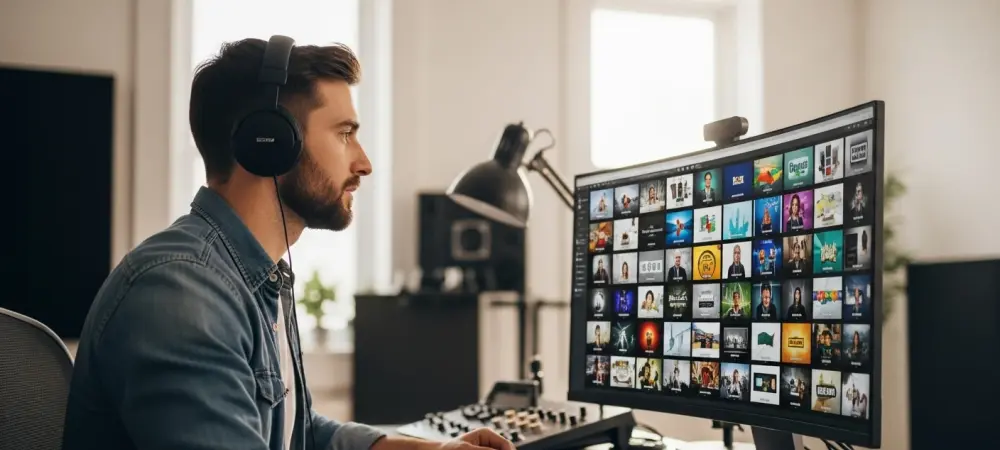
The New Creative Battlefield: Why Thumbnails Are at the Forefront of an AI Revolution
In the hyper-competitive world of digital content, the thumbnail is more than just a preview—it’s the digital storefront, the first handshake, and the single most critical factor in a viewer’s decision to click. For years, Adobe Photoshop has been the undisputed king of this domain, a powerful but complex tool for crafting the perfect visual hook. However, a seismic shift is underway. Creators are increasingly abandoning the meticulous, time-consuming workflows of Photoshop in favor of specialized, AI-powered generators. This article explores the fundamental drivers behind this migration, examining how the demand for speed, data-driven optimization, and accessibility is redefining the creator’s toolkit and pushing traditional software to its limits.
From Manual Mastery to Automated Efficiency: The Legacy of Thumbnail Design
For over a decade, a high-quality YouTube thumbnail was a badge of professionalism, almost exclusively achieved through mastery of Adobe Photoshop. The process was an art form in itself, requiring hours of meticulous work: isolating subjects with the pen tool, balancing layers, adjusting lighting, and manually arranging text and graphics. This workflow, while capable of producing stunning results, became a significant bottleneck for creators striving to maintain a consistent and frequent publishing schedule. As the digital landscape grew more saturated, the time spent on a single thumbnail became a critical resource drain, creating a clear market gap for a solution that valued speed and performance as much as pixel-perfect control.
The Core Drivers Behind the Shift to AI
The End of the Time Sink: Redefining Workflow Velocity
The most compelling reason for the switch is the dramatic acceleration of the creative process. In Photoshop, crafting a single, compelling thumbnail can easily consume hours. This laborious task is fundamentally at odds with the fast-paced nature of online content, where agility is key. AI platforms like Thumio collapse this timeline from hours to seconds. By generating a diverse array of professional-grade options from a simple prompt, they eliminate the manual grunt work. This newfound efficiency allows creators to shift their focus from tedious execution to higher-level strategy, such as A/B testing multiple concepts to discover which visual approach truly resonates with their audience and maximizes engagement.
From Artistic Guesswork to Data-Driven Precision
Photoshop is a versatile, general-purpose design tool, but it was never specifically engineered for YouTube thumbnails. Creators must manually account for safe zones, aspect ratios, and the unwritten rules of what visually performs well on the platform. In stark contrast, specialized AI tools are purpose-built instruments trained on massive datasets of successful thumbnails. A key innovation is the ability for a tool like Thumio to connect to a creator’s YouTube channel, analyze historical performance data, and learn what visual styles and layouts have the highest click-through rates for their specific audience. This transforms thumbnail creation from a process of subjective, artistic intuition into an objective, data-backed strategy, giving creators a tangible competitive advantage.
Lowering the Barrier: The Democratization of Professional Design
The financial and technical barriers of traditional design are significant drivers of this trend. An Adobe Photoshop subscription represents a recurring cost, while hiring a professional designer can run from $50 to $100 per thumbnail—prohibitive expenses for many emerging creators. AI tools democratize access to high-quality visuals with more accessible pricing. Furthermore, they level the playing field for solo creators who lack a formal design background. Features like one-click background removal or “sketch-to-thumbnail” generation automate complex tasks that would require significant skill and time in Photoshop, empowering anyone to translate a simple idea into a polished, high-fidelity visual without a steep learning curve.
The Future Is a Creative Partnership, Not a Replacement
This technological shift is not about replacing human creativity but augmenting it. Instead of facing Photoshop’s intimidating blank canvas, a creator can use an AI tool as a powerful brainstorming partner. By generating dozens of initial concepts, the AI provides a dynamic mood board that sparks inspiration and helps refine a creative direction. The creator’s role evolves from a technical operator to a strategic curator, selecting, combining, and tweaking AI-generated elements to fit their unique brand and vision. This hybrid workflow, where AI handles the technical execution and the human guides the creative strategy, is poised to become the new industry standard, influencing the development of all future creative software.
A Practical Guide: When to Use AI and When to Stick with the Pro
The move to AI is a pragmatic evolution, not an outright rejection of Photoshop’s power. For creators, the key is to adopt a “right tool for the right job” mentality.
- Embrace AI for Speed and Volume: For daily or weekly content where speed, consistency, and performance are paramount, an AI thumbnail generator is the superior choice. Use it for rapid ideation, A/B testing, and maintaining a high-quality visual standard without the time investment.
- Rely on Photoshop for Uniqueness and Control: For flagship projects, channel rebranding, or highly specific artistic concepts that require absolute granular control, Photoshop remains indispensable. Its comprehensive toolset is unmatched for complex photo manipulation and designs that must be built from the ground up to be truly one-of-a-kind.
The Inevitable Evolution of the Creator Toolkit
The migration from Photoshop to AI-powered thumbnail generators is more than a fleeting trend; it’s a clear indicator of the future of creative work. It highlights a fundamental demand for tools that are not only powerful but also intelligent, efficient, and accessible. While Photoshop will continue to be a cornerstone for deep, intricate design work, its role in the high-velocity world of thumbnail creation is being successfully challenged. By handling the technical labor, AI empowers creators to work smarter, not harder, focusing their energy on the strategic and conceptual elements that truly drive growth. For the modern creator, adapting to this new paradigm is no longer an option—it’s a necessity.