

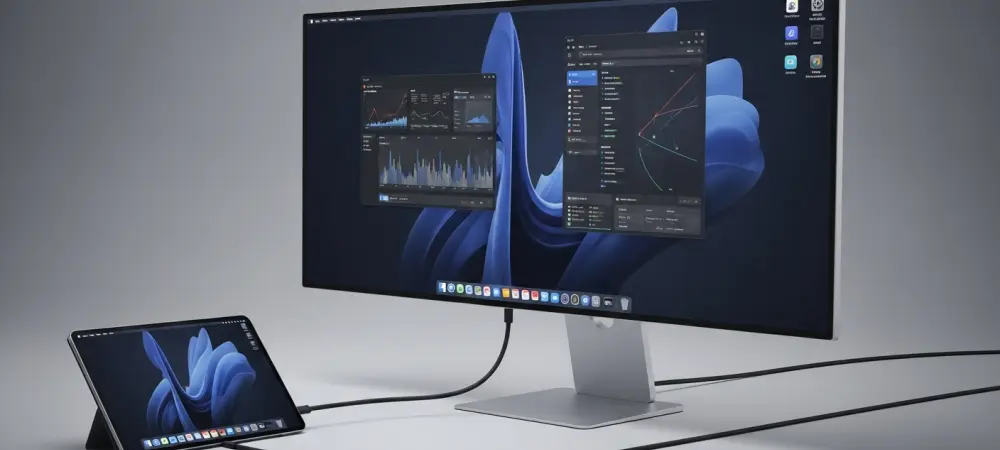
The distinction between tablet and laptop hardware has practically vanished as Apple continues to ship its most powerful silicon inside the sleek chassis of the iPad Pro. While the hardware remains exceptional, users have long felt restricted by the inherent limitations of iPadOS, which often treats sophisticated multitasking as an afterthought rather than a core feature. A dedicated community of developers recently achieved a significant milestone by successfully booting a fully functional version of macOS on an M4-equipped iPad Pro, bypassing the traditional software barriers that once seemed insurmountable. This feat was not merely a proof-of-concept but a demonstration of the raw potential hidden within mobile hardware when freed from artificial constraints. By leveraging existing virtualization technologies, these enthusiasts managed to bridge the gap between two previously isolated ecosystems. This represents a pivotal shift in how enthusiasts perceive the utility of high-end tablets, suggesting the era of single-purpose professional hardware is ending in 2026.
Technical Implementation: Overcoming the Virtualization Hurdle
The primary challenge involved navigating the intricate boot process of the M-series chips, which are designed to strictly enforce signed code and secure boot sequences. To circumvent these protections, the project utilized a custom-built hypervisor layer that allows for the execution of a guest operating system with near-native performance. This breakthrough relied heavily on the virtualization extensions built into the silicon, which Apple initially introduced to support high-performance server tasks and developer tools. By modifying specific kernel extensions, the developers were able to fool the hardware into accepting the macOS image as a legitimate environment. The resulting performance is remarkably fluid, with system benchmarks showing that the virtualized environment captures roughly eighty percent of the raw processing power available to the host device. This efficiency suggests that the hardware is more than capable of handling the demands of a desktop-class operating system without the need for specialized cooling or significant architectural changes.
Beyond the initial boot sequence, the community had to address the lack of specialized drivers for the iPad’s unique hardware components, such as the Liquid Retina XDR display and the integrated Thunderbolt port. The solution involved porting existing drivers from the MacBook Air line and adapting them to interface with the iPad’s proprietary firmware. This allowed for full resolution support and the use of external displays, effectively turning the tablet into a portable workstation. Input methods posed another significant hurdle, as macOS is fundamentally designed for precise mouse and keyboard interactions rather than touch gestures. By integrating support for the Magic Keyboard and the Apple Pencil as a high-precision pointing device, the team ensured that the desktop interface remained usable in a mobile form factor. These refinements turned a technical experiment into a practical tool for power users who require the flexibility of macOS without the bulk of a traditional laptop. The success of this driver adaptation proves that the hardware differences between the Mac and the iPad are increasingly cosmetic.
The successful execution of macOS on iPad hardware established a clear roadmap for the future of mobile computing by proving that hardware limitations were largely a product of software policy rather than physical constraints. Industry leaders began to recognize that providing users with the choice to toggle between a simplified touch interface and a complex desktop environment could drastically increase device lifecycle and consumer satisfaction. Moving forward, developers needed to prioritize the creation of adaptive user interfaces that respond to the presence of peripherals, ensuring a seamless transition between modes. Organizations found that investing in these hybrid capabilities reduced the need for employees to carry multiple devices, streamlining logistics and reducing hardware costs. This milestone provided the necessary evidence that the next logical step in hardware evolution involved total software fluidity, urging a reimagining of what a professional-grade device should truly offer to the modern user.