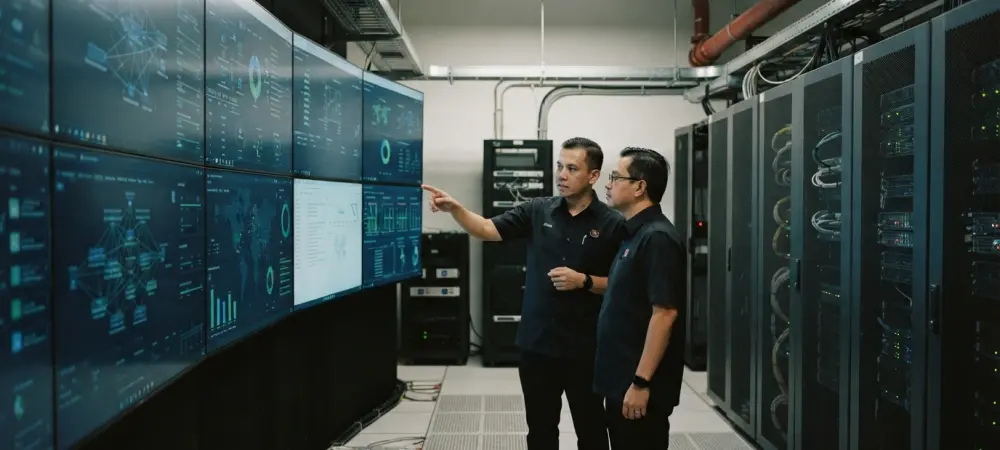
Fragmented cloud architectures create data silos that effectively prevent AI models from accessing the information they need to function. This structural deficiency is the primary reason many ambitious enterprise projects fail to move beyond the pilot phase, as the underlying

Fragmented cloud architectures create data silos that effectively prevent AI models from accessing the information they need to function. This structural deficiency is the primary reason many ambitious enterprise projects fail to move beyond the pilot phase, as the underlying

Fragmented cloud architectures create data silos that effectively prevent AI models from accessing the information they need to function. This structural deficiency is the primary reason many ambitious enterprise projects fail to move beyond the pilot phase, as the underlying
Deeper Sections Await

Introduction Maintaining seamless data pipelines for hundreds of millions of global users demands an advanced infrastructure that can navigate the unpredictable fluctuations of cloud resource availability without interruption. As organizations expand their footprint in the cloud, the rigidity of traditional

Upwind leverages a sophisticated Linux kernel feature known as eBPF to collect deep telemetry data without compromising system stability. This technological foundation marks a departure from traditional security architectures that often introduced latency or required intrusive agents. As organizations navigate
Browse Different Divisions

Introduction Maintaining seamless data pipelines for hundreds of millions of global users demands an advanced infrastructure that can navigate the unpredictable fluctuations of cloud resource availability without interruption. As organizations expand their footprint in the cloud, the rigidity of traditional

The demand for low-latency communication between model shards has transformed Kubernetes and microservices into the essential backbone of AI scaling. In the current landscape, the rapid convergence of cloud-native technologies and artificial intelligence is fundamentally altering the technological terrain throughout

Extracting a service with the cleanest boundaries and lowest data dependency is the most effective way to initiate a successful cloud-native migration strategy. As software ecosystems become increasingly complex in 2026, the reliance on massive, interconnected monolithic architectures has become

Operating across multiple platforms like AWS and local data centers creates operational silos that lead to inefficient resource use and significant visibility gaps. As modern enterprises increasingly pivot from monolithic architectures to sophisticated hybrid models, the friction between legacy hardware

Global enterprises are increasingly discarding the “public cloud by default” ideology in favor of a sophisticated sovereignty-first architecture that prioritizes localized control and regulatory compliance over raw scalability. This shift represents a point where the initial allure of hyperscale platforms

Upwind leverages a sophisticated Linux kernel feature known as eBPF to collect deep telemetry data without compromising system stability. This technological foundation marks a departure from traditional security architectures that often introduced latency or required intrusive agents. As organizations navigate
Browse Different Divisions
Uncover What’s Next
B2BDaily uses cookies to personalize your experience on our website. By continuing to use this site, you agree to our Cookie Policy