

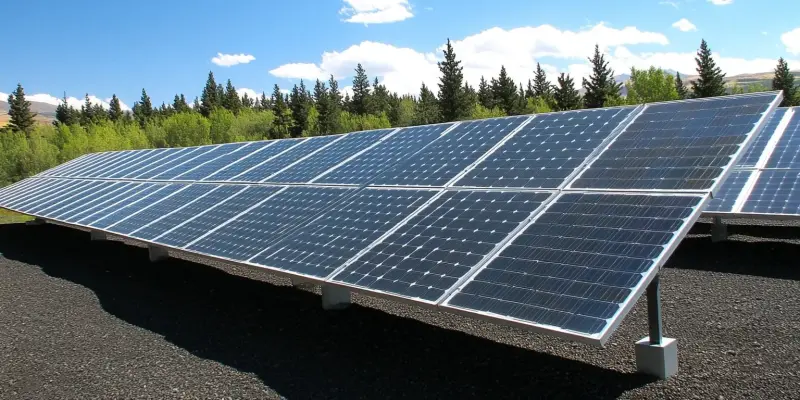
The renewable energy sector is undergoing a remarkable digital transformation, propelled by the integration of cloud computing, advanced data analytics, and machine learning technologies. These advancements are revolutionizing the maintenance of solar farms, leading to unprecedented efficiencies, reduced operational costs, and enhanced management capabilities. As the world increasingly relies on renewable sources of energy, the need to optimize and automate the operations of solar farms has become more pronounced. Emerging tech is not only improving the efficiency of these facilities but also setting new standards for the industry as a whole.
The Role of Cloud Computing in Solar Energy
Robin Sarkar, a visible figure in the renewable energy industry in the United States, has underscored the immense transformative potential of cloud computing in the solar energy arena. With solar photovoltaic (PV) capacity projected to reach 2,350 GW by 2027, integrating advanced cloud platforms into solar farm operations is becoming an increasingly essential component of modern energy infrastructure. Cloud computing enables these expansive farms to handle the vast amounts of data generated by utility-scale facilities, which can process over 100,000 data points per second per facility.
This massive data processing capability allows for the high-precision tracking of critical metrics, introducing a new paradigm in operational oversight and efficiency. Panel temperatures, for instance, can be measured with an accuracy of ±0.5°C, while power output fluctuations can be monitored at millisecond intervals. This level of data collection and analysis ensures that each aspect of the solar farm’s operation is closely monitored and managed, leading to significant improvements in efficiency and performance. The necessity of such advanced systems underscores the urgency of embracing cloud computing in maintaining and optimizing the growing number of solar farms worldwide.
Data-Driven Revolution in Solar Farms
Modern utility-scale solar farms have evolved into prolific data generation entities, deploying sophisticated monitoring systems to track myriad operational metrics. Such systems allow for the precise monitoring of panel temperatures, power output fluctuations, and various other parameters, thus enabling operators to maintain optimal performance levels. The ability to monitor these metrics with granular accuracy means that solar farm operators can make informed decisions based on real-time data, ultimately leading to more efficient and effective maintenance processes.
One of the most significant aspects of this data-driven revolution is the power of predictive analytics. Advanced analytics technologies have demonstrated the capability to predict equipment failures up to three weeks in advance, boasting an accuracy rate that exceeds 90%. This predictive power has drastically reduced unexpected downtime by 47% and has also led to a 32% reduction in maintenance costs. These figures highlight the transformative potential of predictive analytics in redefining standard practices for solar farm maintenance and ensuring more reliable and efficient operations.
Real-Time Monitoring and Predictive Maintenance
Real-time monitoring systems, powered by cloud computing, continuously analyze a broad array of metrics from thousands of sensors distributed throughout the solar farm. These metrics include power generation data, environmental conditions, thermal imaging, and grid parameters. This comprehensive oversight enables proactive and predictive maintenance strategies that significantly enhance operational efficiency and reliability. By continuously analyzing these metrics, operators can identify potential issues before they escalate into significant problems, thus preventing costly downtimes and ensuring the smooth operation of the facility.
The economic impact of cloud-based maintenance systems is substantial, as evidenced by the performance of standard 100MW solar facilities. These facilities can achieve annual savings of $850,000, with a remarkable return on investment of 145% over three years. Additionally, the integration of cloud-based systems has contributed to a 35% reduction in overall maintenance costs and has boosted system availability to an impressive 99.98%. These economic benefits, coupled with the operational efficiencies offered by real-time monitoring and predictive maintenance, underscore the critical role of cloud computing in the future of solar energy.
Future-Ready Infrastructure and AI Advancements
Cloud-based maintenance systems are not only enhancing current operations but are also paving the way for future-ready infrastructure through advancements in AI and edge computing. Market projections suggest a compound annual growth rate (CAGR) of 24.5% for AI in solar maintenance, with the market value expected to reach $12.8 billion by 2030. These advancements are pushing the boundaries of automation, efficiency, and reliability in solar farm operations, thereby creating opportunities for more sophisticated and intelligent maintenance strategies.
In addition to the financial benefits, the adoption of cloud-based systems offers significant environmental and operational advantages. These systems have achieved a 60% reduction in response time and an 8% increase in energy yield through optimized maintenance and real-time monitoring. They also facilitate precise weather impact forecasting, enhanced grid stability with 99.9% uptime, and sophisticated power quality monitoring. Such advancements mitigate the adverse effects of environmental conditions and align with broader sustainable energy goals by maximizing energy production and minimizing waste.
Innovation Pipeline and Emerging Technologies
The renewable energy sector is experiencing an extraordinary digital transformation, driven by the adoption of cloud computing, sophisticated data analytics, and machine learning technologies. These technological advancements are dramatically changing the way solar farms are maintained, resulting in exceptional efficiencies, lower operational costs, and improved management capabilities. As the global reliance on renewable energy sources grows, the necessity to optimize and automate the operations of solar farms has become more critical. Emerging technologies are not only boosting the efficiency of these renewable energy facilities but also establishing new benchmarks for the entire industry. The integration of these cutting-edge technologies ensures that solar farms can operate at maximum efficiency, with minimal downtime and maintenance issues. This modernization in the renewable energy sector is essential for meeting the ever-increasing demand for sustainable energy solutions, making renewable energy more viable, accessible, and cost-effective for consumers and businesses alike.