

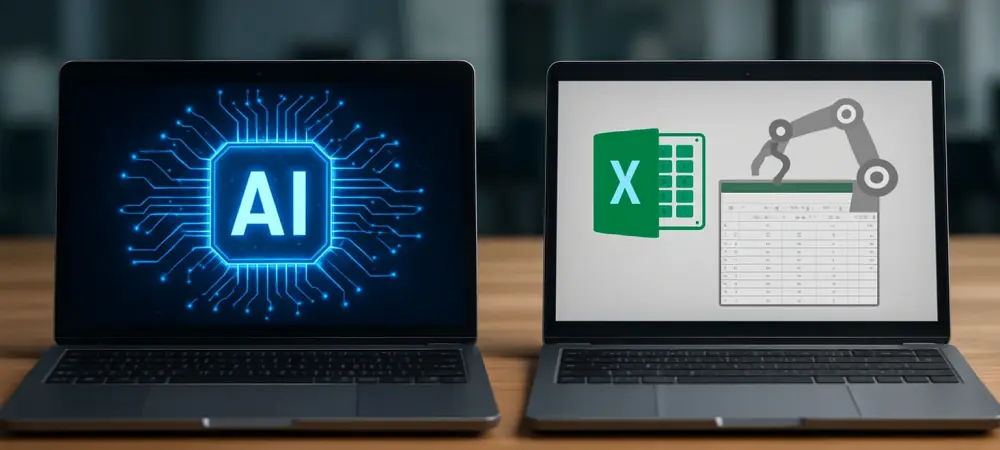
Imagine a bustling office where the once-ubiquitous sound of clicking keyboards over spreadsheet data entry has been replaced by the quiet hum of artificial intelligence processing tasks in seconds, transforming the workplace in 2025. This scenario is no longer a distant vision but a reality for many workplaces, as AI tools like ChatGPT redefine productivity. This roundup explores the seismic shift in office software dynamics, gathering opinions, tips, and reviews from various industry sources and tech communities to understand how ChatGPT is challenging Microsoft Excel’s long-standing dominance. The purpose is to provide a comprehensive look at this transformation, comparing perspectives on automation’s benefits and challenges.
Unpacking the AI Revolution in Office Tools
The Shift from Spreadsheets to Smart Automation
The landscape of office productivity has undergone a dramatic change with AI models stepping into roles traditionally held by tools like Excel. Industry blogs and tech forums highlight a growing consensus that ChatGPT, with its advanced language processing, can now handle tasks ranging from basic data entry to intricate formula creation. Many users note that this shift allows employees to focus on strategic decision-making rather than mundane calculations. A key point of discussion among tech analysts is the speed at which AI can process and analyze datasets. Unlike traditional spreadsheet software, which requires manual input and expertise for complex operations, AI tools offer near-instantaneous results. This capability has sparked excitement about potential efficiency gains across sectors like finance and logistics, where time is often a critical factor.
However, not all feedback is unequivocally positive. Some industry watchers caution that while automation is impressive, it may lack the nuanced understanding of context that human operators bring to data management. This balance of speed versus depth remains a central theme in evaluating AI’s role in replacing established software.
ChatGPT’s Capabilities: A Game-Changer?
Diving deeper into specific functionalities, numerous tech platforms have praised ChatGPT’s evolution into a tool capable of autonomously managing spreadsheets. Reports from developer communities emphasize its ability to create and edit files compatible with major office suites, reducing dependency on licensed software. This feature is often cited as a direct challenge to Excel’s market position.
User feedback from coding hubs reveals practical applications, such as generating detailed reports with minimal human intervention. Many small business owners have shared stories of cutting operational costs by integrating AI for routine clerical tasks. Such real-world examples underscore the transformative potential of these advancements in everyday workflows.
Yet, there are reservations about reliability in high-stakes environments. Contributors to tech discussion boards point out instances where AI-generated outputs contained errors in complex datasets, suggesting that while the technology is promising, it may not yet fully match Excel’s precision for specialized functions. This critique shapes a more tempered enthusiasm among professionals.
Diverse Opinions on AI’s Impact on the Workforce
Productivity Boosts versus Job Displacement Fears
The dual impact of AI on workplace dynamics is a hot topic across various sources. Business consultants frequently highlight how automation frees up time for employees to engage in creative problem-solving and innovation. This perspective paints AI as an enabler, allowing companies to redirect human talent toward more value-added activities.
In contrast, labor market analysts express concern over the potential for job losses, particularly in roles centered on data management. Many argue that clerical positions, often reliant on spreadsheet proficiency, face significant risk as AI takes over repetitive tasks. This viewpoint calls for proactive measures to address the socioeconomic ripple effects of such technological shifts.
A middle ground emerges from HR professionals who advocate for reskilling initiatives. They suggest that companies invest in training programs to equip workers with skills in AI oversight and strategic analysis, ensuring adaptability in an evolving job market. This balanced approach seeks to mitigate displacement while harnessing automation’s benefits.
Adoption Trends Across Industries
Examining adoption rates, industry reports reveal varied integration of AI tools across different sectors. Technology and e-commerce firms are often at the forefront, rapidly incorporating ChatGPT-like systems to streamline operations. Their experiences, shared through case studies on professional networks, showcase significant time savings and error reduction in data handling.
Conversely, sectors like healthcare and education exhibit slower uptake, primarily due to concerns over data security and regulatory compliance. Feedback from these fields, gathered from industry webinars, indicates a cautious approach, with many preferring to maintain human oversight alongside AI assistance. This disparity reflects broader challenges in standardizing automation globally.
Speculation on future trends suggests that over the next couple of years, from 2025 onward, hybrid models combining AI and traditional tools may become the norm. Tech trendsetters on various platforms predict that such integrations could offer a compromise, preserving Excel’s utility while leveraging AI’s efficiency. This evolving landscape continues to fuel debate on optimal implementation strategies.
Practical Tips for Navigating the AI Era
Embracing Automation with Caution
For businesses looking to integrate AI, insights from tech advisors stress starting with pilot projects to test ChatGPT’s capabilities on low-risk tasks. This approach, widely recommended in online business forums, allows companies to gauge effectiveness without overhauling existing systems. It’s seen as a prudent step to minimize disruption during transition phases.
Another tip circulating among productivity experts is to maintain a human-in-the-loop framework. This means using AI for initial data processing but ensuring final reviews are conducted by trained staff to catch potential inaccuracies. Such advice, shared across professional blogs, aims to balance efficiency with accountability in operational workflows.
Lastly, user communities emphasize the importance of staying updated on AI advancements. Regularly exploring new features and updates through developer resources can help organizations maximize the benefits of tools like ChatGPT. This proactive stance is often highlighted as essential for remaining competitive in a rapidly changing tech environment.
Upskilling for a Changing Workplace
On the individual level, career coaches advocate for workers to acquire skills in AI tool management and data interpretation. Many online learning platforms offer courses tailored to these areas, which are frequently recommended in career advice columns. Such training can position employees as valuable assets in automated workplaces.
Additionally, networking with peers in tech-driven industries provides exposure to best practices and emerging tools. Insights from professional meetups suggest that collaborative learning can accelerate adaptation to new technologies. This community-driven approach is often cited as a powerful way to stay relevant amid shifts.
Finally, advocating for workplace training programs is a recurring suggestion from employee advocacy groups. Encouraging employers to provide access to AI literacy workshops can bridge skill gaps and foster a culture of continuous learning. This strategy is viewed as a critical component for long-term career resilience in an automated era.
Reflecting on the Roundup’s Key Takeaways
Looking back, this exploration into ChatGPT’s challenge to Excel revealed a spectrum of perspectives that shaped a nuanced understanding of AI’s role in office productivity. Tech communities marveled at the automation capabilities that redefined efficiency, while labor analysts cautioned against the potential erosion of traditional roles. Practical advice from various sources offered a roadmap for cautious integration and skill development, ensuring that both businesses and workers could navigate this transition. Moving forward, an actionable step is to delve deeper into hybrid models that blend AI with established tools, exploring resources on emerging tech integrations. Engaging with industry forums and upskilling platforms can further equip stakeholders to adapt, turning the challenge of automation into an opportunity for innovation and growth.