

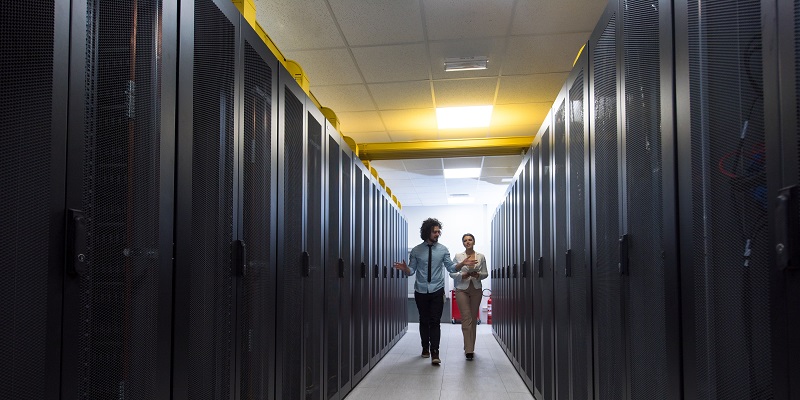
Data centers, the powerhouses that enable the internet and digital networks to function, are facing increasing scrutiny for their environmental impact and rising energy costs. According to estimates, data centers account for approximately 2% of all global carbon emissions, a figure that is continually rising. As the world becomes increasingly dependent on digital data storage and processing, data centers must become more efficient and sustainable. This article provides insights into power-saving techniques in data centers, including strategies for increasing efficiency and reducing energy costs.
Data centers and carbon emissions
Data centers are responsible for an increasing percentage of global carbon emissions. This is because they consume substantial amounts of energy to power and cool the equipment needed to store and process digital information. According to estimates from the International Energy Agency (IEA), data centers consumed 205 TWh of electricity in 2018, which is approximately 1% of global energy demand. If current trends continue, this consumption is expected to increase by over 50% by 2030.
Importance of Power Savings in Data Centers
Many data center operators focus primarily on physical plant management, assuming that traffic processing is a sunk cost that will always exist. However, it is essential to recognize that minimizing energy consumption and increasing efficiency are critical for reducing carbon emissions and controlling costs. Moreover, power savings can improve system reliability and increase security.
Data centers have reached a crossroads, where the importance of power savings cannot be overstated. IT professionals should prioritize efficient and sustainable data centers. By implementing power-saving strategies, we can ensure sustainable growth and minimize the environmental impact of data centers while reducing costs.
Energy Costs in Data Centers
Electricity represents one of the significant expenses in data center operations. As energy costs increase across the globe, data centers are facing ever higher bills. According to the US Department of Energy, data centers use up to three percent of national electricity production. Energy costs have been on the rise globally since 2020 and are expected to remain elevated through at least 2024. Without measures to counter this trend, data centers’ energy consumption and associated costs will continue to increase.
Gaining visibility to streamline efforts
Visibility can help organizations streamline efforts within the data center. With visibility, IT professionals can make informed decisions about data center efficiency, identify potential problems, and optimize the IT infrastructure. For example, by monitoring network traffic, they can see which applications are consuming the most bandwidth, which users are the most active, and how different components are performing.
Applying traffic processing strategies, such as application filtering and deduplication, can aid in improving visibility. Application filtering identifies well-known applications by traffic signature, even when encrypted, and can help monitor which specific applications are using the most bandwidth. Deduplication analyzes each network packet only once, reducing the number of tool instances needed and increasing tool usage efficiency.
Combining strategies can help businesses achieve their goals more effectively. By bringing together different approaches, a company can benefit from the strengths of each, leading to improved outcomes. However, it’s important to choose strategies that are compatible with one another and that work well in tandem.
Combining strategies for power savings in data centers can dramatically increase tool usage efficiency and reduce the amount of traffic processing necessary. For instance, using both application filtering and deduplication can help reduce the number of tools needed to monitor traffic, which in turn can lower energy usage and costs.
Intelligent Capabilities
Best-in-class organizations should go beyond the physical plant and utilize intelligent capabilities, such as deep observability, to reduce and consolidate at the source. Deep observability provides greater visibility into the underlying components of the IT infrastructure, enabling IT professionals to identify inefficiencies and minimize energy consumption.
Efficient and sustainable data centers are a top priority for IT professionals and organizations worldwide. Power-saving strategies such as gaining visibility, using application filtering, deduplication, and intelligent capabilities like deep observability can help optimize data center operations, improve sustainability, and reduce energy costs. By implementing these strategies, we can ensure environmentally sustainable growth, lower power bills, and maintain a reliable and secure IT infrastructure.